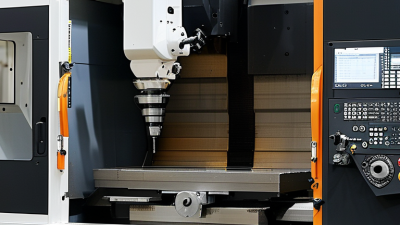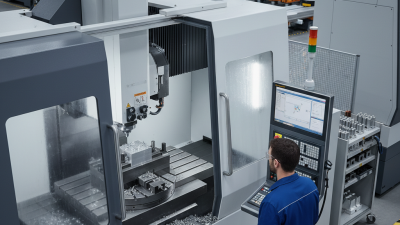
post thumbnail
Our pricing model is flexibly designed to give you the most possible advantages of a continuing partnership.

2026 Best CNC Milling Machine for Global Buyers

Choosing the 2026 best CNC milling machine is not about chasing the highest spindle speed. It is about matching real production needs with dependable engineering. Global buyers must examine material, tolerance, work envelope, control software, service access, and long-term operating costs. A machine cutting aluminum sheets behaves differently from one machining hardened steel parts.

This guide compares practical options for workshops, factories, and growing manufacturers. It considers spindle power, axis travel, table strength, repeatability, chip evacuation, safety systems, and energy use. It also reviews installation requirements, operator training, warranty terms, and regional technical support. These details matter when a replacement part may require weeks to arrive.

A reliable CNC milling machine should produce consistent results on Monday morning and after months of demanding work. Still, no model suits every buyer. A compact three-axis machine may outperform a larger system for simple jobs and limited floor space. That assumption can fail when future production expands. Buyers should verify sample cuts, inspect service records, and request clear performance data before ordering. Price alone is a weak guide. A cheaper machine may create hidden costs through downtime, tooling wear, or difficult maintenance. This overview uses practical manufacturing considerations and careful comparison to help international buyers make a more confident decision. Some specifications look impressive on paper. Real shop performance remains the harder test.
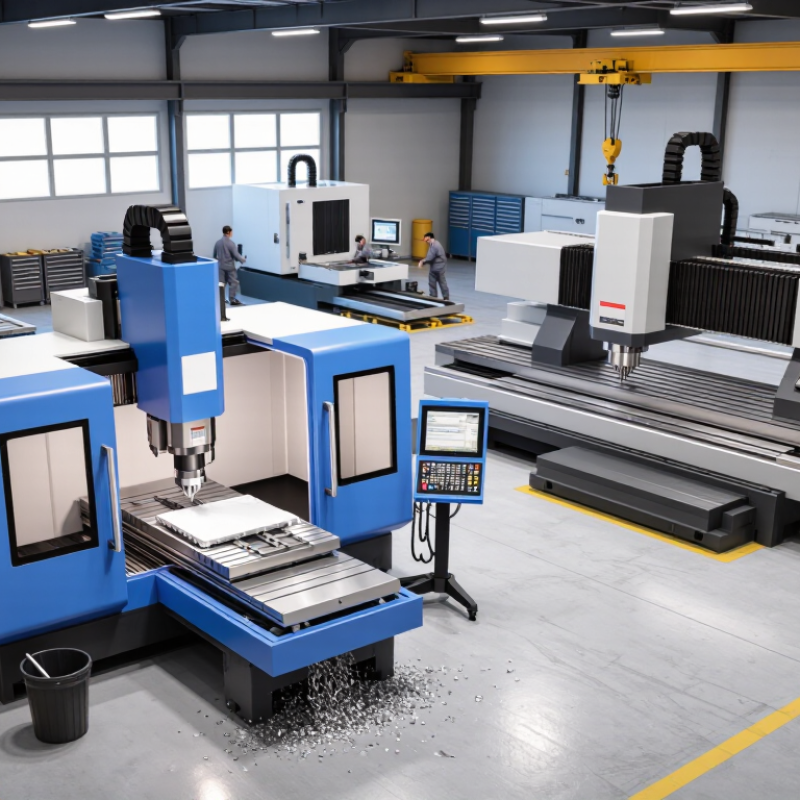
2026 Best CNC Milling Machine for Global Buyers

2026 CNC Milling Machine Landscape: UN Comtrade Trade Data and ISO 230-2

2026 Best CNC Milling Machine for Global Buyers

The 2026 CNC milling machine landscape needs more than catalog comparisons. UN Comtrade data can reveal import and export trends by country, value, volume, and HS classification. However, customs records may combine different machine types. Reporting delays and inconsistent descriptions can also distort demand signals. Treat the data as a map, not a final buying decision.

ISO 230-2 provides a stronger technical checkpoint. It evaluates positioning accuracy and repeatability under defined test conditions. Ask suppliers for recent test results, axis measurements, test temperature, and compensation settings. A machine showing 0.008 mm repeatability may perform differently in a warm workshop. Real production also depends on foundations, tooling, maintenance, and operator practice. This is where many comparisons become imperfect.

Tips: Compare UN Comtrade figures across several years, not one quarter. Confirm HS codes with a customs specialist. Request ISO 230-2 reports for the exact machine configuration. Review sample parts with measured inspection data. Check service response time and spare-part availability. I would also record ambient temperature during testing. That small detail is often missed. A low purchase price can hide installation work, training costs, or delayed calibration. Careful buyers should question clean-looking datasets and attractive accuracy claims.

Machine Types Explained: 3-, 4-, and 5-Axis Configurations per ISO 10791

For global buyers, axis count should match the part, not the brochure.

A 3-axis CNC mill moves along X, Y, and Z, making it practical for plates, pockets, and vertical features.

A 4-axis model adds rotary positioning, reducing manual setups for parts with repeated radial details.

A 5-axis machine controls two rotary axes with three linear axes. It can reach inclined surfaces, turbine-like forms, and complex medical components with fewer fixtures.

ISO 10791 provides test conditions for machining-centre accuracy, including positioning, interpolation, and rotary-axis performance. It does not guarantee production quality by itself.

World Robotics 2024 reported 541,302 industrial robots installed globally in 2023, showing continued pressure for automated, repeatable manufacturing.

Yet automation exposes weak foundations. Poor fixturing or incorrect post-processing can waste expensive cutting time. More axes can also mean higher calibration, programming, and maintenance demands. Five-axis is not automatically better.

Tips:

Ask for ISO 10791-based test records, volumetric accuracy data, and rotary-axis inspection results.

Confirm whether the machine supports simultaneous or indexed 5-axis machining.

Review the controller, postprocessor, tool-length measurement, and local service response before purchase.

Test a representative part, including thin walls and angled holes.

A small trial may reveal thermal drift that a sales specification misses.

Do not ignore operator training; complex kinematics punish casual setup.

Performance Metrics: ISO 230-2 Accuracy, Spindle Speed, and Feed Rates

2026 Best CNC Milling Machine for Global Buyers

Performance Metrics: ISO 230-2 Accuracy, Spindle Speed, and Feed Rates

For global buyers, performance begins with measurable evidence, not impressive brochure language. ISO 230-2 testing evaluates positioning accuracy and repeatability under defined conditions. Ask for the test temperature, axis travel, measurement equipment, and compensation settings. A machine claiming ±0.005 mm may perform differently after thermal expansion or several hours of cutting. The number needs context.

Spindle speed matters, but maximum RPM alone can mislead. A 20,000 RPM spindle may suit aluminum and small tools, while steel often needs stronger torque at lower speeds. Review the power curve and continuous-duty rating. Feed rates should match cutting conditions, including tool diameter, tooth count, material, and chip load. In a practical trial, listen for vibration and inspect the machined surface. Faster is not always better. I have seen fast settings produce heat, burrs, and shortened tool life.

Tips: Request an ISO 230-2 report from a recent machine test. Compare accuracy at the center and far end of each axis. Ask for sample parts cut with your material and tooling. Record spindle load during heavy passes. Leave room for doubt; advertised feed rates may describe rapid movement, not productive cutting. A careful buyer also checks service response, installation quality, and operator training, because real accuracy depends on the entire working system.

Global Buyer Checklist: CE, UL, IEC 60204-1, and Energy Data

2026 Best CNC Milling Machine for Global Buyers

For global buyers, the best CNC milling machine starts with compliance evidence, not spindle speed. CE marking shows conformity with applicable European requirements; it is not a universal safety certificate. Request the EU Declaration of Conformity, risk assessment, wiring diagrams, and technical documentation. IEC 60204-1 should guide the machine’s electrical design review. Inspect emergency stops, protective bonding, cabinet temperature, and fault labels on the actual machine. Small omissions can create expensive delays.

UL approval requires careful wording. UL is not one global standard. Ask for the exact evaluation standard, certificate scope, and applicable voltage range. Confirm whether the complete machine was evaluated, rather than only selected components. A third-party inspection may still be needed at installation. Check the details.

Energy data must be testable. The International Energy Agency’s Energy Efficiency 2023 report identifies industry as responsible for roughly 37% of global final energy demand. Ask for kWh per part, idle consumption, cutting time, coolant use, material, tool diameter, and programmed feed rate. ISO 14955 provides a useful framework for evaluating machine-tool energy efficiency. Request raw measurement records, not only a marketing percentage. Real factory results may differ. That uncertainty deserves a witnessed acceptance test. A machine using 8 kWh per aluminum part may perform differently on steel, especially during long idle periods. Recheck the figures under your own production conditions.

2026 Model Comparison: Capacity, TCO, Service, and NIST Measurement Guidance

2026 Best CNC Milling Machine for Global Buyers

A serious 2026 comparison should begin with usable capacity, not brochure numbers. Check X, Y, and Z travel against your largest workpiece, fixture, and tool clearance. Table load matters too. A heavy steel block can expose weak assumptions quickly. Spindle speed, torque, taper type, and chip evacuation affect real production time. I have seen machines with impressive speed ratings struggle during deep pocketing. That detail is easy to miss.

Total cost of ownership includes more than the purchase price. Add tooling, electricity, coolant, calibration, maintenance, training, and possible downtime. Service quality also deserves measurement. Ask about technician response times, spare-part availability, remote diagnostics, and local language support. Global buyers should confirm voltage, installation requirements, delivery terms, and operator training. A spreadsheet helps, but it can still mislead when downtime is estimated poorly. My own comparisons become more reliable after checking production records, not just quotations.

Tips: Use a weighted scorecard for capacity, TCO, service, and accuracy. For measurement, follow NIST guidance through traceable calibration, documented uncertainty, and controlled temperature. Verify probes, gauges, and CMM results against calibrated references. Record the measurement environment, method, and operator. NIST traceability does not mean perfect accuracy. It means an unbroken calibration chain. Review the process after several months; early assumptions often need correction.