
post thumbnail
Our pricing model is flexibly designed to give you the most possible advantages of a continuing partnership.

2026 Top Vacuum Hydrocarbon Cleaning Machine Manufacturers

Vacuum hydrocarbon cleaning is used to remove oils, greases, and fine residues from precision components. In automotive, aerospace, and general manufacturing, cleanliness can affect assembly quality and downstream processes. The equipment is not just a washer. It combines a sealed chamber, solvent circulation, vacuum drying, filtration, and process controls. Small design differences matter.

For a grounded comparison, buyers can consult the U.S. Environmental Protection Agency’s AP-42, Section 4.7, “Solvent Cleaning,” which documents emissions from solvent-cleaning operations. It is not a machine-performance ranking, and it should not be read as one. ISO 16232:2018 and VDA 19.1 offer technical frameworks for evaluating particulate cleanliness in components. These references help clarify process requirements, but neither certifies a manufacturer’s equipment. That distinction matters.

This 2026 overview examines Vacuum Hydrocarbon Cleaning Machine Manufacturers through practical criteria: chamber capacity, drying consistency, filtration design, automation, service support, and process documentation. Look for evidence such as test results, clear operating limits, and accessible maintenance points—not polished claims alone. A spotless sample is useful. Repeatability is better. Public market data specifically covering this equipment category remains limited, so rankings should be treated with care. Real production conditions can change the picture. A machine that performs well in a demonstration may need adjustment on a busy line. That is worth asking about.
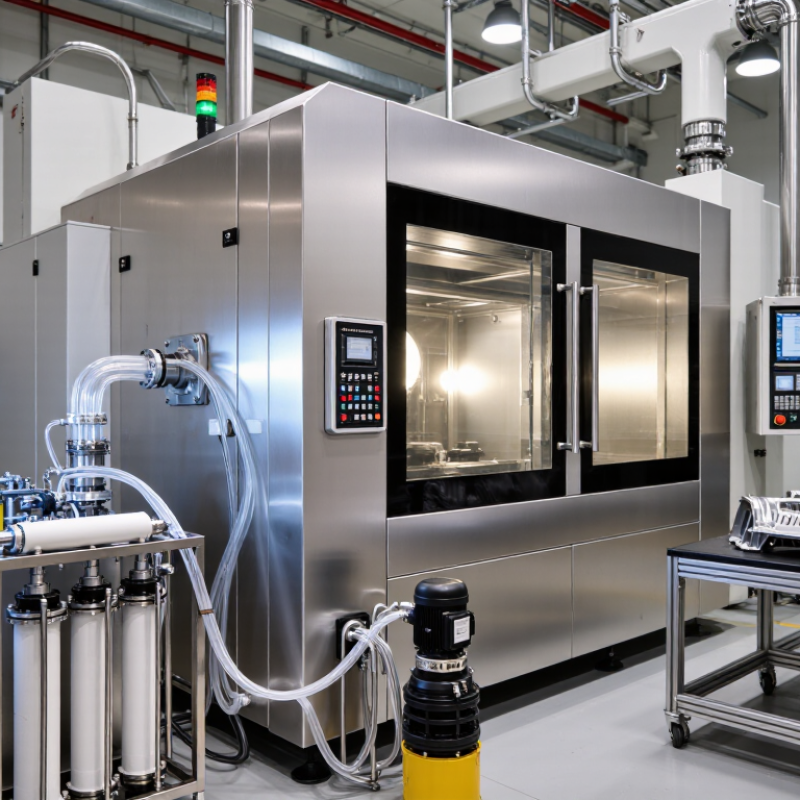
2026 Top Vacuum Hydrocarbon Cleaning Machine Manufacturers

What Is a Vacuum Hydrocarbon Cleaning Machine?

A vacuum hydrocarbon cleaning machine is an enclosed system that uses a hydrocarbon-based solvent to remove oil, grease, and processing residues from metal components. It is commonly used for parts such as gears, bearings, and machined housings. Vacuum reduces air pressure inside the chamber, helping the solvent reach recessed areas and supporting drying after cleaning. It is not simply a powerful vacuum cleaner.

During a typical cycle, parts are loaded into a sealed basket, exposed to solvent, and then drained and dried. Some systems filter or distill the solvent for reuse. The exact sequence depends on the machine and the type of residue. Small details matter. A basket packed too tightly may block solvent flow, leaving marks or oily patches on sheltered surfaces.

These machines can provide consistent cleaning, but results depend on part geometry, solvent condition, and process settings. Blind holes and narrow channels may retain liquid, even after a drying cycle. Not always. Operators should check material compatibility and validate the process with representative parts before routine production. Regular inspection of filters, seals, and solvent quality also helps maintain reliable results.

How Vacuum Hydrocarbon Cleaning Systems Work

2026 Top Vacuum Hydrocarbon Cleaning Machine Manufacturers

How Vacuum Hydrocarbon Cleaning Systems Work

A vacuum hydrocarbon cleaning system cleans parts in a sealed chamber. First, the machine evacuates air, helping solvent reach narrow passages and blind holes. Heated hydrocarbon solvent then sprays over or immerses the parts, dissolving oils and machining residues. A circulation filter captures particles. Depending on the machine, ultrasound or directed spray improves cleaning in tight features. The solvent drains, and vacuum drying lowers its boiling temperature, helping remove liquid from recesses. A condenser collects solvent vapor for reuse. EPA’s AP-42, Section 4.2.2, provides solvent-degreasing emission factors by equipment and operating conditions; that data supports measuring actual solvent loss rather than assuming a closed system has none. Small details matter.

Tips: Track solvent charged, recovered, and replaced for each batch. Check parts for dry pockets, especially around threaded holes. Match solvent compatibility and the machine’s approved operating range to the part material. One caveat: a vacuum cycle cannot correct poor loading; stacked components may shield surfaces. Even good machines need process checks.

Industrial Applications and Key Performance Requirements

Vacuum hydrocarbon cleaning machines serve precision manufacturing, automotive production, aerospace component maintenance, and metalworking. They remove oils and machining residues from parts with blind holes, narrow channels, or complex surfaces. Under reduced pressure, cleaning fluid can reach spaces that spray washing may miss. The process can also support drying, but results depend on part geometry, fluid condition, and cycle settings. Small passages need attention. Details matter.

Industrial performance is more than a short cycle time. Buyers should assess cleaning consistency, drying quality, basket capacity, and compatibility with the parts’ metals, seals, and coatings. Temperature and pressure controls should be stable and easy to verify. Filtration and fluid monitoring help limit residue transfer between batches, while recovery features can reduce fluid loss. Not always. A faster cycle may leave moisture in a deep bore, so trial runs with representative parts are useful. Operators should record settings and inspect difficult features, not rely on appearance alone. A bright surface is not proof of cleanliness. Maintenance access, clear alarms, and documented procedures also matter in daily production.

How to Evaluate Manufacturers in 2026

How to Evaluate Manufacturers in 2026

A polished brochure proves little. Ask manufacturers for acceptance-test data from a load resembling yours: same metal, part geometry, basket fill, and soil. Compare cleaning time, residual contamination, drying results, and energy use per batch. Request the test method and instrument calibration records, not just a “pass” statement. Ask for measured results. The IEA’s Energy Efficiency 2023 report estimates that industry used about 37% of global final energy in 2022, making energy per cycle a practical comparison point. Still, one test load cannot predict every production shift.

Inspect the machine’s vacuum integrity, solvent recovery, filtration, and controls during a factory visit. Ask how often filters and seals need replacement, and request a written maintenance schedule with lead times for common parts. The U.S. EPA’s AP-42, Chapter 4.6, provides emissions factors for solvent degreasing; ask suppliers to explain how their process data relate to those assumptions. Compare service response times and references from plants with similar throughput. Look closely. A low quoted price may hide lengthy changeovers or weak support. No scorecard is perfect; test conditions can be simplified, and I would treat unverified savings claims cautiously.

2026 Top Vacuum Hydrocarbon Cleaning Machine Manufacturers — How to Evaluate Manufacturers in 2026

Suggested evaluation weights for comparing manufacturers of vacuum hydrocarbon cleaning machines.

These percentages are an illustrative buyer evaluation framework, not measured market data or ratings of specific manufacturers. Adjust the weights to fit your cleaning requirements, applicable regulations, and procurement priorities.

Notable Vacuum Hydrocarbon Cleaning Machine Manufacturers

Notable vacuum hydrocarbon cleaning machine manufacturers distinguish themselves through process knowledge, careful engineering, and dependable technical support. Their equipment typically combines a sealed wash chamber, vacuum controls, filtration, and drying functions. These features help remove oil and fine residue from complex parts, including narrow channels and threaded holes. Details matter. A door seal that wears early can disrupt a busy production shift.

Experienced manufacturers ask about part geometry, soil type, basket loading, and daily throughput before recommending a system. They may offer test cleaning, process documentation, and operator training. Look for clear specifications on chamber size, cycle options, solvent management, and maintenance access. A polished brochure is useful, but it cannot replace a practical trial with representative components.

After-sales service also separates strong suppliers from merely capable builders. Ask how quickly technicians respond, which spare parts are stocked, and whether remote troubleshooting is available. References from similar manufacturing environments can add useful context. Still, no supplier is perfect, and a machine that works well for one factory may not fit another. Compare actual cleaning results, operating costs, and support commitments before choosing.

2026 Top Vacuum Hydrocarbon Cleaning Machine Manufacturers - Notable Vacuum Hydrocarbon Cleaning Machine Manufacturers
Evaluation Dimension Common Industrial Capability or Practice What Buyers Should Check
Cleaning medium Non-halogenated hydrocarbon solvents are commonly used to remove oils, greases, and similar residues. Confirm solvent compatibility with the workpiece materials, soil type, and required cleanliness level.
Process enclosure A sealed, vacuum-rated chamber contains the cleaning process and supports controlled solvent handling. Compare usable chamber dimensions with the largest parts, baskets, and production loads.
Process stages Typical systems can combine washing, draining, rinsing, and drying; the available sequence depends on the machine configuration. Check which stages are included and whether the recipe can be adjusted for different parts and soils.
Vacuum-assisted drying Reduced pressure lowers a liquid’s boiling point and can help remove solvent from cavities and complex geometries. Request process validation for the actual part geometry, solvent, and required residual-solvent limits.
Solvent management Closed-loop designs can limit solvent loss; some configurations include filtration, distillation, or solvent recovery options. Identify included recovery equipment, maintenance needs, and how spent solvent and residues are handled.
Filtration and soil control Particle filtration can help maintain solvent cleanliness. Filtration arrangements vary by system and process. Check filter ratings, replacement intervals, and whether the filtration method addresses the actual contamination.
Process controls Industrial systems typically manage process steps using setpoints such as time, temperature, and pressure. Review recipe storage, alarms, process-record export, and controls for repeatable production cycles.
Safety provisions Equipment design may include chamber interlocks, pressure monitoring, and controls for solvent-related hazards. Confirm applicable local requirements, installation conditions, ventilation needs, and the machine’s safety documentation.
Cleanliness verification Part-cleanliness requirements are application-specific. ISO 16232 provides methods for assessing particulate contamination on road-vehicle components. Agree on the inspection method and acceptance criteria before testing or production approval.
Operating cost factors Energy use, solvent consumption, cycle time, maintenance, and throughput all affect the total cost of operation. Compare documented cycle data using representative parts and a consistent production schedule.
This table describes general equipment characteristics and selection criteria, not specifications or rankings for individual manufacturers. Exact capabilities depend on the machine model, solvent, process, and applicable regulations.