
post thumbnail
Our pricing model is flexibly designed to give you the most possible advantages of a continuing partnership.

What Are the Best CNC Machining Centers in China?

Choosing the best Cnc Machining Centers in China takes more than comparing spindle speed or price. A polished brochure may promise precision, but the real test is a stable cut after hours of production. Buyers should examine machine structure, axis travel, spindle power, tool capacity, control options, service coverage, and the parts they plan to make. A center cutting aluminum housings faces different demands from one machining hardened steel molds. Details matter.

Manufacturing scholar Yoram Koren describes reconfigurable systems as enabling “rapid change in structure.” That idea offers a useful lens: a capable machining center should suit changing workloads, not just one impressive demonstration. For Chinese equipment, compare specific models and configurations rather than judging by country of origin alone. Check sample-part results, positioning data, thermal behavior, and the availability of local technicians and spare parts. Ask who supports the machine after installation. A quick reply matters.

This guide will compare leading options by application, capability, and ownership considerations, not by a single headline specification. Some public specifications are hard to compare directly, and advertised accuracy may not reflect a buyer’s shop conditions. That limitation deserves attention. We will also consider how workpiece size, production volume, and operator experience affect the choice. There is no universal winner. The best fit may be a less famous model with dependable service and the right configuration. A careful shortlist starts with real parts, clear requirements, and questions suppliers can answer with evidence.
What Are the Best CNC Machining Centers in China?

What Is a CNC Machining Center?

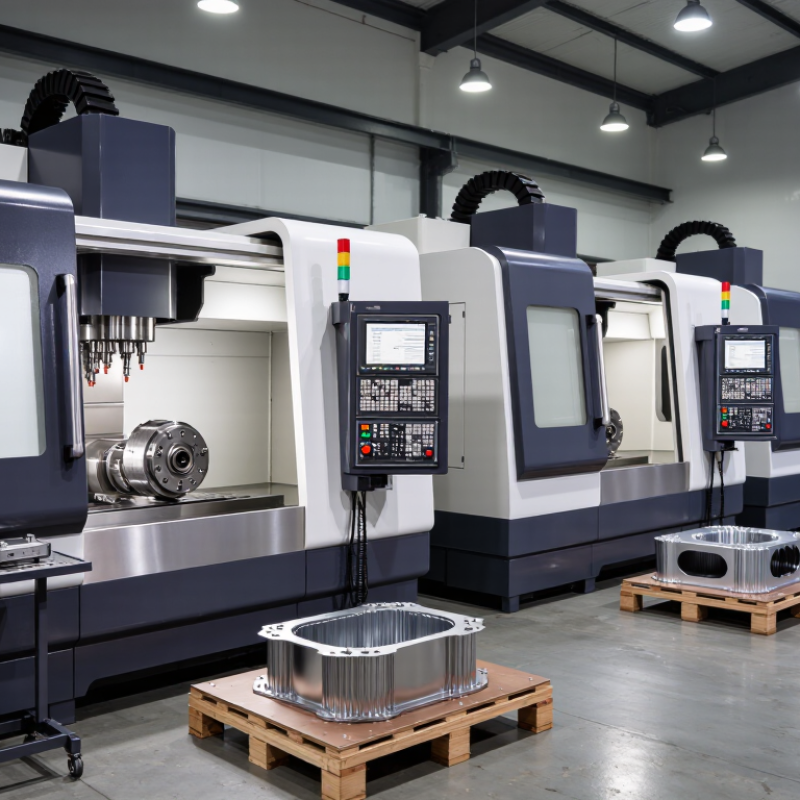
A CNC machining center is a computer-controlled machine tool that removes material with rotating cutters. Unlike a basic mill, it typically has an automatic tool changer. This allows drilling, milling, boring, and tapping during one setup. Less handling. The machine’s main components include a spindle, worktable, controlled axes, enclosure, and coolant system. Together, they guide the cutting tool and help manage heat and chips.

Many centers have three axes, while more complex models add rotary movement for angled or multi-sided features. Vertical designs suit many general-purpose jobs; horizontal designs can help with parts requiring access from several sides. The label can mislead. A machine’s capabilities depend on its configuration, tooling, workholding, and control system—not just its advertised axis count. A practical example is an aluminum housing: its pockets, bolt holes, and flat surfaces may all be machined in one setup, if the fixture holds it securely.

When comparing machining centers made in China, match the machine to the parts and expected production volume. Check the working envelope, spindle specifications, tool capacity, and stated positioning accuracy. Ask how accuracy is tested, and request a sample cut when possible. Specifications do not tell the whole story. A capable machine can still produce poor results if it is installed badly, maintained inconsistently, or paired with unsuitable tooling. Service access and clear maintenance records matter too.

CNC Machining Center Configurations: Typical Controlled Axes

A machining center is a computer-controlled machine tool that can perform multiple cutting operations, commonly including milling and drilling, with automatic tool changes.

Axis counts describe representative configurations, not a quality ranking. Actual capabilities vary by machine setup; 5-axis machines can orient the tool or workpiece from multiple directions, while 3-axis machines move along three linear axes.

What Types of CNC Machining Centers Are Made in China?

China-made CNC machining centers cover several common layouts, each suited to different parts and production needs. Vertical machining centers have a downward-facing spindle and a table that holds the workpiece. They are widely used for milling pockets, drilling holes, and machining flat surfaces. Operators can often see the cutting area clearly, which helps during setup. A horizontal machining center places the spindle sideways. With suitable pallet systems, it can machine several faces of a part while reducing manual repositioning.

Five-axis centers move the tool, table, or both along additional rotational axes. They can reach angled surfaces and complex contours in fewer setups, but programming and process planning demand care. Gantry and bridge-type machines provide a larger working envelope for long panels, molds, and other bulky components. Compact drill-and-tap centers suit smaller parts and short cycle times. Not every shop agrees.

The right type depends on the part’s size, material, required tolerances, and expected output. Check spindle speed and torque, tool capacity, axis travel, and how chips leave the cutting area. For example, deep cavities may need stronger chip evacuation than shallow aluminum features. A machine’s brochure cannot reveal every setup challenge. Even a capable five-axis model may be a poor fit if operators lack training or the parts rarely need multi-sided access. Planning the work matters as much as choosing the configuration.

Which Manufacturers Lead China’s CNC Machining Center Industry?

China’s leading CNC machining-center manufacturers are best assessed by engineering depth, not shipment volume alone. Look for rigid castings, stable spindle performance, reliable tool changers, and control systems that suit the buyer’s materials and tolerances. The National Bureau of Statistics of China reported output of 615,000 metal-cutting machine tools in 2023, up 6.4% year on year. This figure covers machine tools broadly, not machining centers alone.

The International Federation of Robotics’ World Robotics 2024 report recorded 276,288 industrial robots installed in China in 2023, about 51% of global installations. That signals a strong automation ecosystem, but it does not rank machine-tool makers. A useful signal, not proof. Manufacturers with in-house testing, documented accuracy checks, and accessible service teams offer stronger evidence of capability than a polished catalogue.

Buyers should compare repeatability and cutting results on their actual workpiece material. Ask for test cuts, spindle runout measurements, and service response times. Inspect chip evacuation, too; swarf around a crowded machine can reveal design weaknesses quickly. Public data rarely separates CNC machining centers from wider machine-tool categories, so rankings should be treated cautiously. This comparison remains imperfect. A supplier’s results on one part may not transfer neatly to another.

What Are the Best CNC Machining Centers in China? A Practical Comparison of Leading Machine Types

This comparison covers commonly available CNC machining-center configurations, not named brands or a market-share ranking. Specifications vary by model, options, tooling, and test conditions; confirm them in the manufacturer’s technical documentation and acceptance test.

Machining-center type Typical axis configuration Common applications Main advantages Key checks when comparing manufacturers
Vertical machining center (VMC) Usually 3 linear axes; optional rotary table or trunnion for additional axes Prismatic parts, plates, molds, fixtures, and general-purpose milling Broad availability, straightforward workholding, and access to the workpiece from above Axis travel, table size and load rating, spindle taper, tool capacity, chip evacuation, and verified positioning performance
Horizontal machining center (HMC) Typically 3 linear axes with a rotary pallet or indexing table Box-shaped components and production work requiring machining on multiple sides Horizontal spindle orientation can support chip removal; pallet systems can reduce workpiece changeover time Pallet dimensions and load, indexing accuracy, pallet-change arrangement, spindle specifications, and automation compatibility
Five-axis machining center Three linear axes plus two rotary axes; simultaneous or indexed operation depends on the machine Complex surfaces, impellers, aerospace components, medical parts, and multi-face machining Can reach multiple part faces in fewer setups and machine complex geometries with suitable CAM programming Rotary-axis travel and load, work envelope, collision limits, calibration method, thermal behavior, and five-axis test results
Gantry or bridge-type machining center Commonly 3 linear axes, with optional rotary axes or attachment heads Large molds, dies, panels, and oversized components Large working envelope and support for heavy or wide workpieces Effective travel, table capacity, machine footprint, structural stiffness, head configuration, and accuracy across the full travel range
High-speed machining center Often 3-axis or 5-axis; configuration depends on the intended material and process Aluminum components, electrodes, precision mold work, and fine-detail machining High spindle speed and responsive motion can suit small tools and light cutting, when matched to the application Spindle speed and power curves, tool-holder system, balance requirements, cooling, vibration behavior, and surface-finish test parts
CNC drilling and tapping center Usually 3 linear axes; rotary-axis options depend on the model Small parts with repeated drilling, tapping, and light milling operations Designed for short-cycle operations and frequent tool changes in suitable production environments Tool-change time under stated conditions, spindle torque, tapping capability, worktable capacity, and cycle-time validation on sample parts
CNC mill-turn center Turning axes with driven-tool capability; axis count and configuration vary Components that require both turning and milling operations Can combine operations on one machine and reduce transfers between separate turning and milling equipment Turning capacity, driven-tool power, axis synchronization, bar or part-handling options, and demonstrated cycle time

How Do Chinese Machining Centers Compare in Performance and Cost?

Chinese machining centers can deliver strong value, but purchase price alone says little about performance. Compare spindle power, positioning accuracy, repeatability, thermal compensation, and tool-change time against your actual parts. A machine cutting aluminum brackets may behave differently from one milling hardened steel for eight-hour shifts. Ask suppliers for test cuts using your material, tooling, and tolerances.

China’s manufacturing base supports a wide automation ecosystem. The International Federation of Robotics reported 276,288 industrial robot installations in China in 2023, equal to 51% of global installations. That figure reflects factory automation, not CNC accuracy, so treat it as context—not proof that any individual machine is better.

Cost comparisons also need a consistent specification: include installation, tooling, maintenance, spare parts, service response, and expected downtime. A lower quote can become expensive if local support is slow. And specifications on paper may not match shop-floor results.

Tips: Request a sample-part inspection report and a written service-response commitment. Compare total cost over five years, not just the machine price. Small differences matter. Ask about them.

What Factors Matter When Choosing a CNC Machining Center?

What Are the Best CNC Machining Centers in China?

Choosing a CNC machining center starts with the part, not the machine’s headline specifications. Match work envelope, axis travel, and spindle torque to your largest, heaviest, and most demanding components. A compact aluminum housing needs different rigidity and cutting power than a deep steel mold. Check repeatability under real cutting conditions, not just the finest figure in a brochure.

Automation readiness also matters. The International Federation of Robotics’ World Robotics 2024 report recorded 276,288 industrial robot installations in China in 2023, about 51% of the global total. This points to a strong automation ecosystem, but it does not guarantee that a particular shop can integrate a machine smoothly. Verify control compatibility, tool-change time, local service response, and spare-parts access. Downtime has a cost. So does buying capacity you rarely use.

Tips: Ask for a test cut using your material and a representative drawing. Measure the finished part, inspect chip evacuation, and record cycle time. Compare energy use and maintenance needs over several years, not only purchase price. One detail is easy to miss: operator training can take longer than expected. I would treat that as a real cost, even when the supplier’s estimate looks optimistic.