7 Best Trolley Elevators for Global Buyers
Moving goods between floors can turn a simple workday into a slow one. A Trolley Elevator helps carry loaded carts, boxed stock, and equipment between levels with less manual lifting. Yet the right choice depends on the building, the trolley, and the load—not just the advertised capacity.
A platform that fits one cart may be awkward for another. Measure the trolley, including its handles and wheels. Check doorway width, landing space, travel height, and available power before comparing models. Small details matter. A tight landing can make loading difficult, while frequent daily cycles may call for a different duty rating. These practical checks are easy to overlook.
This guide introduces seven trolley elevator options for global buyers and explains the specifications worth comparing. Look closely at rated load, platform dimensions, travel speed, controls, guarding, and emergency features. Also ask about installation requirements, spare parts, warranty terms, and local service support. Published specifications are useful, but they do not replace a site assessment. Requirements differ by building and application.
No single model suits every warehouse, workshop, or retail space. A lower-cost unit may meet basic needs, yet prove inconvenient when loads change. That deserves a second look. Compare each option against real operating conditions, and confirm important details with the manufacturer or a qualified installer. This shortlist is a starting point, not a substitute for careful evaluation.
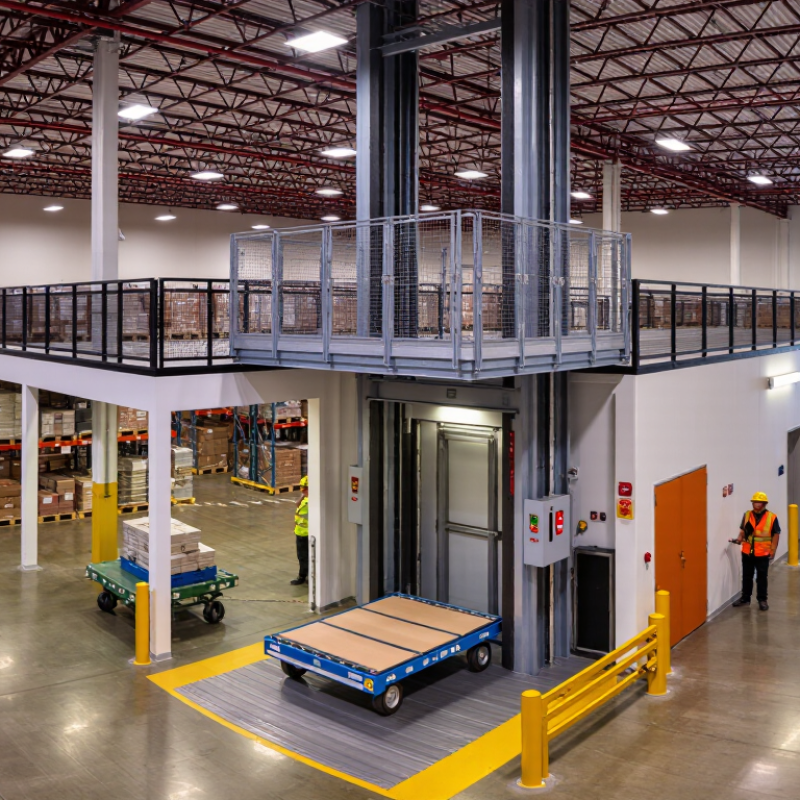
What Trolley Elevators Are and How They Work
A trolley elevator moves wheeled carts between floors in a warehouse, kitchen, workshop, or other busy facility. Unlike a passenger lift, it is designed around loads, clearances, and repeated deliveries. The trolley rolls into a cabin or onto a platform, so its wheel width and turning space matter. Small details matter.
A typical system uses a guided platform, a lifting mechanism, floor-level controls, and doors or gates. Depending on the building and load, the platform may rise through hydraulic power or a motor-driven traction system. The operator positions the trolley, secures it if needed, closes the gate, and selects the destination. Safety interlocks prevent movement when access points are open. On arrival, the platform stops level with the floor, reducing the awkward bump that can spill a tray or shift a box.
Capacity is only part of the decision. Measure the largest loaded trolley, including handles, and consider how staff approach the entrance. Check the travel height, loading frequency, and available installation space with a qualified lift professional. A design that fits the drawing may still feel cramped during a busy shift. That is easy to miss. Site conditions and maintenance needs should shape the specification, not just the price.
7 Best Trolley Elevators for Global Buyers - What Trolley Elevators Are and How They Work
A trolley elevator is a lifting system that moves a wheeled trolley and its load between different heights or floors. The options below are common system types, not specific products. Capacity and travel figures are indicative ranges; actual specifications depend on the design, site, and applicable regulations.
| System type | Typical rated load | Typical vertical travel | How it works | Best suited to | Key considerations |
| 1. Hydraulic goods lift | About 500–5,000 kg | About 2–12 m | A hydraulic pump moves a cylinder or lifting mechanism to raise and lower the platform. | Warehouses and workshops moving loaded trolleys between a small number of levels. | Requires suitable space for the lift and hydraulic equipment; speed and duty cycle vary by design. |
| 2. Traction goods lift | About 500–5,000 kg | About 5–30 m | A motor drives ropes or belts over a sheave to move a counterweighted or suspended car. | Multi-storey sites with regular trolley movements and longer travel distances. | Needs a suitable shaft and building structure. Design, access control, and safety provisions depend on local rules. |
| 3. Vertical reciprocating conveyor (VRC) | About 250–5,000 kg | About 2–15 m | A powered platform travels vertically between fixed loading and unloading points. | Dedicated goods transfer in factories, distribution centres, and mezzanine areas. | Generally designed for goods rather than passengers; guarding and interlocked access gates are important. |
| 4. Scissor lift table | About 100–2,000 kg | About 0.5–4 m | Hydraulic cylinders open a linked scissor mechanism to raise a platform. | Short lifts, workstations, and loading points where a trolley needs to reach a nearby level. | Check platform size, wheel restraint, pit or ramp requirements, and pinch-point protection. |
| 5. Dock lift | About 1,000–6,000 kg | About 0.3–2 m | A platform raises or lowers goods to bridge differences between a dock, vehicle, or ground level. | Loading bays where wheeled trolleys need to move across changing heights. | The rated capacity must account for the trolley, goods, and any concentrated wheel loads. |
| 6. Inclined platform lift | About 100–500 kg | Route-dependent; commonly a few metres of rise | A powered platform runs along an inclined rail between levels. | Sites where a vertical shaft is impractical and the route can accommodate a rail. | Confirm trolley dimensions, slope, platform restraint, weather exposure, and local approval requirements. |
| 7. Continuous vertical conveyor | Often about 50–500 kg per carrier | System-dependent; can serve multiple levels | A looped conveyor carries compatible platforms or carriers continuously between elevations. | High-throughput operations with repeated, standardised loads and fixed routes. | Usually requires purpose-designed carriers; standard free-rolling trolleys may not be compatible. |
Selection note: compare the total moving load (trolley plus goods), platform dimensions, wheel and floor conditions, travel height, operating frequency, loading method, guarding, and local safety requirements. A goods-only lifting system should not be used to carry people unless it is specifically designed and approved for that purpose.
Main Types and Specifications of Trolley Elevators
Trolley elevators are commonly supplied as enclosed goods lifts, open platform lifts, or vertical reciprocating conveyors. Enclosed models suit warehouses where carts travel between floors behind gates. Open platforms allow fast loading, but need controlled access and clear operating procedures. Hydraulic systems often serve short, low-rise routes; traction or screw-driven designs may suit other travel distances and duty patterns. The right mechanism depends on the building and workload.
Compare rated capacity, platform size, travel height, lifting speed, and daily cycle count. A 500-kilogram rating may sound generous, yet a wide cart can exceed the platform footprint. Measure the cart, including handles and protruding loads. Allow room for turning. Check door clearances, floor loading, power supply, and whether the lift can stop accurately at each landing. These details affect routine use more than a headline speed figure.
Safety features deserve equal attention. Look for interlocked gates, emergency stops, overload protection, and safeguards against unintended movement. Ask how the lift is inspected and maintained, and confirm that its controls fit the operators’ training. One detail gets overlooked: a specification sheet may describe ideal conditions, not a busy shift with frequent starts. Compare realistic duty-cycle requirements before choosing; otherwise, even a well-sized elevator can feel like the wrong fit.
Seven Trolley Elevators for Global Buyers
Seven trolley elevators for global buyers are best compared by layout, load, and daily traffic. A compact single-mast lift suits a small stockroom with limited floor space. A twin-mast model can offer a steadier platform for wider or heavier carts. A goods-only vertical lift moves loaded trolleys between fixed levels, while an enclosed-cage design helps keep carts contained during travel. Check the trolley’s wheelbase and handle height against the platform opening. Small mismatches can cause daily delays.
The other options include a shaft-enclosed elevator for busy buildings, a low-pit model where floor access is restricted, and a mobile lift for flexible work areas. Mobile units need clear travel paths and a stable parking location. Not every site can use one. Buyers should compare rated load, platform dimensions, door clearance, control location, and emergency lowering provisions. Ask suppliers for drawings and installation requirements, then confirm details with qualified local professionals. Requirements differ by site and region.
A practical test is simple: measure the widest loaded trolley, not just the cart frame. Consider wet floors, tight turns, and how often operators open the doors. A lift that looks generous on paper may feel cramped in use. Noise and maintenance access deserve attention too. I would not choose on price alone; that can be a costly shortcut. Request operating information and service plans before ordering.
7 Trolley Elevator Options for Global Buyers
Representative rated-load classes for goods and material lifts (kg). These are indicative reference points, not specifications for individual products.
Choose capacity based on the combined weight of the trolley, goods, and operators where applicable. Confirm the rated load, platform dimensions, travel height, and local safety requirements with the supplier.
How to Compare Capacity, Safety, and Operating Costs
A trolley elevator should match the loads and routes it will handle every day. Compare rated capacity with the heaviest trolley, its cargo, and any operator riding with it. A 500-kilogram load may need more headroom once uneven weight distribution and frequent starts are considered. Check platform dimensions too: a narrow entrance can make a suitable lift awkward to use. Small details matter.
Safety features deserve a close look. Review door interlocks, overload protection, emergency stops, and how the lift behaves during a power interruption. Ask for maintenance intervals and clear inspection records, not just a list of features. Operating costs include electricity, routine servicing, replacement parts, and downtime. A lower purchase price can become expensive if local technicians or parts are hard to find. Estimates vary; site conditions can change them.
Tips: Ask suppliers for a duty-cycle estimate based on your actual trips per hour. Compare energy use under similar load conditions. Confirm available service support near your facility, and leave room for future load changes. I would not rely on capacity figures alone. They do not tell the whole story.
What to Check Before Buying a Trolley Elevator Internationally
Before ordering a trolley elevator across borders, define the heaviest trolley-and-cargo load. Compare it with the rated capacity, platform dimensions, and trolley wheelbase. A platform that looks generous on paper may leave too little room for turning or securing a load.
Measure the doorway, floor opening, and overhead clearance at the installation site. Small details matter. Confirm lift height and travel speed, then check that the power supply matches the destination’s voltage and frequency. Ask how the controls handle stops between floors and what happens during a power failure.
Review the safety features and operating documents before comparing prices. Request details on guards, interlocks, emergency lowering, and overload protection. Check which inspection records, user manuals, and technical documents are supplied, and whether they are available in a useful language for operators.
Requirements can vary by destination, so confirm applicable local standards with a qualified local professional. Do not guess. Get shipping dimensions, packaging details, delivery terms, and a clear list of excluded installation work.
Ask how replacement parts are identified and shipped, and what remote technical support can realistically cover. Specifications are not always directly comparable; suppliers may use different test conditions or definitions. That is easy to miss. Keep written answers alongside the quotation, and verify critical measurements at the site before the order is released.