post thumbnail
Our pricing model is flexibly designed to give you the most possible advantages of a continuing partnership.

What Are the Best UPVC Door Hinges in 2026?

Choosing the best Upvc Door Hinges in 2026 means looking beyond a shiny finish or a low price. A hinge must support the door’s weight, allow smooth movement, and help it close evenly against the frame. On a busy entrance, you may notice the difference every day: a stiff handle, a dragging corner, or a faint rattle in the wind. Small details matter.

This guide compares common hinge types and practical features, including adjustment options, materials, security-related design, and compatibility with your existing door. It also explains what to check before buying, since hinge size, fixing points, and door construction can vary between systems. A product described as “heavy duty” is not automatically right for every door. Check the manufacturer’s measurements and installation guidance, and ask a qualified fitter if the door is badly misaligned or its weight is uncertain. That is the safer call.

There is no single best choice for every home. A coastal property, a frequently used back door, and a sheltered porch can place different demands on hardware. Reviews can help, but they do not replace checking the hinge against your actual door. I have found that the obvious feature is not always the useful one. This overview aims to make the comparison clearer, while leaving room for the fact that real doors can be awkward.
What Are the Best UPVC Door Hinges in 2026?

What UPVC Door Hinges Are and How They Work

What Are the Best UPVC Door Hinges in 2026?

What UPVC Door Hinges Are and How They Work

A UPVC door hinge connects the door sash to its frame and carries the door’s weight as it swings. Common designs include flag and butt hinges. Inside each hinge, a pin or pivot guides rotation, while the fixing plates transfer force into the door and frame.

Small parts, significant job. If screws loosen or the door drops, the latch may scrape and the weather seal may compress unevenly.

Many modern hinges allow adjustment in three directions: height, side-to-side position, and compression against the seal. This helps installers correct a door that catches at the threshold or leaves a visible gap near the lock. Adjustments should be gradual; overtightening can distort the seal or stress fixings. I would not assume every hinge offers all three adjustments. Check the hinge’s specification and the door manufacturer’s guidance.

For single-axis hinges, BS EN 1935:2002 classifies endurance performance; its higher grades include 200,000 and 300,000 test cycles. These figures describe controlled testing, not a guaranteed service life in every home. Dirt, poor alignment, and repeated slamming change real-world wear. A useful inspection is simple: watch the hinge while opening the door, listen for grinding, and check for movement around its fixings. The standard is a benchmark, not a crystal ball.

The Main Types of UPVC Door Hinges

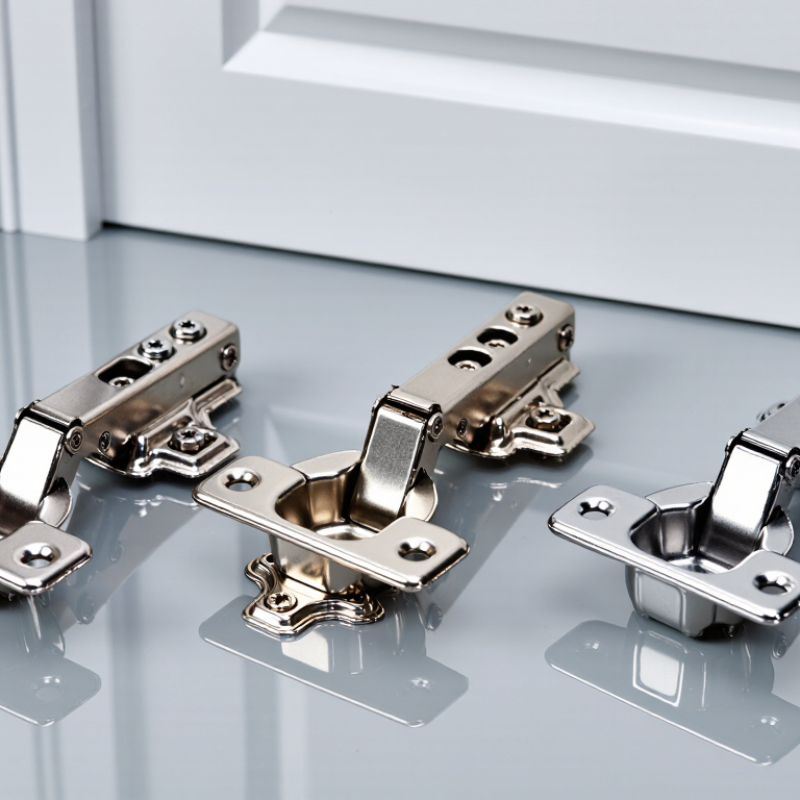
UPVC doors commonly use flag, butt, or rebated hinges. Flag hinges are easy to spot: a visible hinge body sits between the door and frame. Many models allow adjustment in three directions, which can help correct a door that rubs at the bottom or catches near the lock. Check the hinge’s stated load capacity and adjustment range; appearance alone tells you little. Small changes matter.

Butt hinges have a more traditional shape, with two leaves joined by a pin. Some modern versions offer adjustment, though the range varies, so confirm the design before buying. Rebated hinges suit doors whose edges overlap the frame rather than sitting flush against it. Their shape must match the door’s rebate. A mismatch can leave gaps or prevent the door from closing properly.

The right type depends on the door profile, weight, and existing fixing points. Before replacing a hinge, inspect the screw holes, measure the hinge, and look for sagging or worn seals. A door that sticks may need alignment, not a stronger hinge. It is tempting to blame the hardware first. That is not always right. When details are unclear, a door installer can identify the hinge type without guesswork.

Features That Set the Best Hinges Apart in 2026

A good UPVC door hinge should match the door’s weight, profile, and opening direction. Appearance matters less than a secure fit. Check the manufacturer’s stated load capacity and adjustment range before choosing. Many quality hinges allow vertical, horizontal, and compression adjustments, helping correct a door that catches or leaves uneven gaps. That matters.

Durable materials and protected moving parts help hinges cope with rain, temperature changes, and frequent use. Look for corrosion-resistant metal components and covers that shield adjustment points without making servicing difficult. Smooth movement is useful, but it should not come at the cost of stability. A hinge that feels stiff may need adjustment; forcing it can damage the fitting or door profile.

Security features deserve a close look. Fixed hinge pins or anti-lift designs can make removal harder when the door is closed, though their effectiveness depends on correct installation. Check the screw positions and the condition of the frame, too. Even a well-made hinge can perform poorly if it is loose or incompatible. One detail is easy to overlook: seals can compress differently over time, so a small seasonal adjustment may be needed. That is not always a fault, but it is worth monitoring.

What Are the Best UPVC Door Hinges in 2026?

A standards-based look at hinge durability: EN 1935 endurance classes are defined by the number of test cycles completed.

EN 1935 class 4 corresponds to 25,000 test cycles and class 7 to 200,000. Higher endurance is one useful selection factor; confirm that a hinge is compatible with the door, frame, load, and required corrosion resistance.

How to Choose Hinges for Your UPVC Door

What Are the Best UPVC Door Hinges in 2026?

How to Choose Hinges for Your UPVC Door

The best hinge is the one that matches your door’s weight, profile, and existing fixing points. Many uPVC doors use flag hinges, which allow adjustment after installation. Check whether the door sags, rubs the frame, or leaves uneven gaps before choosing a replacement. These clues can point to alignment or wear, not just a faulty hinge. Measure carefully. A hinge that looks similar may not fit the original cut-outs.

Look for an appropriate load rating and corrosion resistance, especially for doors exposed to rain. EN 1935, the European hinge classification standard, includes durability testing; Grade 7 hinges are tested for 200,000 cycles. That figure is a useful comparison, not a promise of service life in every home. Also check the manufacturer’s stated door-weight limit and whether the hinge offers height, lateral, and compression adjustment. If you are unsure, compare the fixing positions and hinge dimensions with the door’s specifications.

Tips: Photograph the hinge from several angles before removing it. Check screw length and frame condition, too. A quick adjustment may solve a small alignment problem, but worn parts need proper assessment. Don’t assume every uPVC door uses the same hinge.

Best UPVC Door Hinge Options by Use Case

For a busy front door, choose adjustable flag hinges with accessible height and compression controls. They allow small corrections when seasonal movement makes the door scrape the threshold. A practical check: confirm the hinge suits the door’s profile, weight, and fixing points. A strong-looking hinge can still fail early if screws bite only into thin plastic. Fit matters.

For heavier doors or frequent use, prioritize documented load capacity and tested durability over decorative covers. BS EN 1935:2002 classifies single-axis hinges by performance; its Grade 7 durability level represents 200,000 test cycles. Ask for test evidence matching the hinge model, not a general product claim. For exposed locations, corrosion-resistant materials and protected pin details deserve attention, especially near salt air. Still, no rating guarantees trouble-free service. Installation quality, alignment, and periodic inspection matter too. Measure the existing hinge carefully before ordering; profile names are not always consistent, and that detail is easy to miss.

What Are the Best UPVC Door Hinges in 2026? — Best UPVC Door Hinge Options by Use Case

Use case Suitable hinge type Why it fits What to check before choosing
General replacement Matching replacement hinge The closest match to the existing hinge is usually the simplest route when the door, frame, and fixing positions are staying in place. Compare hinge type, dimensions, screw-hole positions, opening direction, profile clearance, and adjustment range. Similar-looking hinges are not always interchangeable.
Routine adjustment after installation Adjustable butt or flag hinge Adjustment features can help correct door alignment without repositioning the entire hinge, when the hinge design and installation allow it. Check which directions can be adjusted, the available adjustment range, and whether adjustments can be made with the door installed.
Fine alignment in multiple directions Three-way adjustable hinge Depending on the design, three-way adjustment allows alignment in height, side-to-side position, and compression against the seal. Confirm the hinge actually provides all three adjustments and is compatible with the door profile and existing fixing points.
Flush-fitting or rebated door profile Hinge designed for the specific rebate or profile A profile-matched hinge can provide the clearance needed for the door to open and close without binding. Measure the rebate and check the hinge’s specified door and frame compatibility; do not select by appearance alone.
Heavy or frequently used door Load-rated hinge set specified for the door The correct hinge set must be suitable for the door’s weight, dimensions, construction, and expected use. Use the hinge maker’s rated capacity and installation guidance. Capacity depends on the hinge model, number of hinges, fixing method, and door construction.
Door exposed to weather Corrosion-resistant hinge with suitable finish Materials and finishes intended for the installation environment can help resist corrosion and maintain operation. Check the stated material or corrosion-resistance information and follow the specified cleaning and maintenance instructions.
Security-conscious replacement Compatible security hinge or hinge with anti-lift features Some hinge designs include features intended to help resist lifting or tampering when the door is closed. Check that the feature engages correctly with the frame and is compatible with the complete door assembly; a hinge alone does not determine overall door security.
Door rubbing or failing to latch Adjustment or repair of the existing hinge system Misalignment can result from hinge adjustment, loose fixings, door movement, or other issues; replacing hinges is not always the only remedy. Inspect the fixings, frame, seals, and locking points. If the door is damaged or the cause is unclear, seek a qualified door installer.

Selection note: There is no single best UPVC door hinge for every door. Confirm the door profile, hinge dimensions, fixing positions, adjustment features, and load rating against the door and hinge specifications before buying.