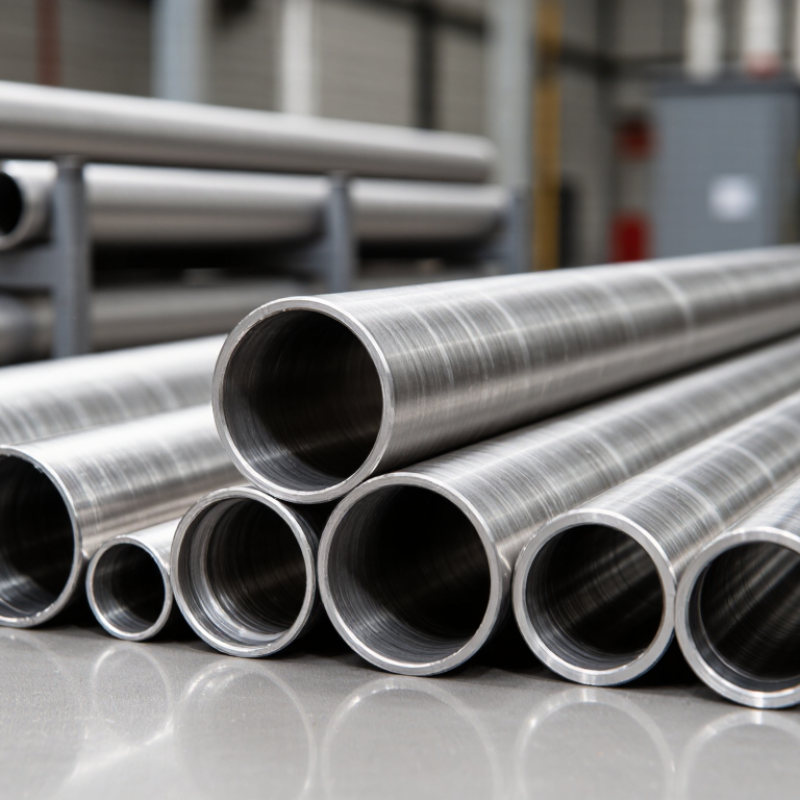
post thumbnail
Our pricing model is flexibly designed to give you the most possible advantages of a continuing partnership.

China Best Stainless Steel Welded Pipe Supplier?

Choosing the right China supplier for Stainless Steel Welded Pipe takes more than comparing prices. Buyers need to examine grade, dimensions, welding method, finish, and inspection records together. A polished surface helps, but it cannot tell you how consistently the pipe was made. Looks can mislead.

Welding-metallurgy author John C. Lippold’s published work offers a useful principle: weld reliability depends on controlled procedures and sound inspection, not appearance alone. This is a paraphrase, not a verbatim quotation. For buyers, that means asking how each production lot is checked, which testing methods are used, and whether the supplier can provide traceable material documents. Request sample specifications and confirm tolerances before approving a bulk order. A certificate is useful, but paperwork alone cannot prove every production run.

This guide explores how to assess Chinese manufacturers, compare product capabilities, and ask sharper questions before selecting a Stainless Steel Welded Pipe supplier. It considers practical details such as weld-seam consistency, surface condition, packaging, lead times, and communication during order changes. These details matter when pipes must fit a real installation, not just a neat spreadsheet. No single supplier is best for every project. The right choice depends on service conditions, required standards, inspection needs, and delivery expectations. Some buyers may still overlook small inconsistencies during sampling; that is worth reviewing, not ignoring.

China Best Stainless Steel Welded Pipe Supplier?

What Stainless Steel Welded Pipes Are and How They Are Made

China Best Stainless Steel Welded Pipe Supplier?

What Stainless Steel Welded Pipes Are and How They Are Made

Stainless steel welded pipe is formed from a flat strip or coil. Rollers gradually bend the metal until its edges meet in a round shape. A controlled welding process joins those edges along one continuous seam. Depending on the material and production setup, manufacturers may use TIG, laser, or another suitable method. The pipe is then sized to meet its specified diameter and wall thickness. It looks straightforward on paper. In practice, edge alignment and steady heat matter greatly.

After welding, the seam may be inspected and the pipe may undergo heat treatment or surface cleaning. Pickling or passivation can help remove heat tint and support corrosion resistance, when appropriate for the grade and specification. Checks may include measurements, visual inspection, and non-destructive testing. Requirements vary, so a single test should not be treated as proof of suitability for every application. A polished surface alone proves little.

Tips: Ask for the steel grade, wall thickness, and applicable test records. Check that the stated dimensions match your drawing. For corrosive service, confirm the finish and cleaning requirements before ordering.

Why China Is a Major Source of Stainless Steel Welded Pipes

China has become a major source of stainless steel welded pipes because its production base is unusually broad. The International Stainless Steel Forum reported global stainless crude steel production of about 58.4 million tonnes in 2023. China contributed approximately 36.7 million tonnes, or nearly 63% of the total. This scale supports competitive pricing, short material lead times, and flexible production for food processing, chemical plants, water systems, and construction projects.

The supply chain is visible on the factory floor. Coils arrive by truck, pass through forming mills, and leave as welded pipes with polished or pickled surfaces. Many qualified suppliers can provide mill certificates, PMI checks, weld inspection records, and hydrostatic test results. Product selection should still follow the project standard, such as ASTM A312 or EN 10217-7. The World Steel Association recorded China’s crude steel output at about 1.02 billion tonnes in 2023, showing the depth of its supporting steel ecosystem. Yet scale is not proof of consistency. A low quotation may reflect thinner inspection, unstable tolerances, or unclear surface requirements. Buyers should compare sample results, audit production controls, and verify traceability before choosing the best Chinese supplier. The decision is less about geography than evidence.

China Best Stainless Steel Welded Pipe Supplier? Why China Is a Major Source

Stainless steel welded pipes are commonly specified by grade, corrosion resistance and alloy chemistry. The chart compares representative chromium and nickel content for widely used grades in global industrial sourcing.

Values show representative midpoint percentages by weight based on commonly specified chemical ranges for stainless steel grades 201, 304 and 316L. Actual requirements should be confirmed against the applicable ASTM, EN or other project specification.

Which Grades, Standards, and Applications Buyers Should Know

Choosing a stainless steel welded pipe supplier in China requires more than comparing quoted prices. Buyers should match the grade to the fluid, temperature, pressure, and forming method. Grade 304 suits many food, water, and architectural systems. Grade 316 or 316L offers better resistance to chlorides and marine exposure. Grade 321 handles elevated temperatures more confidently. Duplex 2205 can provide higher strength, but welding procedures need closer control. The cheapest grade may become expensive after corrosion repairs.

Specifications should state standards, not vague “international quality.” ASTM A312 commonly covers welded pipe for pressure service, while ASTM A269 suits general instrumentation and corrosion-resistant tubing. EN 10217-7 may apply to welded stainless tubes for pressure purposes. Confirm outside diameter, wall thickness, tolerance, surface finish, and heat treatment. Ask for heat numbers and material test certificates. PMI testing can verify alloy chemistry. Weld records, hydrostatic results, and dimensional reports add useful evidence. Still, paperwork is not proof by itself.

Applications change the inspection plan. Sanitary lines may require smooth internal surfaces and controlled weld beads. Chemical plants often need chloride testing, pickling controls, and corrosion review. Exhaust systems need thermal cycling checks. Request sample photos, weld samples, and pre-shipment inspection when risk is high. A capable supplier should explain limitations without hiding behind certificates. No checklist is perfect. Even experienced buyers sometimes overlook support spacing or thermal expansion. Small details matter. Compare responses, not promises, and keep every agreed requirement in the purchase order.

How to Assess a Chinese Supplier’s Quality and Capabilities

China Best Stainless Steel Welded Pipe Supplier?

How to Assess a Chinese Supplier’s Quality and Capabilities

A supplier’s brochure can look impressive, but it cannot show how a pipe performs under pressure. Ask for recent mill test certificates that match the quoted grade, dimensions, and heat numbers. Then check whether each bundle can be traced back to its production records. Review the welding process, inspection plan, and applicable product standards. Look for documented checks of wall thickness, ovality, surface finish, and weld integrity. Details matter.

Visit the factory if practical, or request a live video walkthrough of the production line and inspection equipment. Ask how operators handle rejected pipes and maintain calibration records. A sample order can reveal packaging quality, dimensional consistency, and response time. Still, one good sample does not prove every production batch will match. I would compare a few measured samples against the purchase specification, not rely on appearance alone. Communication is part of capability, too. Slow, vague answers can become costly later.

Tips: Send a clear specification with grade, size tolerance, length, finish, testing, and packaging requirements. Ask for sample inspection records and a production schedule. Confirm which tests are performed in-house and which use an independent laboratory. Keep the first order manageable. A careful supplier should explain limitations plainly, not promise perfection.

China Best Stainless Steel Welded Pipe Supplier? - How to Assess a Chinese Supplier’s Quality and Capabilities
Assessment Dimension What to Verify Suitable Evidence or Test Evaluation Guidance Relevant Standard or Reference
Product-standard fit Confirm that the proposed pipe standard matches the application, product form, grade, dimensions, and governing code. Purchase specification, quotation, drawings, and the supplier’s production and inspection plan. Check the exact standard and edition stated in the order. Do not treat different product standards as interchangeable. Examples include ASTM A312 for austenitic stainless steel pipe; ASTM A358 for electric-fusion-welded austenitic alloy steel pipe; EN 10217-7 for welded stainless steel tubes for pressure purposes.
Material grade and traceability Verify the specified grade, heat number, and link between the material certificate and the delivered pipe. Material test certificate, heat-number records, bundle or pipe markings, and documented traceability records. Match grade and heat number across documents and markings. Confirm that the certificate covers the actual supplied material. EN 10204 describes types of inspection documents, including type 3.1. The required document type should be stated in the purchase contract.
Chemical composition Check reported alloying elements against the ordered grade’s chemical requirements. Heat-analysis results on the material certificate; independent laboratory testing or portable positive material identification (PMI) when appropriate. Compare results with the specified material standard and grade. PMI is a verification aid and does not replace a complete laboratory chemical analysis. Use the chemical limits in the applicable product or material specification.
Mechanical properties Review tensile properties and any other mechanical requirements specified for the product. Material certificate and test reports identifying the test method, results, and material heat or lot. Check that the reported values meet the ordered grade and product-standard requirements; verify additional requirements in the contract. Applicable product and material specification; referenced test methods depend on the order and governing standard.
Welding process and control Assess whether welding procedures, personnel qualifications, and production controls suit the ordered pipe and weld process. Welding procedure specifications, procedure qualification records where required, welder or operator qualification records, and weld-production logs. Confirm that documented controls cover the actual process and product. Requirements depend on the contract, application, and governing code. ISO 3834 specifies quality requirements for fusion welding of metallic materials; the applicable level and scope should be agreed for the project.
Weld and surface condition Inspect weld appearance, surface condition, ends, and any finishing required by the specification. Visual inspection records, production photographs where useful, and inspection of representative finished pipes. Compare workmanship and finish with the purchase specification and applicable acceptance criteria; visual inspection alone does not establish internal soundness. Acceptance criteria should come from the ordered product standard, project specification, or agreed inspection plan.
Non-destructive examination Confirm the required examination method, coverage, acceptance criteria, and examination records. Applicable NDT procedure, operator qualifications where required, equipment records, and reports traceable to pipe or lot identification. Verify that the method and extent of examination meet the order. Do not assume every standard or application requires the same NDT method or coverage. ISO 10893 is a series of standards for non-destructive testing of steel tubes; the relevant part depends on the method and product requirements.
Dimensions and tolerances Check outside diameter, wall thickness, length, straightness, and end preparation against the order. Calibration records for measuring equipment and inspection reports with actual readings and sampling details. Use the tolerance limits in the specified product standard or contract. Generic tolerance assumptions can lead to incorrect acceptance decisions. Applicable product standard, approved drawing, and purchase specification.
Pressure or leak testing Determine whether hydrostatic testing, an alternative leak test, or another pressure-related test is required. Test procedure, equipment calibration records, test pressure and duration where applicable, and results linked to the product or lot. Confirm the test method and acceptance criteria against the ordered standard and service requirements; testing requirements vary by product and specification. Applicable product standard and project or purchase requirements.
Heat treatment and corrosion requirements Check whether solution treatment, pickling, passivation, or corrosion-related testing is required for the grade and service. Heat-treatment records, finishing process records, and corrosion-test reports when specified. These requirements are application- and specification-dependent. Request evidence only where the contract or governing standard requires it. ASTM A262 contains practices for detecting susceptibility to intergranular attack in austenitic stainless steels; use only when applicable and specified.
Quality management and corrective action Review document control, inspection planning, nonconformance handling, and corrective-action processes. Quality-management-system certificate with scope and validity, audit records, inspection plans, and anonymized corrective-action examples. Check certificate scope, issuing body, and validity. A management-system certificate does not by itself prove that a particular pipe shipment conforms. ISO 9001 specifies requirements for quality management systems.
Production capacity and delivery control Verify that available equipment, production planning, and subcontracting controls can support the ordered specification and schedule. Facility audit, equipment and process list, production schedule, capacity records, and disclosed subcontracting arrangements. Assess evidence against the requested size range, quantity, inspection needs, and delivery date rather than relying on general capacity claims. Assess against the purchase specification and agreed delivery plan.
Packaging, marking, and shipment records Confirm protection against handling or transit damage and preservation of required identification. Packing specification, marking samples, packing list, and pre-shipment inspection records. Ensure markings and documents remain traceable to the order and that packaging suits the route, handling, and storage conditions. Purchase specification and agreed shipping requirements.
Use this matrix as a supplier-assessment checklist, not as a certification or ranking. Confirm the current edition and applicability of each standard, and agree the inspection scope and acceptance criteria in the purchase contract.

How to Choose a Supplier for Your Project Requirements

China Best Stainless Steel Welded Pipe Supplier?

Choosing a supplier starts with your project conditions, not a price list. Define the stainless steel grade, pipe diameter, wall thickness, length, and surface finish. Then explain the fluid, operating temperature, pressure, and installation environment. A pipe used near the coast may need different corrosion resistance than one carrying dry air indoors. Details matter.

Ask how the supplier controls welding and dimensional consistency. Request material test reports, inspection records, and details of any applicable standards. Check whether the documents match the quoted grade and actual order. If tolerances are critical, confirm them in writing and request a sample or inspection plan. A polished sample can look convincing, but it does not prove every production batch will match.

Tips: Compare quotations against the same specification, including packaging, lead time, and inspection scope. Ask how pipes are protected from scratches and moisture during shipping. Clarify replacement procedures before placing an order. If an answer is vague, pause and ask for evidence; I would not treat a low price as proof of value. Supplier fit can be difficult to judge from a single call, so keep your questions specific and your records complete.