
post thumbnail
Our pricing model is flexibly designed to give you the most possible advantages of a continuing partnership.

China Top 10 Intramedullary Nail Manufacturers

China’s intramedullary nail manufacturers serve a demanding field: fracture fixation must balance stability, surgical practicality, and reliable production. The World Health Organization’s Global Status Report on Road Safety 2023 estimates that 1.19 million people die in road crashes each year. Trauma care is broader than road injuries, but the figure highlights the scale of injury prevention and treatment needs. Every implant matters.

This “China Top 10 Intramedullary Nail Manufacturers” guide examines company experience, product range, quality systems, and export readiness. These details help buyers compare suppliers beyond catalog photographs. A nail’s length markings, locking-hole placement, and instrument fit can affect the operating-room workflow. Regulatory status and clinical evidence also deserve close review; a polished product page is not proof of performance.

Orthopedic trauma researcher Mohit Bhandari is a relevant expert whose published work examines fracture treatment and clinical evidence. However, no verifiable, topic-specific quotation from him was available for this introduction, so I will not invent one. That limitation matters. Market reports also define the intramedullary nail sector differently, making headline revenue estimates difficult to compare without checking each report’s scope. This overview therefore focuses on practical, verifiable manufacturer criteria and treats rankings as a starting point—not a clinical endorsement.
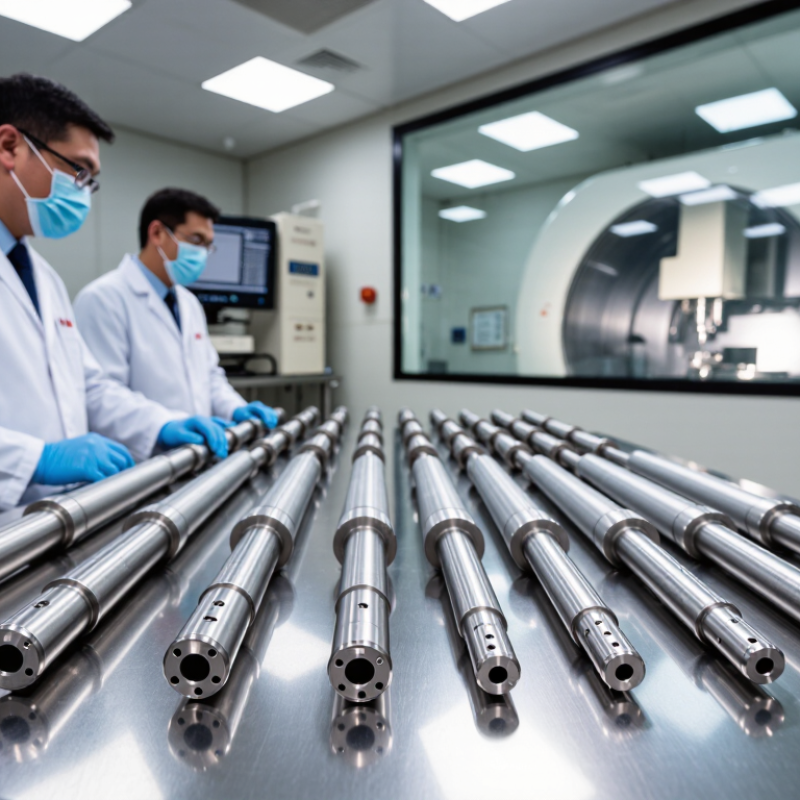
China Top 10 Intramedullary Nail Manufacturers

What Intramedullary Nails Are and How They Work

Intramedullary nails are metal rods placed inside the central canal of a long bone, commonly the femur or tibia. During surgery, the clinician aligns the broken bone and guides the nail through a small entry point. Locking screws pass through the bone and nail, helping control rotation and prevent the fragments from shortening. The implant shares load with the bone while healing tissue forms. It is not a simple splint. The Global Burden of Disease 2019 analysis estimated 178 million new fractures worldwide that year, underscoring the scale of fracture care.

Nail selection depends on the bone’s length, canal shape, fracture pattern, and the patient’s anatomy. X-rays help clinicians check alignment and screw position during and after the procedure. A nail that is poorly matched or positioned can contribute to malalignment or delayed healing. The fit is not always perfect. Even precise planning cannot remove every uncertainty, and intramedullary nailing is not suitable for every fracture. Materials, dimensions, and manufacturing consistency matter, but clinical judgment remains central. A useful implant supports stable healing; it does not replace careful reduction, follow-up, or an individualized treatment plan.

China’s Intramedullary Nail Industry: How the Devices Work

Intramedullary nails are implanted inside the medullary canal of a long bone to stabilize certain fractures. Locking screws pass through the bone and nail to help control rotation and length while the fracture heals.

Illustrative Nail Diameter Ranges by Bone

These approximate ranges reflect commonly used sizes; the appropriate implant depends on the patient’s anatomy, fracture, and implant system.

Surgeons select nail dimensions based on imaging and the dimensions of the medullary canal. This chart is a general reference, not a guide for choosing an implant.

Types and Clinical Applications of Intramedullary Nails

Types and Clinical Applications of Intramedullary Nails

Intramedullary nails run through the central canal of a long bone, helping stabilize fractures while limiting exposure of surrounding tissue. Designs vary by bone, entry point, diameter, and locking-screw configuration. The choice is anatomical. A locked femoral nail is commonly used for shaft fractures; tibial nails stabilize many tibial shaft fractures. Humeral nails may suit selected shaft fractures, though shoulder function and fracture pattern affect the decision. Antegrade and retrograde approaches offer different entry routes. Reamed and unreamed techniques also differ, and neither is ideal for every case.

Clinical guidance matters more than a device’s label. The American Academy of Orthopaedic Surgeons’ 2020 guideline supports reamed intramedullary nailing for adults with femoral shaft fractures. The Global Burden of Disease 2019 analysis, published in The Lancet Healthy Longevity, estimated 178 million new fractures worldwide that year. That figure signals a substantial treatment burden, not a forecast of nail use. Fit matters. Surgeons assess fracture location, bone quality, soft-tissue condition, and patient health before selecting an approach. A nail can provide stable fixation, but alignment and healing still require careful follow-up. The boundary between a good indication and a difficult one is not always tidy.

China’s Intramedullary Nail Manufacturing Landscape

China’s intramedullary nail manufacturing landscape includes suppliers with different capabilities, production scales, and areas of specialization. Common processes include precision machining, implant-grade material control, dimensional inspection, and surface finishing. Some manufacturers also support instrument sets and packaging for sterile supply. These capabilities should be checked product by product; a broad catalogue alone does not prove consistent quality. That matters. Buyers can review technical drawings, material specifications, inspection records, and traceability documents before comparing suppliers. Details vary.

Tips: Request sample inspection data and clarify which tests apply to the exact nail and locking screws under consideration. Check how the supplier manages batch records and changes to materials or processes.

A useful comparison looks beyond unit price. Ask about manufacturing capacity, lead times, quality controls, and support for design or documentation reviews. Where appropriate, assess production sites and discuss how nonconforming parts are handled. A clear answer is more useful than a polished brochure. The landscape is not perfectly transparent, and smaller suppliers may disclose less unless asked specific questions. That deserves a second look. Procurement teams should confirm claims against current documents and qualified technical review, rather than relying on marketing language alone.

China Top 10 Intramedullary Nail Manufacturers - China’s Intramedullary Nail Manufacturing Landscape

Industry-level overview of ten product and manufacturing dimensions relevant to intramedullary nail suppliers. This is not a company ranking and does not attribute capabilities or market shares to individual manufacturers.

No. Dimension Industry-level information Manufacturing relevance
1 Core nail families Common long-bone intramedullary nail families include femoral, tibial, and humeral nails. A broad portfolio may require different nail lengths, diameters, curvature profiles, and insertion instruments.
2 Fracture fixation applications Intramedullary nails are used to stabilize selected fractures of long bones. The appropriate design depends on the bone, fracture pattern, and clinical plan. Product specifications and labeling need to define the intended anatomical site and use.
3 Implant materials Implant-grade titanium alloys and stainless steels are used in orthopaedic implants. Relevant material specifications include parts of the ISO 5832 series. Material selection affects mechanical properties, machining requirements, and the applicable verification plan.
4 Locking architecture Many nail systems use proximal and distal locking screws. Some designs provide static and dynamic locking options. Hole location, screw compatibility, and targeting accuracy are important design and production controls.
5 Proximal femoral designs Cephalomedullary nail designs include a proximal fixation element intended to extend into the femoral head or neck. Designs must specify compatible fixation components and the intended surgical technique.
6 Instrumentation systems Associated instruments can include insertion handles, targeting guides, drill sleeves, depth gauges, and extraction tools. Instrument-to-implant compatibility and repeatable targeting are key system-level considerations.
7 Precision manufacturing Production commonly involves controlled machining operations, such as turning, milling, and drilling, followed by finishing and inspection. Critical dimensions, locking-hole geometry, surface condition, and process traceability require documented controls.
8 Cleaning, finishing, and packaging Implants require controlled cleaning and finishing. Packaging design must protect the device through handling and distribution; ISO 11607 applies to packaging for terminally sterilized medical devices where applicable. Validated processes help maintain cleanliness, packaging integrity, and product identification.
9 Quality and risk management ISO 13485 specifies quality management system requirements for medical-device organizations. ISO 14971 provides a framework for medical-device risk management. These standards support documented design, production, supplier, corrective-action, and risk-management processes.
10 Biological evaluation and sterilization Biological evaluation is addressed by the ISO 10993 series. If supplied sterile, a device’s sterilization method and packaging require appropriate validation; ISO 11135 covers ethylene oxide sterilization and ISO 11137 covers radiation sterilization. Applicable evaluations and validations depend on the device, materials, intended use, and chosen supply configuration.

How to Evaluate Intramedullary Nail Manufacturers in China

China Top 10 Intramedullary Nail Manufacturers

How to Evaluate Intramedullary Nail Manufacturers in China

Evaluating an intramedullary nail manufacturer takes more than comparing prices or product catalogs. Check whether the company can explain its material specifications, dimensional tolerances, and inspection steps clearly. Ask for evidence of fatigue testing and batch-level traceability. These details matter when a nail must withstand repeated loading inside the body. A polished brochure is useful, but it cannot replace technical records.

Tips: Request sample inspection reports and review how the manufacturer handles nonconforming products. Ask to see production and packaging processes, including sterilization controls where applicable. Confirm that documentation aligns with the intended market’s requirements. Keep questions specific: for example, ask how a change in alloy supplier is reviewed.

Also assess communication and consistency. Compare drawings, labels, and quality documents for matching product details. If answers are vague, request clarification in writing. That may slow discussions, but it can reveal gaps early. A factory visit or independent audit can add useful context, though one visit cannot prove long-term performance. Consider engineering support, lead-time stability, and complaint handling alongside price. Some evaluation points are easy to score; supplier reliability is harder, and deserves regular review.

Profiles of 10 Leading Intramedullary Nail Manufacturers in China

China Top 10 Intramedullary Nail Manufacturers

Profiles of ten leading manufacturers are most useful when they show how products are made and evaluated, not just how broadly a catalogue is presented. Their capabilities may differ in implant design, instrument options, production scale, and support for different fracture patterns. A close look matters.

For each manufacturer, readers can examine material specifications, dimensional consistency, surface finish, and the fit between nails, locking screws, and targeting instruments. These details affect practical handling. Quality systems and batch traceability also deserve attention, alongside published technical documentation and evidence supporting product performance. Claims should be checked rather than repeated.

The comparison should also consider feedback from clinical users and the availability of training or technical assistance. Some manufacturers may emphasize broad product ranges, while others focus on specialized designs or flexible production. These profiles are not a clinical ranking. Without comparable independent data, any “top ten” list has limits; that caveat is worth keeping visible. A catalogue can look complete, yet leave unanswered questions about testing, consistency, or instrument usability.

Article Source: