Choosing the right 5 axis CNC milling machine can be a daunting task. With numerous options available, it's easy to feel overwhelmed. Consider your specific needs and requirements first. Each machine has different capabilities and features. These features can significantly impact your projects.
Consider the types of materials you will work with. Some machines excel with hard metals, while others are better for plastics. The precision of the 5 axis CNC milling machine is crucial. A higher precision can lead to better quality finished products. However, this often comes at a greater cost.
Don’t overlook the software compatibility. Many machines have unique software environments. Choosing a machine that integrates well with your existing systems saves time and frustration. Be aware of the support and maintenance options as well. Proper support can make a big difference over the lifespan of your machine.
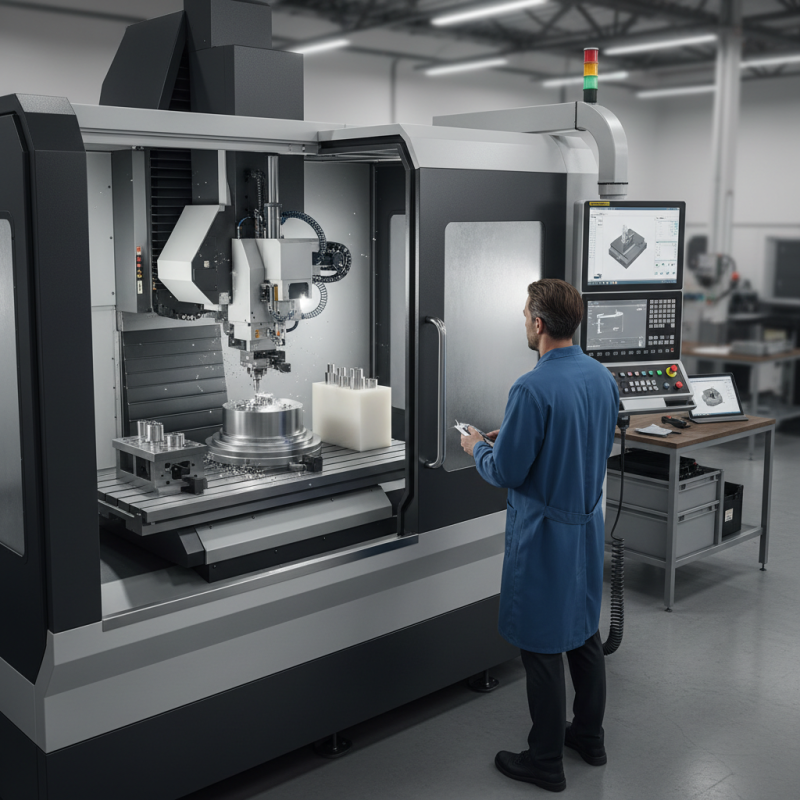
Understanding the fundamentals of 5 axis CNC milling machines is crucial for making informed choices. These machines allow for complex machining and reduced setup time. With the ability to move along five axes simultaneously, they can produce intricate geometries that traditional machines struggle with. According to a 2022 industry report, over 60% of manufacturers are adopting 5 axis technology to enhance precision and efficiency.
When selecting a 5 axis CNC milling machine, consider your specific needs. What materials will you work with? Aluminum, titanium, and plastics each require different cutting strategies. Surface finish is another key aspect. A smoother finish often requires more sophisticated programming and tooling. A study revealed that nearly 50% of operators felt their machines underperformed in achieving desired finishes. This indicates a need for ongoing evaluation.
Cost can be a significant factor. While 5 axis machines offer benefits, the investment is substantial. Research shows that many businesses experience challenges in justifying the high initial costs. During the selection process, reflecting on your operational goals is essential. Balancing investment with expected efficiency gains may guide your decision. Performance reviews and feedback from users can also provide valuable insights into machine capabilities and drawbacks.
When selecting a 5 axis CNC milling machine, technical specifications are crucial. Pay close attention to the machine's accuracy. A high degree of precision is vital for intricate designs. Look for specifications that highlight tolerance levels. If the tolerance is inconsistent, you might face challenges with quality.
Next, consider the spindle power. Machines with higher spindle power can handle tougher materials. This means they maintain efficiency during complex operations. Low power might lead to longer production times. Additionally, check on the maximum travel distance. Machines with extended travel capabilities can accommodate larger workpieces. However, a larger machine may require more space.
Another aspect to reflect on is the control software. User-friendly interfaces can save time. Complicated software may hinder productivity. Assess the ease of programming as a part of your evaluation. Remember, while it's tempting to focus on advanced features, simplicity contributes to overall performance. Each detail matters. The right choices lead to better outcomes.
When choosing a 5-axis CNC milling machine, machine accuracy is crucial. Accurate machining minimizes error. Small discrepancies can lead to significant issues in production. Even a fraction of a millimeter can change the outcome. It is vital to assess the machine's tolerance and precision before making a decision.
Consider the materials you will be working with. Different materials may require varying levels of accuracy. For instance, aerospace components demand tighter tolerances than basic metal parts. Test parts can help gauge accuracy. Conducting trials will reveal the machine's capability.
Moreover, think about day-to-day operational needs. Not all tasks require high precision. Sometimes, manufacturers settle for less accuracy to meet budget constraints. Assessing what level of precision is essential for your projects will save time and resources. Reflecting on these factors ensures that your choice aligns with both your needs and expectations.
When considering a 5-axis CNC milling machine, software compatibility is critical.
A report from iMachining highlights that around
75% of industry users prioritize software integration when selecting machinery.
Advanced software ensures seamless operation and enhances overall productivity.
Without compatible software, you may face delays and errors.
Many CNC machines rely on software like CAD/CAM for design and programming.
For instance, a survey by TechNavio reveals that
67% of manufacturers face challenges due to software limitations.
Incompatibility can lead to costly mistakes.
It's essential to evaluate software features and functionalities before making a decision.
Moreover, not all software packages support 5-axis operations effectively.
Many programs have a learning curve. This can hinder production in the initial stages.
Machines often come with basic software that may not optimize capabilities.
Therefore, researching compatible solutions becomes vital.
Investing in robust software could yield better results long-term.
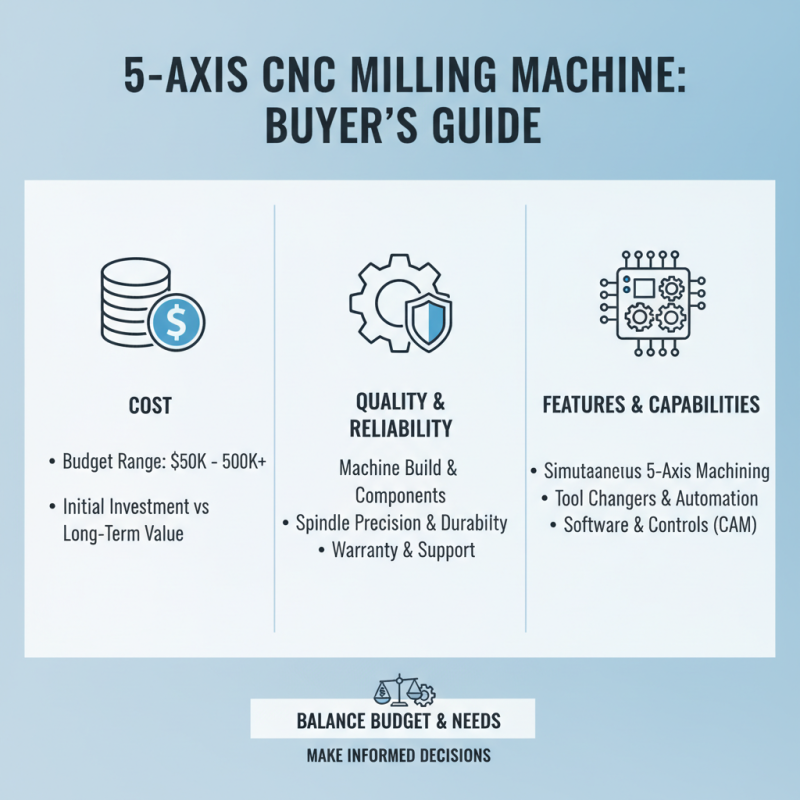
When selecting a 5-axis CNC milling machine, cost is often a primary concern. Quality and features vary widely across different models. Some machines may offer advanced capabilities but at a premium price. Balancing budget and needed features is essential for making the right choice.
Consider the specific applications you need the machine for. Oftentimes, a lower-cost machine can meet basic requirements effectively. However, investing a little more might yield better precision and durability over time. Unforeseen expenses can arise from cheap machines—repairs or replacements can be costly.
Think about maintenance and operational costs too. A machine that costs less initially might need higher operational inputs. Machines with better energy efficiency could save on electricity bills. It's beneficial to evaluate the total cost of ownership over time, rather than just the upfront price. Reflect on the long-term benefits versus immediate savings to ensure a wise investment in your CNC equipment.