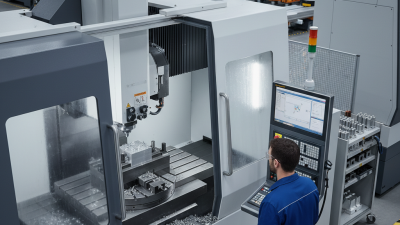
In the world of precision engineering, CNC machining and manufacturing stand out as vital techniques. According to Dr. Emily Carter, a leading expert in the field, "Accuracy is not just a goal; it is a necessity in CNC machining and manufacturing." This statement highlights the critical role precision plays in the industry's success.
CNC machining allows for the creation of complex parts with high accuracy. However, even the best machines face challenges, like tool wear and calibration issues. Manufacturers must constantly adapt to these obstacles to maintain their edge in quality.
Innovation is key in CNC machining and manufacturing. New technologies emerge regularly, but implementation can be daunting. The industry is changing, and professionals must embrace continual learning to stay competitive. Balancing traditional techniques with modern advancements is essential for success.
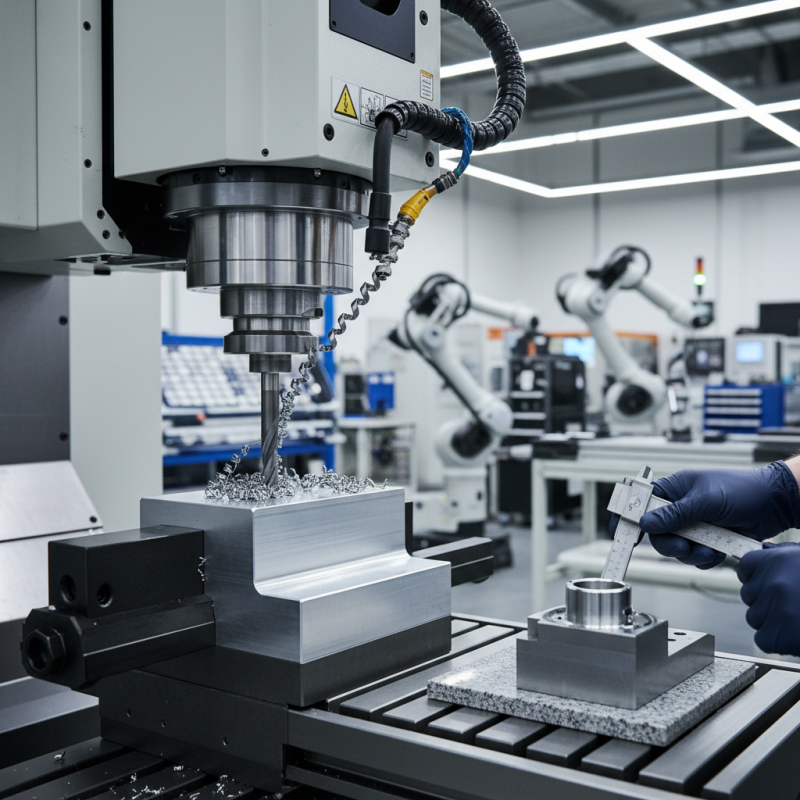
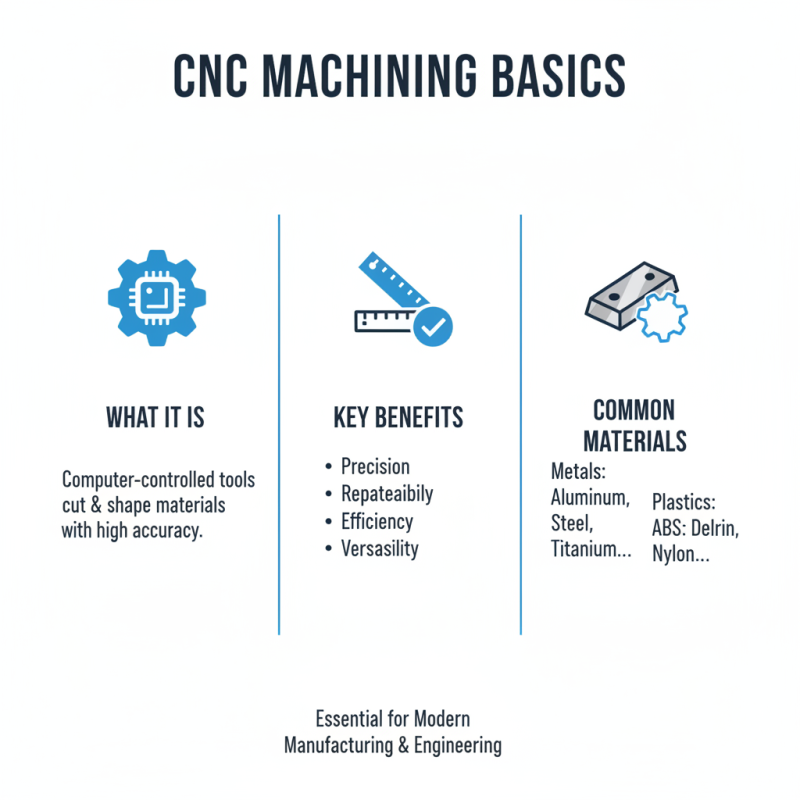
CNC machining is vital in precision engineering. It uses computer-controlled tools for cutting and shaping materials. This process ensures high accuracy and repeatability. Various materials like metals and plastics are commonly used. Understanding CNC machining basics is essential for engineers and manufacturers.
Operators must program CNC machines carefully to avoid errors. Even minor mistakes can lead to flawed products. The setup process requires attention to detail. Each tool needs calibration to achieve desired specifications. Inspection during production catches potential issues early on, enhancing overall quality.
The technology relies on advanced software and hardware. CAD (Computer-Aided Design) programs facilitate design creation. However, not every design is suitable for CNC machining. Complex geometries may present challenges. Continuous learning and adaptation are necessary in this fast-evolving field, pushing engineers to innovate while addressing limitations.
CNC machining is vital for precision engineering, with turning, milling, and drilling as the core techniques. Each process has unique applications and advantages. For instance, turning is ideal for cylindrical parts, offering high precision and efficiency. Reports indicate that turning accounts for nearly 30% of all CNC machining processes. It's efficient for producing parts with excellent surface finishes.
Milling, on the other hand, is versatile. It can produce complex shapes and contours that turning cannot achieve. It represents around 40% of the CNC market. This technique uses rotating tools to cut and shape material. Consider that the choice of tool can dramatically affect the quality of the machined part.
Tip: Regularly inspect tools for wear. A worn tool can compromise precision and lead to costly rework.
Drilling is the simplest yet essential technique. It creates holes and shapes, vital for assembly. Many overlook the importance of drill bit selection. Using the wrong bit can result in poor-quality holes. A recent study showed that 25% of drilling mistakes stem from inadequate tool selection.
Tip: Always match drill bits to material types for best results. This reduces the risk of mistakes and enhances overall quality.
Each technique has its challenges. Navigating these complexities is crucial for achieving high precision in engineering.
The field of precision engineering is evolving rapidly. Recent advancements in CNC technology are driving innovative manufacturing processes. A 2022 survey revealed that 75% of manufacturers are investing in CNC upgrades. These upgrades enhance accuracy and reduce production time.
New technologies such as adaptive machining are changing the landscape. This allows machines to adjust in real-time based on the material's response. Reports suggest that adaptive machining can improve workflow efficiency by up to 30%. However, not all manufacturers have adopted this technique. Some still rely on older methods, which can hinder production capabilities.
Industry professionals need to reflect on their current practices. Continuous learning and adaptation are essential in this competitive field. As technology advances, staying updated becomes crucial.
While many companies lead in innovation, others fall behind. Balancing tradition with modern techniques can be a challenging task for engineers worldwide.
Quality control in CNC machining is crucial for achieving precision in engineering. It involves systematic processes to ensure parts meet strict specifications. Various techniques can be applied throughout production. Regular inspections are essential. Operators must measure dimensions at different stages. Every deviation can lead to significant issues down the line.
Testing can often be overlooked. Some might skip thorough checks to save time. This can result in parts failing later in the process. Unnoticed defects can cause costly reworks. Thus, implementing strict checks is vital. Using advanced measuring tools helps detect errors early.
Communication between teams is also necessary. Engineers need to understand machining capabilities. Designers must be aware of production constraints. Misalignment between these areas can lead to inaccuracies. Regular feedback loops can help refine processes. Learning from past mistakes is essential for continuous improvement.
| Technique | Description | Accuracy | Applications | Tolerance |
|---|---|---|---|---|
| Milling | A process that removes material from a workpiece to create flat or contoured surfaces. | ±0.005 mm | Aerospace, automotive, medical devices | ISO 286-1 |
| Turning | A machining process that rotates a workpiece while a cutting tool removes material. | ±0.01 mm | Manufacturing of shafts, fasteners, and other cylindrical parts | ISO 2768 |
| EDM (Electrical Discharge Machining) | Uses electrical discharges to remove material from electrically conductive workpieces. | ±0.002 mm | Tool and die manufacturing, complex shapes | ISO 2768 |
| 3D Printing | Additive manufacturing process that creates parts by building them layer by layer. | ±0.1 mm | Prototyping, custom parts, complex geometries | ISO 2768 |
| Laser Cutting | Utilizes a laser to cut materials with high precision and minimal kerf. | ±0.01 mm | Sheet metal, aerospace parts, signage | ISO 14405 |
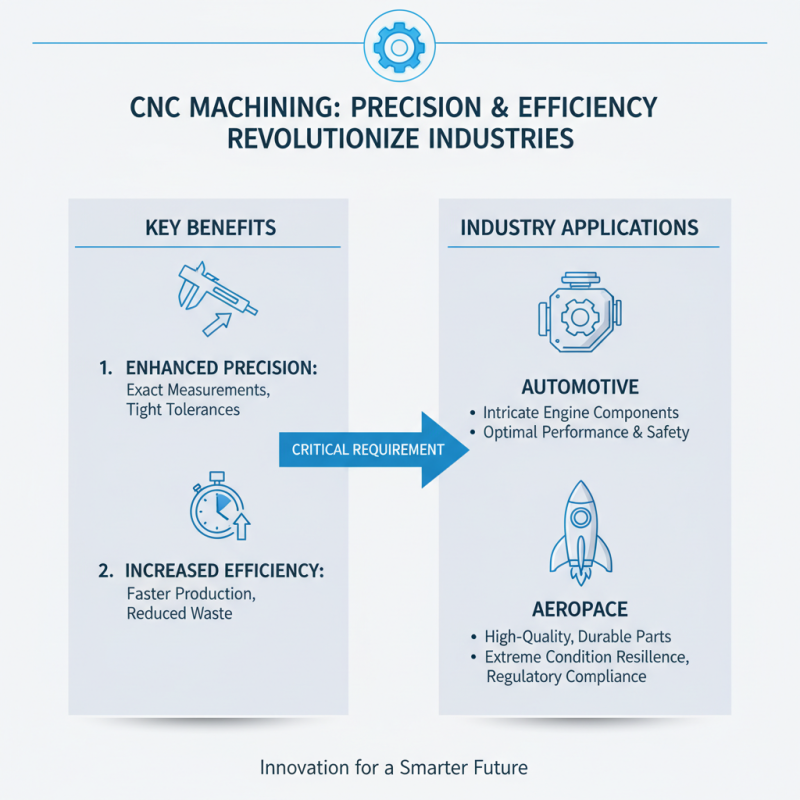
CNC machining significantly impacts various industries by enhancing precision and efficiency. For example, the automotive sector relies on CNC for crafting intricate engine components. These parts require exact measurements to ensure optimal performance and safety. Similarly, the aerospace industry demands high-quality parts that can withstand extreme conditions. Here, precision is critical, so CNC technologies help meet stringent regulations.
Tips: Regular maintenance of CNC machines is essential. Dust and debris can affect precision. Operating at optimal speed can also improve the quality of machined parts.
In the medical industry, CNC machining fabricates custom implants. Tailoring implants to patient specifications ensures better compatibility and healing. These applications showcase the versatility of CNC technology across diverse sectors. However, the reliance on machines can lead to skill gaps. Fewer workers may understand traditional fabrication techniques.
Tips: Training is vital for future engineers. Invest in developing skills that complement CNC technology. Understanding both man and machine is crucial for creating better solutions.
The electronics industry also benefits from CNC manufacturing processes. Producing circuit boards and housings demands precision. Yet, the rapid pace of technology can lead to mistakes in design and production. It’s necessary to double-check specifications to avoid costly errors.