10 Essential Tips for Precision CNC Machining Parts Success?
In the world of manufacturing, precision CNC machining parts play a crucial role. According to a report by MarketsandMarkets, the CNC machining market is projected to reach $100 billion by 2025. This growth emphasizes the importance of mastering precision techniques in order to meet rising demand.
Achieving success in CNC machining requires a deep understanding of several essential factors. Companies must focus on material selection, tooling, and programming accuracy. The quality of precision CNC machining parts can heavily influence the production process and overall product reliability.
However, challenges persist in this field. For instance, 50% of manufacturers report difficulties in maintaining consistent quality standards. This highlights the need for a dedicated approach toward refining machining processes. Embracing continuous improvement is essential for ensuring precision and efficiency in producing CNC parts.
Understanding CNC Machining: A Fundamental Overview for Success
CNC machining is crucial in manufacturing. It's the process of cutting materials with computer-controlled machines. This precision impacts many industries, from aerospace to medical devices. According to a recent industry report, over 70% of manufacturers rely on CNC technology for their production needs.
Understanding the basics of CNC machining is essential. You need knowledge of feed rates, cutting speeds, and tooling. These factors determine the quality of the parts produced. A small error can lead to significant issues down the line. For instance, a 0.01 inch variance can affect component fit and performance.
Training is vital for operators. Many companies face challenges due to insufficient understanding of CNC programming. Continuous education can help avoid costly mistakes. Reports indicate that skilled operators can increase production efficiency by up to 30%. Investing in training yields long-term benefits, ensuring that every part produced meets the highest standards.
10 Essential Tips for Precision CNC Machining Parts Success
| Tip Number |
Tip Description |
Benefit |
Application |
| 1 |
Choose the Right Material |
Improved durability and performance |
Aerospace components |
| 2 |
Optimize Tool Path |
Reduced machining time |
Complex geometries |
| 3 |
Maintain Equipment Regularly |
Consistent quality and precision |
All CNC applications |
| 4 |
Invest in Quality Tools |
Longer tool life and better finishes |
Precision machining |
| 5 |
Calibrate CNC Machines Regularly |
Ensured accuracy |
Manufacturing setups |
| 6 |
Invest in Employee Training |
Higher skill level and efficiency |
New technology adoption |
| 7 |
Implement Quality Control Procedures |
Minimized defects |
Final inspection stages |
| 8 |
Use Simulation Software |
Reduced trial and error |
Prototyping |
| 9 |
Monitor and Analyze Production Data |
Identify inefficiencies |
Continuous improvement |
| 10 |
Adopt Lean Manufacturing Principles |
Waste reduction |
Overall process efficiency |
Key Considerations for Selecting Materials in CNC Machining Projects
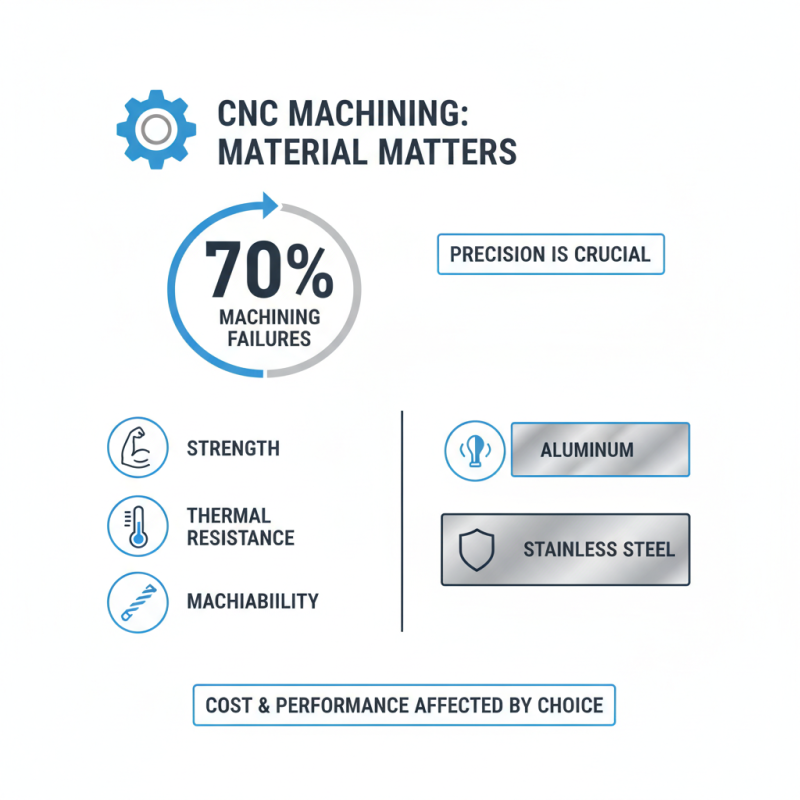
When selecting materials for CNC machining projects, precision is crucial. Material choice affects not just cost, but also the final part's performance. Recent studies show that over 70% of machining failures stem from poor material selection. It's essential to understand the properties of materials like strength, thermal resistance, and machinability. Metals such as aluminum and stainless steel are common, but their individual characteristics can lead to different results.
It's also vital to consider the end-use of the parts being produced. For instance, aerospace components demand higher tensile strength and lightweight materials, while medical devices may prioritize biocompatibility. Reports suggest that inappropriate material choices can lead to increased production costs by up to 30%. Additionally, some materials may pose challenges, such as higher wear rates, leading to unexpected downtimes.
Reflecting on past projects can uncover valuable lessons. Maybe a certain plastic was chosen for its low cost, but it resulted in quicker wear and deformation. Adjusting material choices based on feedback can significantly enhance machining success. Regular reviews of materials and methods could provide insights to refine the CNC machining process further.
Techniques for Ensuring Accurate Measurements and CNC Setup
Precision in CNC machining hinges on accurate measurements and an effective setup. Calibration is key. Regularly checking tools ensures they remain precise over time. Measuring instruments should be used frequently. Micrometers and calipers provide vital data. Misreads can lead to flawed parts, wasting material and time. A small deviation leads to bigger problems later.
When setting up CNC machines, patience is crucial. Take the time to align everything properly. Even minor misalignments can cause significant errors. Double-check the workpiece's positioning. Sometimes, a simple shift can change the entire outcome. Document the setup procedures clearly, allowing for quick adjustments in the future. An effective setup isn’t just a one-time act; it requires constant reflection and adjustments. If something goes wrong, review the process. Learn from mistakes instead of ignoring them.
Best Practices for Tool Selection and Maintenance in CNC Operations
Tool selection plays a pivotal role in CNC machining success. It can make or break the quality of the parts produced. Choosing the right tool ensures precision and reduces wear. Different materials require different tools. For example, harder metals need tougher cutting tools. Keeping a close eye on tool wear is critical. A dull tool can lead to inaccuracies and compromised part integrity.
Maintenance is equally vital in CNC operations. Regularly scheduled maintenance prevents unexpected breakdowns. Checking coolant levels and inspecting tool alignment should be routine tasks. It's easy to overlook small details, but they can lead to significant issues later. Cleaning machines can improve performance, yet it's often skipped. Operators should establish a maintenance log to track issues. It’s a simple step that can improve overall efficiency.
Many often underestimate the impact of the environment on tools. Dust and temperature fluctuations can affect tool performance. Keeping the workspace clean and controlled is essential. Reflecting on these practices can highlight areas for improvement. Mistakes can happen, and part of the process is acknowledging them. Emphasizing better tool maintenance and careful selection can lead to greater CNC success.
Implementing Quality Control Measures Throughout the Machining Process
Quality control is vital in CNC machining. Ensuring precision involves more than just setting machines correctly. Inspecting parts at various stages helps catch issues early. Regular checks prevent larger problems down the line.
One essential tip is to integrate quality checkpoints. This means assessing materials before machining starts. A thorough inspection of raw materials can save time and resources.
Another tip is to use effective measuring tools. Calipers and micrometers provide accurate readings. They help verify dimensions at each step. However, relying too heavily on machines can lead to oversights.
Human oversight is just as important. Operators should maintain a critical eye. They can spot issues that machines might miss. Encourage feedback from the team. They often have insights on recurring problems. Quality is a team effort. Each member plays a role in achieving success in CNC machining.