post thumbnail
Our pricing model is flexibly designed to give you the most possible advantages of a continuing partnership.

What Is an LED Harness and How Does It Work?

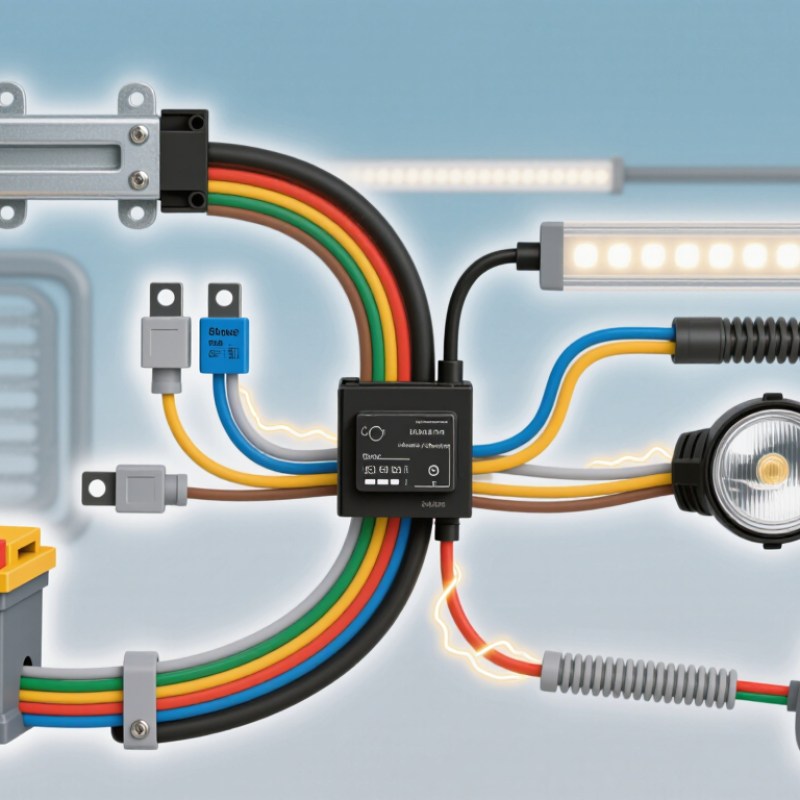
An Led Harness is more than a bundle of wires wrapped in protective material. It connects LED lights to a power source, switch, controller, or vehicle circuit. Its conductors carry current, while connectors, fuses, relays, and insulation help control and protect that flow. When designed correctly, the harness delivers stable power and reduces loose wiring behind a lamp, grille, workbench, or dashboard.

In practical installations, the harness often includes color-coded wires and weather-resistant connectors. A fuse may sit close to the battery, limiting damage if a short circuit occurs. A relay can handle higher current without forcing the switch to carry the full electrical load. Small detail. Big consequence. Poor grounding, incorrect wire sizing, or a connector exposed to moisture can cause flickering, heat, or complete failure. This guide explains how each part works together and why installation quality matters. It also considers voltage drop, polarity, insulation, and connector compatibility. These points are easy to overlook during a quick installation. They deserve attention.

Reliable manufacturers publish load ratings, wiring diagrams, and temperature limits for their products. Those specifications should guide every connection, rather than guesswork or copied forum advice. However, real installations can differ because LED strips, light bars, machinery, and vehicles use different electrical systems. A harness that works well in one application may be unsuitable in another. Always verify the circuit requirements and seek qualified technical support when necessary. The aim is practical understanding, not blind confidence. Mistakes happen, and reviewing each connection can prevent expensive damage.

What Is an LED Harness and How Does It Work?

What Is an LED Harness and What Components Does It Include?

An LED harness is a pre-arranged wiring assembly that delivers controlled power to LED lights.

It replaces loose wires with a structured connection path. In practical installations, this reduces confusion near tight spaces, such as vehicle panels or equipment cabinets.

A typical harness includes insulated power wires, ground wires, connectors, terminals, and protective covering.

Some designs also contain an inline fuse, relay, switch lead, or controller plug. Each component has a job.

The power wire carries current from the source, while the ground wire completes the circuit. Connectors provide removable joints, and crimped terminals secure wire ends inside those joints.

A fuse helps limit damage during an overload, although it cannot correct poor wiring. A relay may handle higher current without sending all the current through a small dashboard switch.

The outer sleeve protects conductors from rubbing, moisture, and heat. Not every harness includes every part. That detail is easy to miss.

Tips:

Match wire size and fuse rating to the LED load and cable length. Check polarity before applying power. Pull each connector gently after installation; loose terminals often cause flickering.

Use heat-shrink protection where exposed copper could meet moisture. I have found that a neat harness can still fail when its ground point is painted or loose.

Inspect the contact surface, not only the visible wiring. A small labeling step also prevents reversed connections later.

How an LED Harness Delivers Power and Controls Lighting

An LED harness is a prewired system that supplies power and controls auxiliary lighting. It usually includes positive and ground wires, a fuse, relay, connectors, and a switch. The battery sends current through the fuse to protect the circuit. The relay then transfers power to the LED lamps without forcing high current through the dashboard switch.

The control side uses a low-current signal. When the switch is activated, the relay closes and completes the power path. This arrangement reduces heat and improves switching reliability. Some harnesses also use dimmers or pulse-width control for brightness adjustment. A clean ground is essential. Poor grounding can cause flickering, weak output, or unexpected shutdowns.

The wiring diagram may look simple, but real installations often contain crowded spaces and confusing factory wires. Assuming every connection is correct can be a costly mistake.

Tips: Match the fuse rating to the wire capacity and lamp load. Check polarity before applying power. Protect exposed connectors from water and abrasion. Leave enough cable length for service, but avoid loose loops near moving parts. Test the switch, relay, and ground separately. A final voltage check at the lamp can reveal hidden resistance. Even careful work deserves a second inspection.

How to Install and Connect an LED Harness Step by Step

What Is an LED Harness and How Does It Work?

An LED harness is a pre-wired system that connects LED lights to a power source and control switch. It usually includes fused power wires, a relay, connectors, and a ground lead. The relay protects the switch from carrying excessive current. This design makes installation safer and more reliable.

Before installation, disconnect the battery’s negative terminal. Choose a dry mounting point for the relay and keep it away from heat. Route the harness along the vehicle’s existing wiring path. Avoid sharp edges, moving parts, and hot surfaces. Connect the positive wire to the battery through the supplied fuse. Attach the ground wire to clean, bare metal. Then connect the harness plugs to the LED lights and mount the switch within easy reach. Check polarity carefully. Reversed connections may prevent the lights from working.

Tips: Secure the harness with cable ties, but do not crush the wires. Leave a small service loop near each connector. Test the lights before hiding the wiring. I usually test them twice, because a loose ground can look like a faulty light. Do not rely only on visual inspection. Gently pull each connection and check for movement. Waterproof connectors help, but they are not magic. Seal exposed joints when needed. A tidy installation is useful, though perfect routing is not always possible. Recheck the fuse rating after testing, especially if the lights flicker or the wires feel warm.

Which Vehicles and Lighting Systems Use LED Harnesses?

LED harnesses are used in cars, pickups, SUVs, vans, motorcycles, and commercial trucks. They commonly connect LED headlamps, fog lamps, auxiliary driving lights, light bars, and work lamps. An automotive harness typically routes battery power through a fuse and relay to the lights, while a dashboard switch or original lamp circuit triggers the relay. This helps keep higher current away from small switches and factory wiring. OICA’s 2023 production statistics recorded 93.5 million motor vehicles built worldwide, a reminder of the wide range of vehicle electrical systems a harness may need to suit. That figure measures vehicle production, not harness adoption.

Harnesses are especially useful when adding brighter auxiliary lights to trucks, off-road vehicles, or work vehicles, where long cable runs and vibration can complicate installation. Some LED replacement bulbs plug directly into existing sockets and need no separate harness. Others draw more power or require a specific connector, fuse rating, or relay arrangement. Check the vehicle’s voltage and wiring diagram before choosing one; a plug that fits is not proof of electrical compatibility. Small detail, big difference. On newer vehicles, diagnostic systems may also react to changes in lamp load, so the correct solution depends on the vehicle and lighting circuit. A universal harness can be convenient, but fitment claims deserve a closer look.

What Is an LED Harness and How Does It Work? - Which Vehicles and Lighting Systems Use LED Harnesses?

Data Dimension Key Information Typical Applications or Considerations
Definition An LED harness is an organized set of wires, connectors, terminals, fuses, relays, switches, and sometimes control modules used to supply power and control signals to LED lighting. It provides a structured connection between the vehicle power source, control switch, and one or more LED lamps.
Primary Function The harness delivers electrical power from the battery or auxiliary power distribution point to the LED lighting system while providing circuit protection and switching control. Commonly used when the original vehicle wiring is not designed for additional auxiliary lights or when a separate controlled circuit is preferred.
How It Works When the switch is activated, a low-current control signal energizes the relay. The relay then connects the fused battery supply to the LED lamps through the output wiring. This arrangement allows a relatively small dashboard or accessory switch to control a higher-current lighting circuit.
Main Electrical Path Battery positive terminal → fuse → relay → LED lamp positive terminal; the lamp negative terminal returns to the chassis ground or battery negative terminal. All power connections should be secure, correctly polarized, and protected from abrasion, moisture, and excessive heat.
Voltage Compatibility Most automotive LED harnesses are designed for low-voltage direct-current systems, commonly nominal 12-volt or 24-volt vehicle systems. The harness, fuse, relay, connectors, and LED lamps must be matched to the vehicle’s actual system voltage and the lamp manufacturer’s requirements.
Typical Harness Components Power cables, ground cables, inline fuse holder, fuse, relay, rocker or push-button switch, crimp terminals, sealed connectors, wire loom, and mounting hardware. More advanced systems may include dimmers, flash controllers, CAN-bus interfaces, or dedicated lighting control modules.
Role of the Fuse The fuse interrupts the circuit when current exceeds a safe level, helping protect the wiring from overheating and reducing the risk of electrical damage. The fuse should be installed close to the battery or power source and sized according to the circuit’s normal operating current and wire capacity.
Role of the Relay A relay uses a low-current control circuit to switch a higher-current load circuit. Relays are useful for auxiliary light bars, driving lights, work lamps, scene lights, and other LED systems that draw more current than a small switch should carry directly.
Vehicle Electrical Systems LED harnesses can be used with conventional alternator-based electrical systems and vehicles equipped with electronically managed body-control systems. Vehicles with sensitive electronic controls may require a compatible interface, load management device, or installation method that avoids warning signals and communication errors.
Passenger Cars and SUVs These vehicles commonly use LED harnesses for auxiliary driving lights, fog lamps, grille lights, reverse lights, and off-road lighting. Installation should account for limited engine-bay space, existing safety systems, and the intended use of the lighting.
Pickup Trucks and Utility Vehicles Harnesses are frequently used for bed lights, work lights, trailer-related lighting, grille-mounted lamps, and auxiliary forward lighting. Additional protection may be needed where wiring passes near suspension components, cargo areas, or exposed underbody sections.
Off-Road and Recreational Vehicles Off-road vehicles commonly use harnesses for light bars, rock lights, scene lights, rear work lights, and dust or fog lighting. Water-resistant connectors, abrasion-resistant sleeving, and secure cable routing are important because of vibration, mud, water, and debris.
Motorcycles and Powersports Vehicles Compact LED harnesses can support auxiliary fog lamps, daytime visibility lights, accent lights, and small work lights. Because charging capacity is limited on some motorcycles and powersports vehicles, the total LED load should be checked before installation.
Commercial Trucks and Buses Commercial vehicles may use harnesses for marker lights, work lamps, warning lights, rear-area illumination, and auxiliary road lighting. Many heavy vehicles use 24-volt systems, so all harness components must be rated for the vehicle voltage and operating environment.
Agricultural and Construction Equipment Tractors, loaders, excavators, and other equipment use LED harnesses for work lights, perimeter lighting, cab lights, and maintenance-area illumination. Harnesses should be routed away from hydraulic lines, hot exhaust components, moving linkages, and areas exposed to heavy vibration.
Marine and Outdoor Equipment Low-voltage LED harnesses may be used for deck lights, navigation-related auxiliary illumination, storage-area lighting, and equipment lighting. Marine installations require corrosion-resistant materials, sealed connections, suitable grounding practices, and protection from continuous moisture.
Lighting Systems Using LED Harnesses Common systems include driving lights, fog lights, light bars, work lights, reverse lights, marker lights, scene lights, warning lights, and interior or cargo lights. The harness design depends on whether the lamps operate continuously, momentarily, independently, or as part of a synchronized flashing pattern.
Single-Light Configuration A single LED lamp normally uses one fused power path, one ground path, and one control switch or relay circuit. This configuration is relatively simple and is suitable for small auxiliary lamps or a single work light.
Multiple-Light Configuration Several LED lamps may be connected in parallel so each lamp receives the intended system voltage. The total current draw must be calculated so the fuse, relay, wire gauge, connectors, and switching device can safely handle the combined load.
Current Calculation For a direct-current lighting circuit, approximate current can be calculated using the formula: Current (A) = Power (W) ÷ Voltage (V). For example, a 120-watt lighting load on a nominal 12-volt system requires approximately 10 amperes before accounting for system variation and design margin.
Wire Selection Wire size should be selected according to current demand, circuit length, allowable voltage drop, insulation temperature rating, and installation conditions. Longer circuits generally require larger conductors to limit voltage drop and maintain consistent LED brightness.
Grounding Method LED lamps may be grounded to a clean, corrosion-free chassis point or returned directly to the battery negative terminal. A poor ground can cause flickering, dim output, intermittent operation, or unwanted electrical noise.
Connector and Environmental Protection Connectors should be appropriate for the expected exposure to water, dust, chemicals, vibration, and temperature changes. Sealed connectors, heat-shrink protection, flexible conduit, and cable ties help improve long-term reliability in outdoor installations.
Integration With Factory Lighting An LED harness can operate independently or connect to an existing lighting control signal, depending on the vehicle and intended function. Factory circuits should not be overloaded. A separate fused relay circuit is often preferred for higher-power auxiliary lighting.
Installation Safety Disconnect the battery before making electrical connections, protect all positive conductors, and keep wiring clear of heat sources and moving parts. After installation, inspect the harness for secure fastening, correct polarity, proper fuse placement, and adequate clearance.
Common Failure Symptoms Typical symptoms include no light output, intermittent operation, flickering, a blown fuse, warm connectors, dim illumination, or relay clicking without lamp activation. Possible causes include loose terminals, undersized wiring, poor grounding, water intrusion, incorrect fuse sizing, damaged insulation, or excessive circuit load.
Key Advantages A properly designed LED harness improves circuit organization, protects wiring, simplifies troubleshooting, supports reliable switching, and enables flexible auxiliary lighting installation. It is especially useful when adding lighting to vehicles or equipment that require separate control and protection from the original lighting circuit.

Note: Always verify the vehicle voltage, lamp specifications, current draw, local lighting regulations, and installation requirements before using an LED harness.

How to Choose, Maintain, and Troubleshoot an LED Harness

An LED harness combines wires, connectors, fuses, and terminals to deliver controlled power to LED modules. Choosing one starts with voltage, current, wire gauge, connector fit, and environmental exposure. Check the fixture’s peak current, not only its average rating. A harness rated too closely may heat during startup or prolonged operation. The U.S. Department of Energy’s 2023 Solid-State Lighting R&D Opportunities report highlights thermal management and reliability as continuing priorities. That applies to wiring, too. Heat needs a path away.

Keep it clean and supported. Inspect insulation for rubbing, green corrosion, loose terminals, and flattened sections near hinges. Secure the harness every 300–450 millimeters, while allowing gentle movement at joints. Use sealed connectors in wet or dusty locations, but do not assume “sealed” means permanent. The IEA’s Energy Efficiency 2024 report identifies efficient lighting as an important electricity-saving opportunity, making dependable distribution increasingly valuable. Small losses still matter.

Troubleshooting should begin with the power source. Measure voltage at the LED and again at the harness input. A large difference suggests resistance, a weak terminal, or undersized cable. Check polarity and ground continuity, then test under load. A continuity tester alone can mislead; a damaged wire may pass a no-load test. Look for heat discoloration after several minutes. I have seen tidy harnesses fail because one crimp was only partly compressed. Visual inspection is imperfect. Retest after vibration, temperature changes, and connector movement.