
post thumbnail
Our pricing model is flexibly designed to give you the most possible advantages of a continuing partnership.

What Is a Metal Filter Disc Used For?

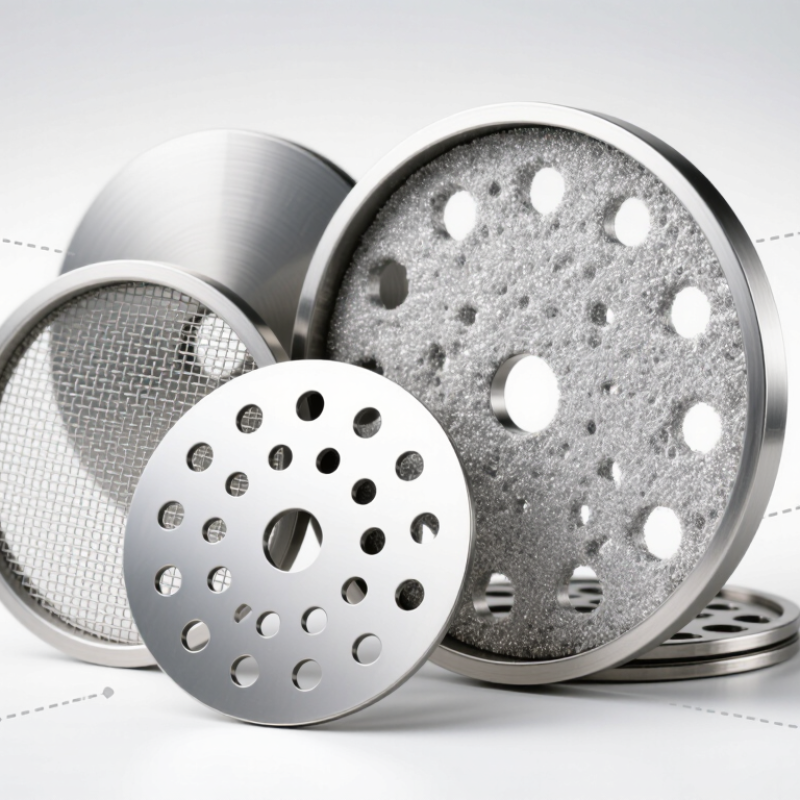
A Metal Filter Disc is a compact component used to separate particles from liquids or gases. It may be woven from metal wire, perforated from sheet, or made from sintered metal powder. Each construction behaves differently. A fine sintered disc can trap small particles throughout its porous structure, while a woven disc often filters mainly at its surface. The right choice depends on the process, not appearance alone.

These discs are used in equipment such as pumps, pipelines, spray systems, and laboratory assemblies. They can protect sensitive components, reduce unwanted debris, or help maintain a consistent flow. In a workshop, a small disc may sit inside a nozzle; in a process line, a larger one may support continuous filtration. Details matter. Metal type, pore size, thickness, pressure, temperature, and fluid compatibility all affect performance. Stainless steel is common, but it is not suitable for every environment.

This overview explains what a Metal Filter Disc does, how its structure influences filtration, and where it is commonly installed. It also considers practical limits, including clogging, cleaning requirements, and pressure loss. A disc that works well in one setup may perform poorly in another. That is easy to overlook. Selection should follow the actual operating conditions and the particle size to be captured, with manufacturer specifications checked before installation.
What Is a Metal Filter Disc Used For?

What a Metal Filter Disc Is

What Is a Metal Filter Disc Used For?

What a Metal Filter Disc Is

A metal filter disc is a flat, porous component that separates particles from liquids or gases. It is commonly made from woven wire mesh, perforated sheet, or sintered metal powder. Each construction has a different pore structure, strength, and flow rate. The disc may sit inside a housing, pipe, or processing unit, where fluid passes through its openings. Particles larger than the openings are retained. Small, but useful.

Metal discs are used in applications such as water treatment, chemical processing, food production, and equipment protection. Their rigid structure can withstand heat, pressure, and repeated cleaning, depending on the material and design. Stainless steel is common, but other alloys may suit specific operating conditions. A disc’s appearance alone does not reveal its filtration rating. Check the stated pore size, operating pressure, temperature range, and fluid compatibility. A filter that is too fine may restrict flow; one that is too coarse may let unwanted particles through. The right choice takes real operating conditions into account.

Tips: Confirm the disc’s diameter and thickness before fitting it. Inspect for dents, corrosion, or blocked openings during maintenance. Cleaning may help, but it will not restore every damaged disc. It is easy to overlook that limitation.

How Its Structure Supports Filtration

A metal filter disc is used to separate particles from liquids or gases, but its structure determines how reliably it performs. A woven disc has crossing metal wires that form repeatable openings. A sintered disc uses bonded metal particles, creating a network of connected pores. In both designs, the filtering surface captures particles while the disc’s thickness and support help resist pressure. Picture dirty fluid meeting a small metal screen: particles collect at the surface or within the pore paths, while cleaner fluid passes through. The exact result depends on pore size, fluid viscosity, flow rate, and contaminant load—not just the micron rating.

ISO 16889:2022 describes a multipass method for evaluating hydraulic filter performance. Its beta ratio gives a useful numerical example: a beta value of 200 represents 99.5% particle removal at the tested particle size. That figure does not guarantee the same performance from every metal disc; test conditions and construction matter. A thicker disc may tolerate more pressure, yet finer pores can increase flow resistance. Real systems involve trade-offs.

Tips: Check the disc’s rating, material compatibility, and maximum differential pressure together. Inspect the sealing edge, too; a small gap can let fluid bypass the filter. Cleaning and reuse may be possible, but not every disc recovers its original performance after washing. That detail is easy to overlook.

What Is a Metal Filter Disc Used For?

How its structure supports filtration

A metal filter disc traps particles as fluid passes through its openings. In woven wire mesh, mesh count and wire diameter determine the opening size: finer openings can capture smaller particles, while the metal structure provides support and allows flow. Values shown are approximate; actual openings vary with wire diameter and mesh specification.

How a Metal Filter Disc Separates Particles

What Is a Metal Filter Disc Used For?
How a Metal Filter Disc Separates Particles

A metal filter disc separates suspended particles from liquids or gases as flow passes through its small, connected openings. Its woven mesh, sintered layers, or perforated structure creates a pathway that lets fluid through while retaining particles too large to pass. Think of cloudy process water entering one side and clearer water leaving the other. The result depends on pore size, disc thickness, flow rate, and particle shape—not pore size alone. Some particles deform or lodge within the media, so real filtration can be less tidy than a simple size cutoff suggests.

Filter performance is often checked with particle-count tests. ISO 16889, a multipass test method for hydraulic-fluid filters, uses the beta ratio: a beta value of 200 corresponds to 99.5% efficiency for the measured particle size. That figure describes a test result, not a guarantee for every metal disc or operating condition. For pore assessment, ASTM F316 describes bubble-point and mean-flow-pore testing; these methods help characterize openings, but do not predict every separation outcome in service. Pressure drop also matters. A finer disc may catch smaller particles, yet clog sooner and restrict flow. Choose a disc by matching its tested retention range to the actual fluid, contaminant load, and cleaning plan. Check data under comparable conditions. Even then, field results deserve review.

What Is a Metal Filter Disc Used For? — How a Metal Filter Disc Separates Particles

Use or Application Typical Material Being Filtered Particles Separated How the Disc Works Common Disc Construction Selection Considerations
Liquid pre-filtration Water, process liquids, and compatible chemical solutions Suspended solids, scale, and other particles larger than the selected openings or pores Liquid passes through the disc while particles are retained at the surface or within a porous structure. Woven or perforated metal for relatively coarse filtration; sintered porous metal for finer particle capture. Consider particle size, flow rate, pressure drop, fluid compatibility, and cleaning method.
Gas and compressed-air filtration Air and industrial gases Dust, rust, and other entrained solid particles Gas flows through the filter medium; particles are intercepted or captured within its passages. Porous sintered metal or a supported metal mesh, selected for the operating conditions. Account for gas temperature, pressure, flow, required cleanliness, and any moisture or oil present.
Protection of pumps, valves, and nozzles Liquids or gases moving through process equipment Debris that could obstruct small passages or damage downstream components Installed upstream, the disc acts as a protective screen or filter before the fluid reaches sensitive equipment. Usually a sturdy woven mesh, perforated plate, or supported metal disc. Choose an opening that protects the equipment without restricting the required flow excessively.
Filtration in high-temperature processes Hot gases or liquids, depending on the metal and system design Solid contaminants carried by the process stream The metal medium provides a porous path that allows the process fluid to pass while retaining selected solids. Heat-resistant metal mesh or sintered metal, with the alloy matched to the service conditions. Check temperature limits, oxidation and corrosion resistance, pressure rating, and thermal cycling.
Reusable process filtration Recoverable liquids or gases in systems designed for filter cleaning Accumulated suspended solids and process debris Particles collect on or inside the disc; the disc can be removed and cleaned when the design and process allow. Metal mesh or sintered metal with mechanical support appropriate to the pressure and cleaning method. Confirm that cleaning can restore adequate flow and that the filter is compatible with the cleaning chemicals or method.
Particle separation in a defined size range Process streams requiring a specified degree of particle retention Particles targeted by the selected mesh opening or porous-medium rating Mesh separates mainly by opening size; porous media can capture particles at the surface and within the media. Woven mesh for clearly defined openings; sintered porous metal where depth filtration or finer media is needed. Check whether the stated rating is nominal or absolute and verify performance under actual operating conditions.

How separation works: A metal filter disc does not remove every particle by default. Separation depends on the medium’s opening or pore structure, particle characteristics, fluid properties, and operating conditions. Mesh openings and porous-media ratings vary by design; the correct disc should be selected for the required retention, flow, pressure, temperature, and chemical compatibility.

Industries and Processes That Use Metal Filter Discs

Metal filter discs serve as compact barriers in processes that need to separate particles from liquids or gases. Their rigid shape fits inside housings, pipelines, and equipment nozzles. In food and beverage production, discs can catch debris from process water, syrups, or brewing liquids. A stainless steel surface is also easier to clean than many disposable media. Small pores matter.

Chemical plants use metal discs to protect pumps, valves, and downstream equipment from scale or catalyst fragments. In water treatment, they can screen suspended solids before finer filtration stages. Disc design varies: woven wire suits some flows, while sintered metal can provide a more uniform pore structure. The right choice depends on particle size, pressure, temperature, and cleaning method. A disc that works well in one line may clog quickly in another.

Polymer production and industrial gas systems also use discs to retain solids while allowing a steady flow. Operators may inspect them for discoloration, deformation, or rising pressure drop, all signs that cleaning or replacement could be needed. Backwashing can extend service life, but it is not suitable for every material or contaminant. In real installations, small changes in feed quality can matter more than expected. A trial under actual operating conditions can reveal issues a specification sheet misses.

Factors to Consider When Selecting a Metal Filter Disc

A metal filter disc separates particles from liquids or gases while fitting into a compact housing, nozzle, or processing line. Selection starts with the fluid and the particles that need to be retained. Stainless steel may suit many wet or warm processes, but chemical compatibility depends on the exact fluid, temperature, and exposure time. A material that performs well in water may corrode in another mixture. Check compatibility data rather than relying on appearance.

Pore size matters, but a smaller opening is not automatically better. It can trap finer particles, yet may also raise pressure drop and clog sooner. Match the filtration rating to the required particle size and the system’s available flow and pressure. Disc diameter and thickness should fit the seat closely; a loose fit can let fluid bypass the filtering surface. It matters. Consider the weave or perforation pattern, too, since these affect strength and cleanability. If the disc will be washed and reused, confirm that cleaning will not distort it or leave residue in the openings. A small sample test under real operating conditions can reveal issues that a specification sheet misses. The test may not represent every production variation, so record the conditions and inspect the disc after use.