What is Ocr Inspection and How Does It Benefit Your Business?
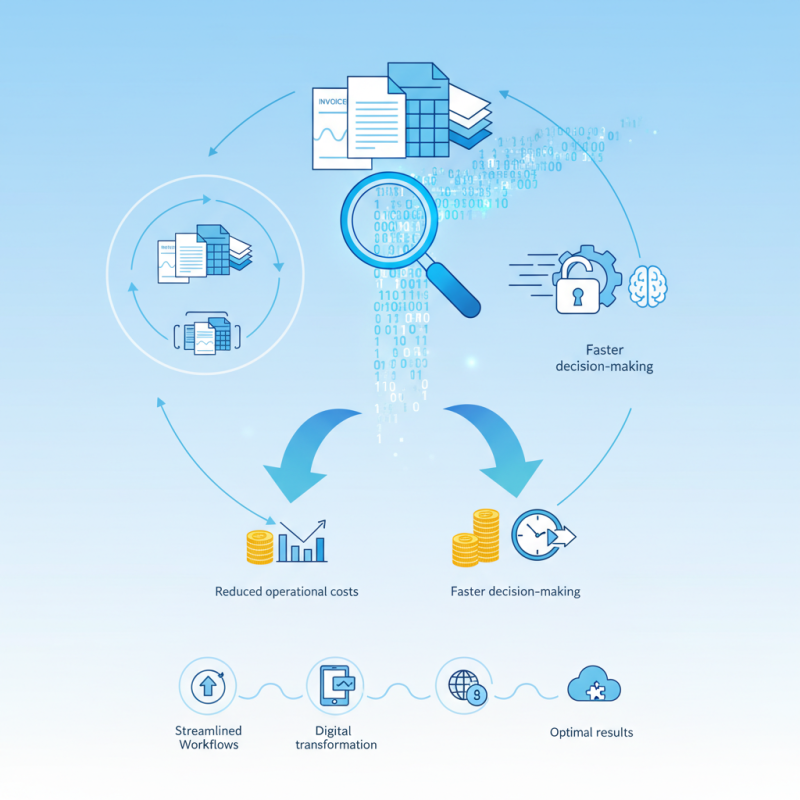
Ocr Inspection is revolutionizing how businesses manage documents. This technology accurately converts different types of documents, like invoices and forms, into digital data. By doing so, it eliminates human error and enhances efficiency.
Implementing Ocr Inspection can significantly reduce operational costs. Businesses can process information faster, allowing for quicker decision-making. The accuracy of this technology often surpasses human capabilities, ensuring data integrity. Regular use can transform how information is accessed and utilized.
Many companies struggle with document organization. They may find it challenging to keep everything in order. Ocr Inspection offers a reliable solution by streamlining workflows. As businesses embrace digital transformation, understanding Ocr Inspection becomes essential. The benefits are clear, but its implementation requires careful consideration for optimal results.
What is OCR Inspection and Its Definition
OCR inspection, or Optical Character Recognition inspection, is a technology that converts different types of documents, such as scanned paper documents or images, into editable and searchable data. This process is essential for businesses that handle large volumes of documents. It enables accurate data entry, reduces human error, and speeds up workflows. By automating data capture, companies can enhance their efficiency and focus on core operations.
The definition of OCR inspection is straightforward. It involves using software and hardware to recognize text within images and documents. Quality control is also crucial, as not all OCR technology is equally effective. Businesses must ensure the OCR system they choose can accurately interpret the fonts, layouts, and sizes they commonly use.
The output may still require human oversight, especially with complex documents. As businesses increasingly rely on digital documents, the effectiveness of OCR inspection becomes apparent. The ability to quickly turn hard copies into digital formats can drastically improve response times. However, it is important to note that some documents may present difficulties. Poor lighting or low-quality images can hinder recognition accuracy. Organizations should continuously assess and refine their OCR processes for optimal results.
The Technology Behind OCR Inspection: How It Works
OCR (Optical Character Recognition) is a powerful technology transforming how businesses handle data. It converts various types of documents, such as scanned papers or images, into editable and searchable formats. This technology uses advanced algorithms to recognize text within images, enabling users to streamline their operations. The process begins with scanning and image preprocessing. It often involves correcting distortions and enhancing clarity. After that, the OCR engine analyzes the shapes and patterns to identify characters.
The benefits of OCR inspection are significant. By automating data entry, businesses can reduce human error significantly. This leads to improved accuracy in documentation. Moreover, having searchable documents enhances information retrieval speed. Staff can find necessary data quickly, saving valuable time. It's also cost-effective, reducing the need for extensive manual labor. However, not all documents are suitable for OCR. Poor quality images or unusual fonts can lead to inaccuracies. Continual monitoring of the system's performance is essential for optimal results. Businesses must remain vigilant and adjust settings to cater to their specific needs.
What is Ocr Inspection and How Does It Benefit Your Business?
| Feature | Description | Benefits |
| Text Recognition | The ability to convert different types of documents, such as scanned paper documents, PDF files, or images captured by a digital camera, into editable and searchable data. | Enhances data accessibility, minimizes manual entry errors, and saves time. |
| Data Extraction | Automated process of retrieving specific data from documents, such as invoices or forms. | Increases operational efficiency by quickly processing large volumes of information. |
| Error Reduction | OCR technology minimizes human error associated with manual data entry. | Improves data accuracy and quality, leading to better decision-making. |
| Cost Efficiency | Reduces the need for physical storage and filing systems by converting paper documents into digital formats. | Lowers operational costs associated with document management. |
| Time Savings | Speeds up document processing times and data retrieval. | Allows employees to focus on higher-value tasks rather than manual data entry. |
Key Benefits of OCR Inspection for Businesses
Optical Character Recognition (OCR) inspection is a powerful tool for modern businesses. It converts different types of documents into editable and searchable data. This technology can enhance efficiency and accuracy in various processes. Businesses can gain several key benefits through OCR inspection.
One major benefit is improved data management. OCR simplifies the organization of paperwork. Digital documents are easier to store and retrieve. This means less time searching for important files. The potential of human error diminishes, leading to more precise data handling.
Additionally, OCR inspection can streamline workflows. Tasks that once consumed hours can now be done in minutes. This ensures that employees spend their time on higher-value activities. Fast processing increases productivity across departments.
For optimal use of OCR, consider the following tips: Start with clearly scanned documents to enhance recognition accuracy. Regularly update your OCR software to benefit from new features. Involve your staff in training sessions to ensure everyone maximizes technology's potential. Remember that while OCR enhances operations, occasional inaccuracies may require human correction.
Key Benefits of OCR Inspection for Businesses
Applications of OCR Inspection Across Various Industries
OCR (Optical Character Recognition) inspection is transforming how industries operate. It automates data extraction from images and documents. This technology is widely used across various sectors, enhancing operational efficiency.
In the manufacturing industry, OCR systems help in quality control. They read labels and verify product details quickly. This process minimizes errors that could lead to recalls or customer dissatisfaction.
In logistics, OCR streamlines package tracking. It captures barcodes, ensuring packages are routed correctly. This reduces delays and improves customer service.
Within healthcare, OCR is critical for managing patient records. It converts handwritten notes into digital formats for easy access. This promotes accuracy in patient care. Retailers utilize OCR for inventory management. Scanning prices and stock levels helps maintain a steady flow of products.
While OCR brings many benefits, challenges remain. Misreading characters can lead to inaccuracies. Continuous improvement is essential.
Future Trends in OCR Technology and Its Impact on Business
As OCR technology evolves, its incorporation in businesses shows promising trends. Current reports suggest that the global OCR market is expected to reach $13 billion by 2026, growing at a CAGR of 13.5%. This growth is driven by advancements in machine learning and artificial intelligence, which enhance the accuracy and speed of document processing. Businesses are increasingly adopting OCR for automation, reducing manual data entry and mitigating errors. An estimated 30% of operational costs can be cut by implementing these technologies effectively.
Future trends indicate that OCR technology will integrate more seamlessly with cloud services and mobile applications. A study by MarketsandMarkets highlights that cloud-based OCR solutions are projected to grow 19% through 2025. This shift allows businesses to access data remotely, offering flexibility and improving collaboration. However, potential issues arise with data security. Companies must navigate the risks associated with storing sensitive information online.
Moreover, as optical character recognition becomes more widespread, the need for high-quality digital documents is paramount. Reports show that 40% of organizations struggle with data accuracy due to poorly scanned documents. Emphasizing the importance of quality control could help businesses maximize the benefits of OCR technology. Continuous investment in employee training and technology updates will also be crucial for staying competitive in this rapidly changing landscape.