Top Types of Prototype Manufacturing Techniques You Should Know?
In the world of prototype manufacturing, the techniques used greatly influence the final product. Expert Mark Johnson, a leader in the field, once said, "The right prototype technique can transform ideas into tangible reality." As industries evolve, staying informed about varied manufacturing methods is crucial.
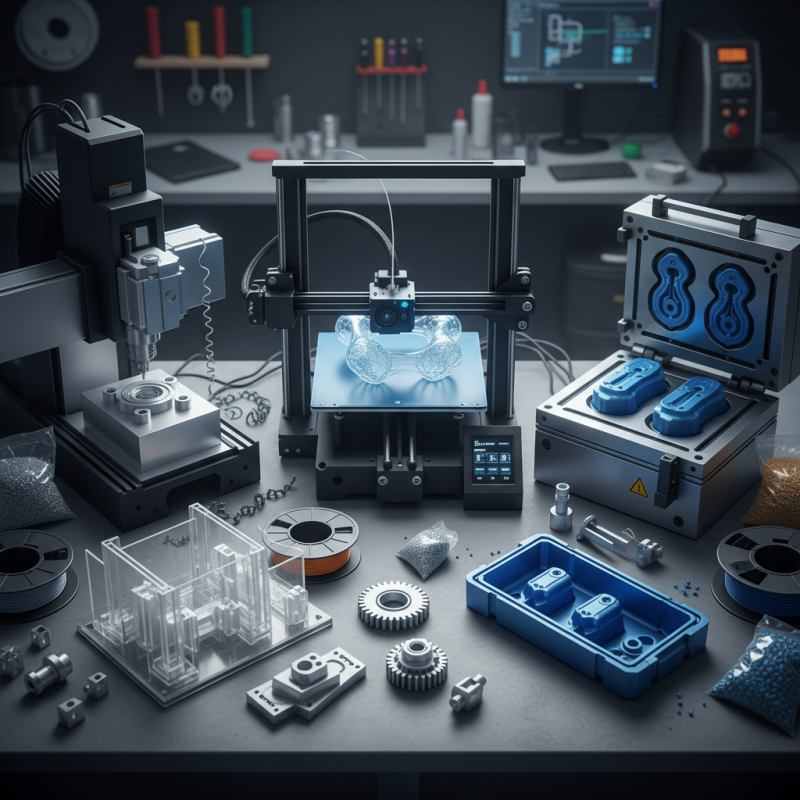
Understanding the top types of prototype manufacturing techniques is essential for designers and engineers. There are several options, including 3D printing, CNC machining, and injection molding. Each method has its unique advantages and challenges. Variable material selection and speed of production often define the success of a project.
However, not every technique is perfect. Some methods may delay timelines or exceed budgets. It's essential to evaluate each approach critically. Balancing quality with production speed is often tricky. Ultimately, recognizing the strengths and weaknesses of prototype manufacturing techniques is key for innovation and success.
Overview of Prototype Manufacturing Techniques
Prototype manufacturing techniques play a crucial role in product development. They help transform ideas into tangible products. Different methods cater to specific project needs and budgets. Some popular techniques include 3D printing, CNC machining, and injection molding. Each method has its unique advantages and challenges.
3D printing allows rapid iteration. It can produce complex geometries that traditional methods struggle with. However, the material options can be limiting. CNC machining provides high precision and can work with various materials. Yet, it may involve longer lead times compared to 3D printing. Injection molding is ideal for high-volume production but requires significant upfront investment in molds.
Choosing the right technique is not straightforward. The existing capabilities of your team also impact selection. Balancing cost, time, and quality is essential. A method may excel in one area but fall short in another. Reflecting on these trade-offs is vital as you embark on your prototype journey.
Additive Manufacturing: 3D Printing in Prototyping
Additive manufacturing is revolutionizing prototyping. Specifically, 3D printing offers unique benefits for designers and engineers. This technique allows rapid creation of complex shapes. Unlike traditional methods, it builds objects layer by layer. The precision is impressive. However, achieving the perfect fit often requires adjustments.
Material selection is critical in 3D printing. Designers must choose wisely. Plastics, metals, and composites each yield different results. Some materials are too brittle. Others may require post-processing. Finding the right balance can be challenging. Often, prototypes support multiple iterations before finalizing the design.
The process is not without flaws. Print quality varies, and minor errors can lead to significant issues. Inexperienced users may struggle with settings. It’s essential to monitor each print closely. Continuous learning and adaptation are necessary. As technology evolves, staying informed is key to successful prototyping.
Top Types of Prototype Manufacturing Techniques You Should Know
| Technique |
Description |
Materials Used |
Best For |
| 3D Printing |
Additive manufacturing technique creating objects layer by layer from digital models. |
Plastics, metals, ceramics |
Rapid prototyping and complex geometries |
| CNC Machining |
Subtractive manufacturing process where material is removed from a solid block. |
Metals, plastics, composites |
High precision parts and functional testing |
| Injection Molding |
Manufacturing process that involves injecting molten material into a mold. |
Thermoplastics, thermosetting polymers |
Mass production of plastic parts |
| Vacuum Casting |
Process for creating silicone molds from a master part to produce copies. |
Silicone, polyurethane |
Small batch production or high-quality finishes |
| SLA (Stereolithography) |
3D printing process using UV light to cure resin into solid parts. |
Photosensitive resin |
High detail prototypes |
Subtractive Manufacturing: CNC Machining Explained
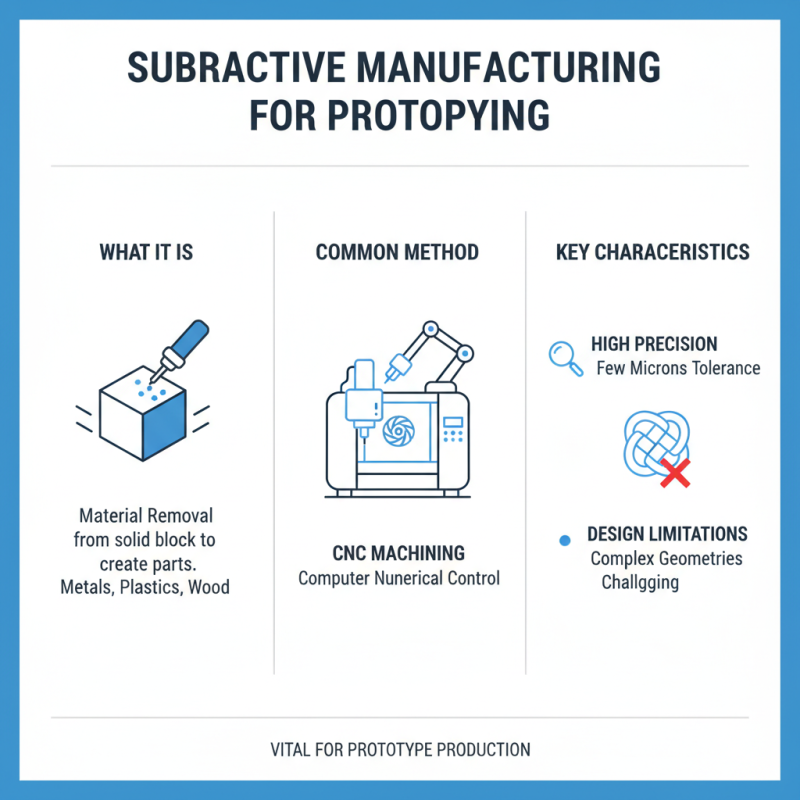
Subtractive manufacturing is a vital technique in prototype production. CNC (Computer Numerical Control) machining is the most common method used. This process removes material from a solid block to create parts. It can be metals, plastics, or wood. The precision can be impressive, often achieving tolerances of a few microns. However, not all designs translate well to this method. Complex geometries may pose a challenge.
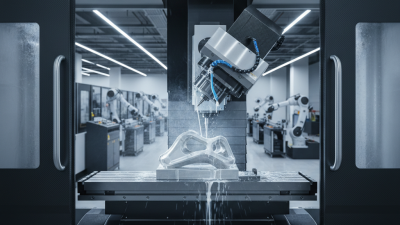
In CNC machining, a programmed computer controls the cutting tools. This allows for repeatability and accuracy. Yet, there are drawbacks. Material waste can be significant. Each cut removes unused material, which can be costly. Designing for CNC often means simplifying the geometry. There’s a balance between creative design and manufacturability. Mistakes in the initial design can lead to costly iterations.
This technique excels at creating functional prototypes. However, it may not be the best choice for every application. The choice of material and complexity of the design are crucial factors. CNC machining has its limitations. Understanding these is key to effective prototype development.
Injection Molding: A Key Method for Producing Prototypes
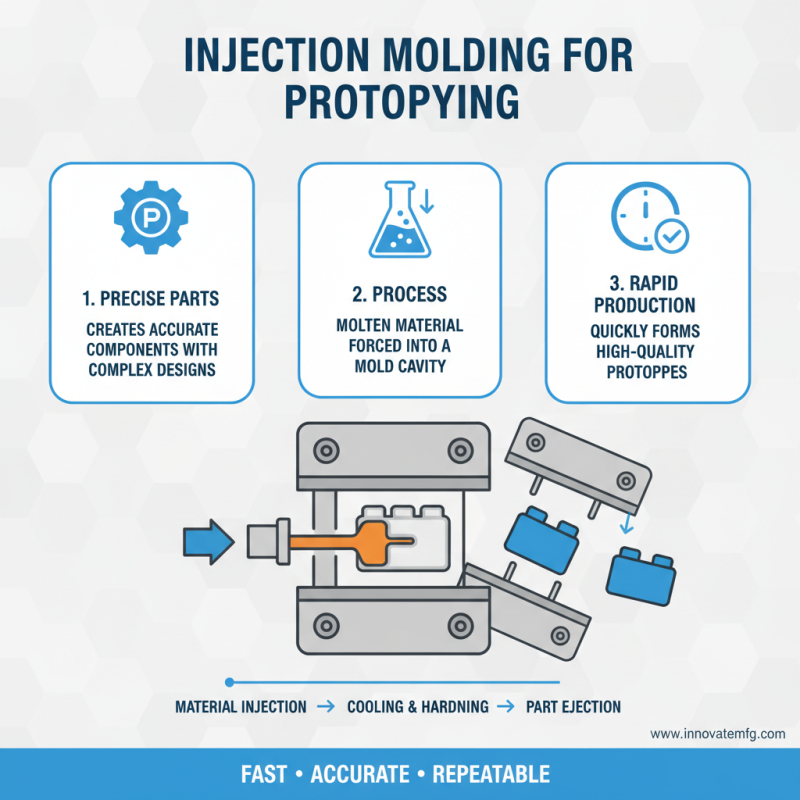
Injection molding is a widely used technique for prototype manufacturing. It creates precise parts with intricate designs. This method involves forcing molten material into a mold. The material cools and hardens, forming the desired shape. It’s a fast way to produce high-quality prototypes.
One of the main advantages of injection molding is its efficiency. This technique can produce a large number of parts in a short time. However, creating the mold is often costly and time-consuming. Designers must consider long-term production needs when investing in molds. It's essential to get the design right to avoid costly modifications later.
Despite its benefits, injection molding has limitations. It may not be suitable for all prototypes, especially those requiring quick iterations. Rapid prototyping methods like 3D printing might be better for testing initial concepts. Balancing speed, cost, and quality remains a challenge for designers and engineers.
Rapid Prototyping: Benefits and Applications in Design
Rapid prototyping has transformed the design landscape. This technique allows for quick creation and testing of prototypes. According to a report from Wohlers Associates, the rapid prototyping market grew by 25% in 2021 alone. This significant growth shows how essential this process is for various industries.
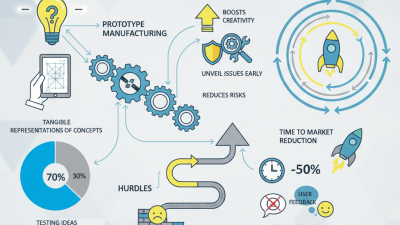
Benefits of rapid prototyping include faster time-to-market. Companies can test and refine designs quickly. Designers can evaluate concepts before full-scale production, saving resources. This approach facilitates better collaboration between teams. It creates opportunities to integrate feedback early in the design process.
Applications of rapid prototyping are vast. Industries from automotive to healthcare utilize these techniques. For example, 3D printing is commonly used in creating surgical tools. However, there are challenges. The accuracy of some methods can vary. It's crucial to choose the right technique for each project. Continuous improvement is needed for optimal results.