
post thumbnail
Our pricing model is flexibly designed to give you the most possible advantages of a continuing partnership.

What Is a Soft Lamination Machine and How Does It Work?

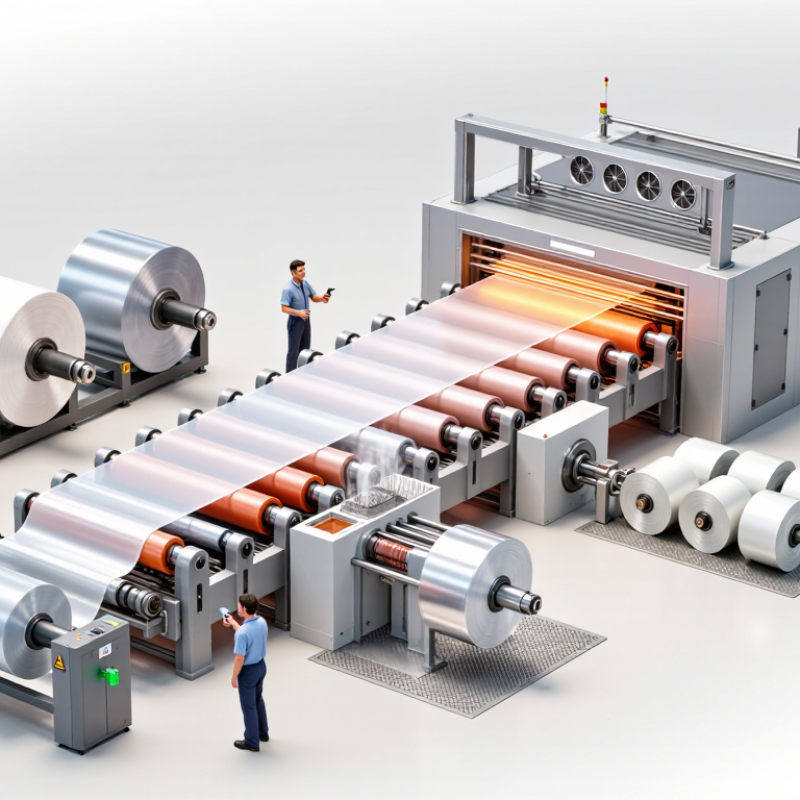
A Soft Lamination Machine joins two or more flexible materials into one functional composite. Common materials include plastic film, paper, aluminum foil, and coated substrates. In production, the machine unwinds each web from separate rolls. An adhesive unit applies a controlled layer to one surface. The adhesive may be water-based, solvent-based, or solventless, depending on the model and product requirements.

The web then moves through heated or pressure-controlled rollers. These rollers press the layers together and help create consistent contact. Drying or curing may follow. The finished material is rewound into a larger roll. Small details matter. Uneven tension can cause wrinkles, telescoping, or poor bonding. Excess adhesive may create blocking between layers. Insufficient pressure can leave weak areas that fail during later processing.

This article explains how the equipment works, from unwinding and coating to bonding and rewinding. It also considers the operator’s role. Experienced operators monitor web alignment, roller temperature, adhesive weight, and curing time. They often inspect the roll edge and surface under strong lighting. A clean edge can reveal problems early.

It is tempting to call the process fully automatic. That description is incomplete. Every substrate behaves differently. Humidity, surface treatment, line speed, and adhesive selection can change the result. Reliable operation therefore requires manufacturer guidance, documented settings, and practical testing. The machine may look straightforward, but its performance depends on many connected decisions. Understanding those decisions helps users evaluate quality more accurately and avoid assumptions that seem reasonable but prove costly.
What Is a Soft Lamination Machine and How Does It Work?

Definition, Structure, and Role of a Soft Lamination Machine

A soft lamination machine joins flexible materials into a stable, multi-layer structure. It commonly handles films, foils, paper, and thin fabrics. Its role is practical: it protects printed surfaces, improves stiffness, and supports cleaner converting. “Soft” describes the pressure system, not a weak result.

The machine usually contains an unwinding unit, alignment guides, an adhesive or coating section, heated rollers, cooling rollers, and a rewinding unit. Material moves through the line under controlled tension. Adhesive bonds the layers, while heated rollers help spread it evenly. Cooling rollers then stabilize the finished web.

Temperature, nip pressure, and line speed require close adjustment. Small errors matter.

Operators watch the edges for wrinkles, bubbles, and shifting layers. They may test bond strength and inspect the surface under direct light. Excessive pressure can stretch a thin film. Low pressure can create weak bonding. Cleaning is easy to underestimate, especially around rollers and coating parts. A soft lamination machine cannot repair dusty materials or poor alignment. Its performance depends on preparation, measured settings, and regular checks. The process is highly controllable, but never perfectly forgiving.

Core Components: Unwinders, Soft Nip Rollers, and Rewinders

A soft lamination machine bonds two or more flexible webs with controlled pressure, adhesive, and tension. Its three core sections are unwinders, soft nip rollers, and rewinders. The unwinders hold film, paper, or foil rolls and release them at a stable speed. Load cells and dancer rollers help control web tension. Excess tension can stretch thin film. Too little tension creates wrinkles.

At the center, soft nip rollers press the layers together. One roller usually has a compliant rubber surface, allowing pressure to spread across small thickness differences. The machine must balance nip pressure, line speed, adhesive weight, and drying conditions. A practical operator checks the nip footprint, splice quality, and edge alignment during production. The surface may look smooth, yet trapped air can remain inside the laminate. That assumption deserves testing.

The rewinder then forms a finished roll with controlled hardness and accurate alignment. Poor winding can create telescoping, blocking, or uneven edges. Smithers’ The Future of Global Flexible Packaging to 2028 estimates the global market will approach 315 billion dollars by 2028, increasing demand for stable converting equipment. The Flexible Packaging Association has reported the United States flexible packaging industry at roughly 40 billion dollars in annual sales. These figures explain the pressure for lower waste and repeatable output. Still, every material behaves differently. A setting that works for one film may fail on another. Experienced technicians record tension, nip load, temperature, and roll hardness instead of trusting one preset. Small details matter.

Step 1: Web Alignment and Tension Control at 20–300 m/min

A soft lamination machine bonds flexible films, paper, or foil with controlled pressure and adhesive. Its performance depends on stable material handling before the layers meet. Web alignment and tension control are critical at speeds from 20 to 300 m/min.

The unwinding section releases each web through a dancer roller or load-cell system. Sensors measure edge position and tension continuously. An automatic edge guide makes small lateral corrections before the laminating nip. At 20 m/min, operators can often see tracking problems early. At 300 m/min, a minor alignment error can quickly create wrinkles, telescoping rolls, or uneven edges.

Tension must remain low enough to protect soft films, yet high enough to prevent slack. Closed-loop controls adjust braking, drive speed, and roller torque as roll diameter changes. I have found that starting with conservative tension settings gives more reliable trials. Not every roll behaves perfectly. Material thickness, humidity, splice quality, and adhesive drag can change the result. A useful check is measuring the web edge at several points, not only near the unwind. If the web shifts after acceleration, the correction may be too aggressive. The machine is working, but the process still needs refinement.

What Is a Soft Lamination Machine and How Does It Work? — Step 1: Web Alignment and Tension Control at 20–300 m/min
Operating Speed Typical Web Condition Recommended Tension Control Range Alignment Objective Key Sensors and Devices Typical Control Action Common Risk if Poorly Controlled
20–50 m/min Start-up, threading, short production runs, or heavy and difficult-to-handle webs Low to moderate; approximately 10–35 N per web width Establish a stable web path and remove lateral drift before the laminating nip Edge sensor, manual or motorized guide, load cell, dancer roller Use gradual tension ramping and slow guide corrections to prevent web shock Wrinkles, loose edges, telescoping rolls, and inaccurate layer registration
50–100 m/min Stable production with moderate web acceleration and regular roll changes Approximately 15–45 N per web width Maintain consistent lateral position as the web enters the coating or adhesive zone Non-contact edge sensor, load-cell feedback, nip encoder, web guide actuator Closed-loop tension adjustment compensates for roll diameter and speed changes Uneven adhesive coverage, diagonal wrinkles, and variation in laminate width
100–150 m/min Continuous production with increased sensitivity to roll eccentricity and splice passage Approximately 20–55 N per web width Hold the web centerline within a narrow position band through the unwinding section Proportional edge sensor, load cells, dancer or torque-control system, servo drive Use faster but damped corrections; coordinate guide movement with the line speed Web flutter, edge damage, print-to-film misregistration, and unstable nip entry
150–200 m/min High-speed production with limited time for operator intervention Approximately 25–65 N per web width Keep lateral deviation and longitudinal tension variation within process limits Dual-edge or centerline sensor, high-resolution load cells, automatic tension controller Combine torque control with feedback from load cells and speed synchronization Wrinkling at the nip, adhesive voids, web breaks, and unstable laminate thickness
200–250 m/min High-throughput operation using lightweight films, coated films, or thin paper webs Approximately 30–75 N per web width Prevent web wandering while minimizing tension-induced stretching High-speed optical or ultrasonic sensor, load cells, servo-driven guide, encoder Apply small, frequent corrections with filtered sensor signals and synchronized drives Stretch-related registration error, edge curl, flutter, and intermittent wrinkles
250–300 m/min Very high-speed production requiring optimized roll quality and precise machine setup Approximately 35–85 N per web width Maintain stable alignment and tension during acceleration, deceleration, and splice events High-speed edge or centerline sensor, multi-zone load cells, automatic guide, drive controller Use coordinated tension zones, acceleration feed-forward, and tightly limited guide movement Rapid web breaks, severe wrinkles, layer offset, telescoping, and production stoppage
Technical reference: The tension figures are typical starting ranges expressed as total web force per web width. Final settings depend on substrate type, thickness, width, roll diameter, coating or adhesive system, friction, and allowable elongation. Tension should be increased only enough to maintain a flat, centered web without stretching or deforming the substrate.

Step 2: Adhesive Application at 1–3 g/m² and Soft-Nip Bonding

After the film is unwound, the machine meters adhesive across its surface at about 1–3 g/m². This narrow range demands accurate control. A gravure cylinder, slot die, or metering roller can regulate the coating, depending on the adhesive system. For solventless materials, 1–3 g/m² often describes the applied coat weight, but the technical specification must define it clearly. Too little adhesive may create weak bonding or small unsealed areas. Too much can cause squeeze-out, wrinkles, and unnecessary curing time.

The coated film then enters a soft nip, formed by a compliant rubber roll and a harder counter-roll. The rubber surface spreads pressure gently, helping both webs meet without crushing delicate layers. Nip pressure, roller temperature, line speed, and web tension must work together. Operators should verify coat weight with regular gravimetric checks and inspect the laminate under angled light. Bubbles, silvering, edge lifting, or uneven gloss can reveal poor contact.

Small variations matter. In practice, the process is less tidy than the settings suggest. A clean-looking roll may still produce a weak bond after curing. I would also avoid treating 1–3 g/m² as a universal answer. Substrate porosity, adhesive viscosity, and final-use requirements can shift the correct value. Trial runs, recorded measurements, and controlled adjustments provide more reliable results than visual judgment alone.

Step 3: Drying, Curing, Quality Inspection, and Final Rewinding

After soft lamination, drying and curing determine whether the new web will perform reliably. The machine guides the laminated film through controlled heating zones. Warm air removes residual solvent or moisture. The operator adjusts temperature, airflow, and line speed together. One setting rarely fits every adhesive.

The 2024 Grand View Research report valued the global flexible packaging market at about $291.8 billion in 2023. Such scale makes small curing defects expensive. Operators commonly check bond strength, residual odor, blocking, wrinkles, and tunnel formation. A calibrated thermometer helps, but surface temperature alone can mislead. Internal adhesive layers may still need more curing time. Real production experience matters here.

Quality inspection follows drying and curing. Technicians examine film under angled light, then test samples from the beginning, middle, and end of the roll. The 2023 Smithers market outlook identified performance consistency as a major requirement for modern flexible packaging. That pressure reaches the rewinding station. Tension must remain stable, or telescoping and edge damage can appear later. Final rewinding should produce a firm, even roll with clean edges. Not perfect every time. A rushed inspection can miss slow-developing defects. Operators should record curing conditions, test results, splice locations, and roll identification before release. That record supports traceability and reveals process drift.