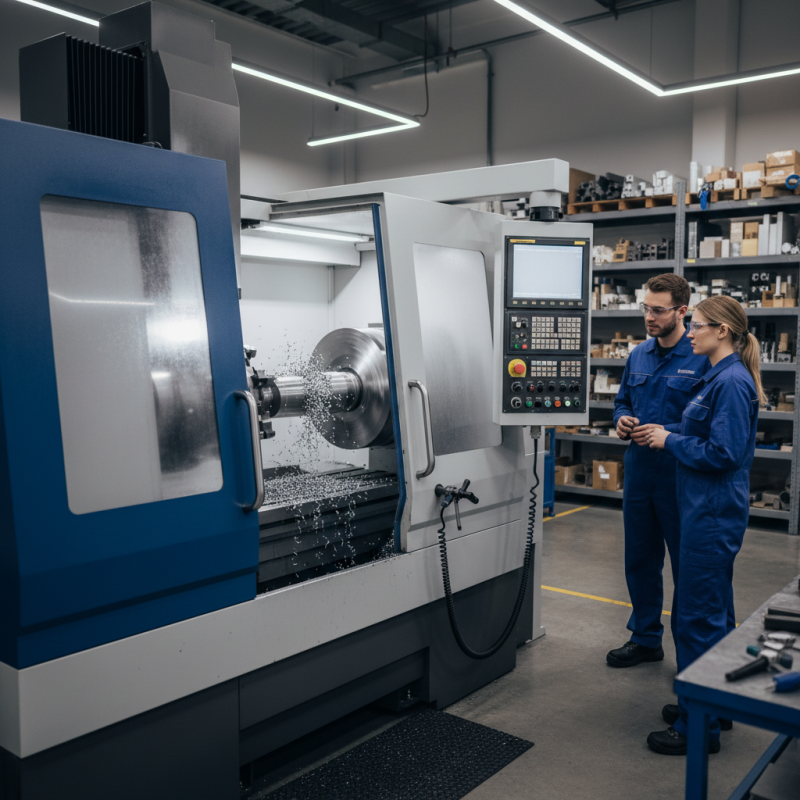
Top Tips for Choosing the Best CNC Turning Center?
Choosing the right CNC Turning Center can significantly impact your manufacturing process. With so many options available, it can be overwhelming. The best CNC Turning Center should fit your specific needs and production goals.
Think about the materials you work with. Different turning centers can handle a variety of materials, from metals to plastics. Analyze the precision required for your projects. A high-precision CNC Turning Center will yield better results. Size also matters—consider the space you have and the dimensions of the parts you'll machine.
Lastly, don’t underestimate the importance of support and maintenance. A reliable provider will help you keep your CNC Turning Center in peak condition. Reflect on these aspects carefully. An informed choice today can lead to greater efficiency and productivity tomorrow.
Key Features to Consider in CNC Turning Centers
When selecting a CNC turning center, pay attention to several key features. The spindle speed is crucial. A higher spindle speed can improve efficiency. However, it might not be necessary for all applications. Consider your specific machining needs carefully.
Tooling options are another important aspect. Exchangeable tool holders enhance versatility. Yet, more tools might complicate setups. Evaluate how often you need to change tools. Next, look at the machine's control system. User-friendly software can reduce setup times. Still, it may require training, which adds to costs.
Finally, size and weight matter too. A compact unit saves floor space, but may limit workpiece dimensions. Balancing size with capabilities is vital. Identify what you prioritize. Don't rush; take time to reflect on what features align with your production goals.
Understanding Different Types of CNC Turning Centers
When selecting a CNC turning center, understanding the different types available is crucial. There are several options, each catering to specific needs. For instance, a standard CNC lathe is versatile and ideal for various tasks. It can handle simple to complex shapes with precision. Meanwhile, a multi-axis turning center allows for more complex geometries. This can be beneficial for projects requiring intricate designs.
Another consideration is the choice between horizontal and vertical configurations. Horizontal lathes often provide better chip removal, which is vital for certain materials. However, vertical setups may save floor space and enhance visibility during operations. Each type has its strengths and weaknesses. Some users may find one type easier to use than another, which can lead to inefficient workflows.
Additionally, it's important to reflect on production requirements. Do you need high precision or speed? Is volume a priority? These questions will guide your choice. Choosing the right CNC turning center is not just about features. It involves understanding these nuances and recognizing how they align with your specific needs.
Evaluating the Precision and Accuracy of CNC Machines
When choosing the best CNC turning center, precision and accuracy are paramount. These qualities ensure that every component produced meets the required specifications. Evaluate the machine's tolerance levels closely. A CNC machine with a tight tolerance will yield better results. Small deviations can lead to significant issues downstream, affecting the overall project.
Look for machines that have advanced feedback systems. These systems constantly check alignment and precision throughout the machining process. This feature helps maintain quality. It's crucial to pay attention to the coolant system as well. A well-designed coolant system can reduce thermal expansion. This, in turn, enhances accuracy and extends tool life.
Consider the stability of the machine. A sturdy base reduces vibrations during operation. Vibrations can compromise precision. Additionally, read reviews from users to understand real-world performance. Try to find feedback about long-term reliability. Reflect on whether the capabilities of the CNC machine match your specific needs. Ultimately, precision and accuracy can significantly impact your production quality.
Assessing the Software Compatibility for CNC Operations
When selecting a CNC turning center, software compatibility is crucial. Modern CNC systems require software that can seamlessly interface with machines. According to industry reports, 70% of CNC users prioritize software compatibility for smooth operations. A mismatch can lead to inefficiencies and increased downtime.
Choosing software involves examining your current programs and data formats. Not all CNC software supports the same file types. For instance, some may excel in G-code, while others focus on CAD integration. This discrepancy can hinder workflow. Therefore, assess the software's capacity to adapt to evolving needs.
Training on new software can be a challenge. Employees may need time to adjust, and this can affect productivity. Statistically, about 60% of manufacturers report delays due to inadequate software training. It’s vital to consider not just the software, but also the support and resources it offers.
Factors Influencing Cost and Budget for CNC Turning Centers
When choosing a CNC turning center, cost is a crucial factor. Several elements influence pricing. Machine specifications, such as size and power, play significant roles. High-precision components often come with a higher price tag. Additionally, the complexity of the software can impact costs. Advanced features may offer efficiency but often at a premium.
Consider your budget wisely. It's essential to balance quality and affordability. A cheaper machine may save money initially but could lead to higher maintenance costs. Reflect on production needs too. Will the machine handle the volume? Factor in potential downtime, as it could affect your overall production rate and efficiency.
Don't forget about after-sales support. Solid customer service can save you from future headaches. Investing in training may also be necessary. Untrained operators can lead to inefficiencies. While a lower cost may seem attractive, sometimes, short-term savings lead to long-term challenges. Choose carefully, and think ahead.
Cost Factors for CNC Turning Centers