
post thumbnail
Our pricing model is flexibly designed to give you the most possible advantages of a continuing partnership.

China Top 10 Back Stretcher Board Manufacturers

Choosing a Back Stretcher Board involves more than comparing shapes and prices. Buyers need to examine board materials, surface finish, support points, adjustment options, and the clarity of product instructions. For manufacturers, these details affect both daily usability and confidence in the product. A smooth edge, stable base, and clearly marked settings are small features, but users notice them.

Dr. Stuart McGill, a spine biomechanics researcher, offers a relevant principle—paraphrased here from his work: controlled movement matters more than extreme stretching. That distinction is useful when evaluating a Back Stretcher Board. A product should not promise to fix every back problem. Instead, manufacturers should explain intended use, adjustment steps, and sensible limits. Not every board suits every user. That matters.

This guide introduces ten Chinese manufacturers for buyers comparing product design, production capabilities, customization, and quality practices. It focuses on practical questions: What materials are used? Are dimensions and load limits clearly stated? Can the supplier provide consistent specifications and samples? A polished product photo cannot answer those questions. Supplier claims also deserve verification, because details may differ between models or production runs. This is not a perfect ranking; available information can be uneven. Treat the list as a starting point for careful comparison, not a substitute for product testing or independent checks. The best choice is the one whose documented features match the buyer’s needs, not simply the lowest quote.
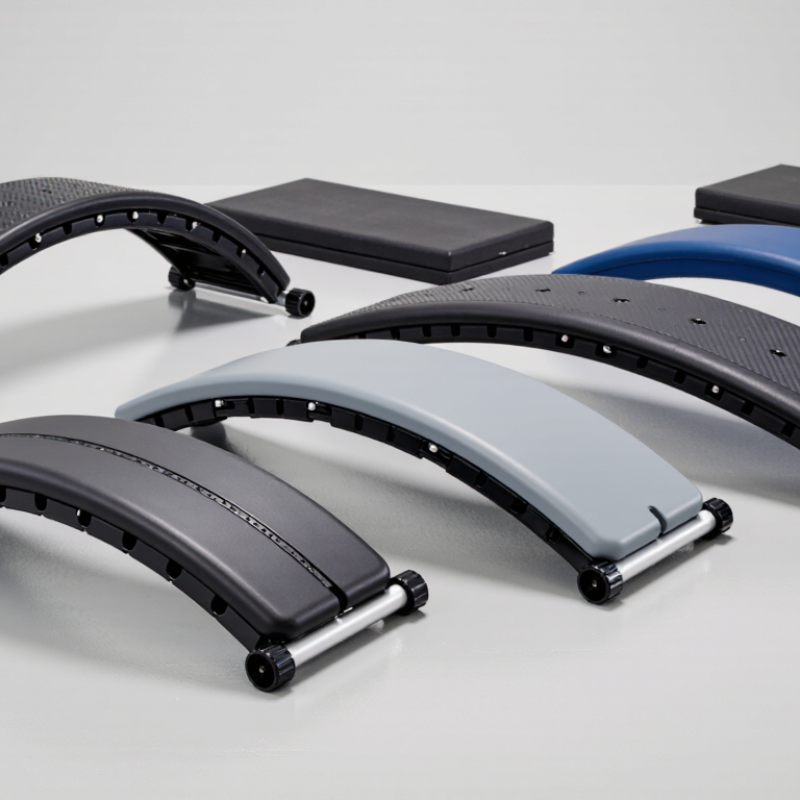
China Top 10 Back Stretcher Board Manufacturers

What Is a Back Stretcher Board and How Is It Used?

A back stretcher board is a shaped support designed to gently extend the back while a person lies on it. Most models have a firm center and raised curves that support the spine. Some include adjustable height settings or small pressure points. The board does not actively stretch muscles; body weight and position create the stretch. It is a mobility aid, not a diagnosis or cure.

To use one, place it on a stable, level floor and follow its instructions. Lie down slowly, keeping your knees bent if that feels more comfortable. Begin with a few minutes at a low setting. Breathe normally and avoid forcing your back into the curve. A board can feel awkward at first. Treat that as feedback, not a challenge to push harder. Stop if you feel sharp pain, numbness, or worsening symptoms. People with back conditions, recent injuries, or concerns should ask a qualified health professional before use.

Tips: Wear a thin shirt if the surface feels uncomfortable. Keep your feet grounded when getting on and off. Check the board for cracks or slipping before each session. Small steps work better than dramatic stretches.

How Are Back Stretcher Boards Designed and Manufactured?

How Are Back Stretcher Boards Designed and Manufactured?

Design begins with the board’s curve, width, and contact points. These features affect how the body rests on the surface. Depending on the product, manufacturers may use molded polymer or laminated wood. Ribs or internal supports help the board resist bending under normal use. Rounded edges and a carefully finished surface reduce rough contact with clothing or skin. There is no single curve for every body, and that remains a design limitation.

Manufacturing methods vary by material. Polymer parts may be injection-molded, while wooden boards can be cut, pressed, and sanded into shape. Workers or automated systems check dimensions, surface finish, and structural consistency. Some designs include adjustable height settings, which need secure, repeatable engagement. A board that looks smooth may still have weak joints or uneven support. That detail is easy to overlook.

Tips: Check for stable contact on a flat floor. Test adjustments gently. Stop if the board shifts, cracks, or feels uncomfortable. A product description cannot replace hands-on inspection, and fit can vary between users.

What Qualities Distinguish Leading Chinese Manufacturers?

Leading Chinese back stretcher board manufacturers distinguish themselves through repeatable engineering, not bold claims. Frames should maintain alignment under repeated loading, while textured contact points help prevent slipping without irritating skin. Ask for material specifications, batch traceability, load-test records, and clear user-weight limits. Small details matter. Even hinges, rounded edges, and legible instructions can reveal careful process control. Factories that record defects and corrective actions are better positioned to keep production batches consistent. These checks say more than a glossy prototype.

The need is real, but it should not be overstated. A 2023 Global Burden of Disease analysis published in The Lancet Rheumatology estimated that 619 million people had low back pain in 2020. It projected 843 million cases by 2050. Those figures describe a health burden, not proof that stretching boards prevent or treat back pain. Responsible suppliers make that distinction clear. Strong manufacturers also test comfort across different body sizes and provide practical setup guidance. Buyers can request independent test summaries and inspect samples after repeated flexing, not only on day one. A polished sample can still hide a weak hinge. Production checks deserve equal attention, and even careful factories can miss things. Documented feedback loops help catch them.

Who Are China’s Top 10 Back Stretcher Board Manufacturers?

Who Are China’s Top 10 Back Stretcher Board Manufacturers?

China’s top back stretcher board manufacturers are best identified by their product engineering, factory controls, and track record—not by online rankings alone. A credible shortlist may include specialists in molded plastic boards, suppliers of adjustable stretching equipment, and factories producing boards with padded surfaces or massage points. These makers serve different needs, so “top” depends on the intended user and sales market. A low price is not proof of quality.

Look for clear product specifications, stable materials, and documented checks on load capacity and repeated use. Ask how the frame, hinges, and contact surface are inspected. Request samples and examine edges, finish, packaging, and instructions. Small details matter. I would not trust a polished catalog by itself; even a good supplier can have uneven batches.

Tips: Compare the same board type and dimensions. Ask for recent inspection records, sample photos, and production lead times. Confirm whether packaging protects the board from scratches and crushed corners during shipping.

For a practical top-ten comparison, assess each factory’s relevant experience, customization limits, communication, and ability to provide consistent quality. Check whether claims match the sample and written specifications. If the supplier avoids specific answers about materials or testing, keep looking. A shortlist built on evidence is more useful than a ranked list built on advertising.

How Can Buyers Compare Suppliers and Check Product Quality?

Buyers comparing back stretcher board manufacturers should look beyond catalog photos. The World Health Organization’s 2023 summary of Global Burden of Disease research estimated that 619 million people experienced low back pain in 2020. The figure may reach 843 million by 2050. This demand makes careful supplier checks worthwhile, but it does not prove that any stretcher board relieves pain. Compare board dimensions, material thickness, adjustment positions, stated load limits, and warranty terms. Ask how each figure was measured. Details matter. A polished sample can still conceal uneven joints or weak locking points.

Request test records for load capacity, repeated adjustment, and surface stability, then check that the tested model matches the quoted product. Ask for evidence. A supplier’s quality-management certificate, such as ISO 9001, describes its management system; it is not proof that a specific board passed performance tests. Inspect a production sample for sharp edges, loose hinges, slipping contact pads, and consistent angles. Also ask how defects are recorded and how batch changes are controlled. The checks take time. I would not treat one passing sample as a complete quality judgment; the gap between samples and bulk production deserves a second look.