What Are the Top 10 Types of Filter Units?
Filter Units are easy to overlook until pressure rises, airflow drops, or a process line stops. Yet the right unit can protect equipment, improve product consistency, and reduce avoidable maintenance. Grand View Research estimated the global industrial filtration market at USD 35.17 billion in 2023, with projected growth through 2030. That figure signals a broad, changing field—not a reason to buy the most expensive filter.
ASHRAE engineer William P. Bahnfleth has noted that “ventilation and filtration provided by HVAC systems can reduce the airborne concentration of SARS-CoV-2.” The point reaches beyond a single application: filtration performance depends on the system, the target contaminant, and operating conditions. A clean-looking cartridge can still be the wrong choice. That detail matters.
This guide compares ten common types of Filter Units, from bag and cartridge systems to HEPA, membrane, and electrostatic designs. It considers what each captures, where it fits, and what operators should check, including flow rate, pressure drop, cleaning needs, and replacement intervals. Those details can vary by installation, so the categories are a starting point, not a substitute for engineering review. The evidence is useful, but never complete. A filter that works well in a dry workshop may perform differently in a humid plant or a changing production line. The goal is practical: understand the trade-offs before selecting a unit.
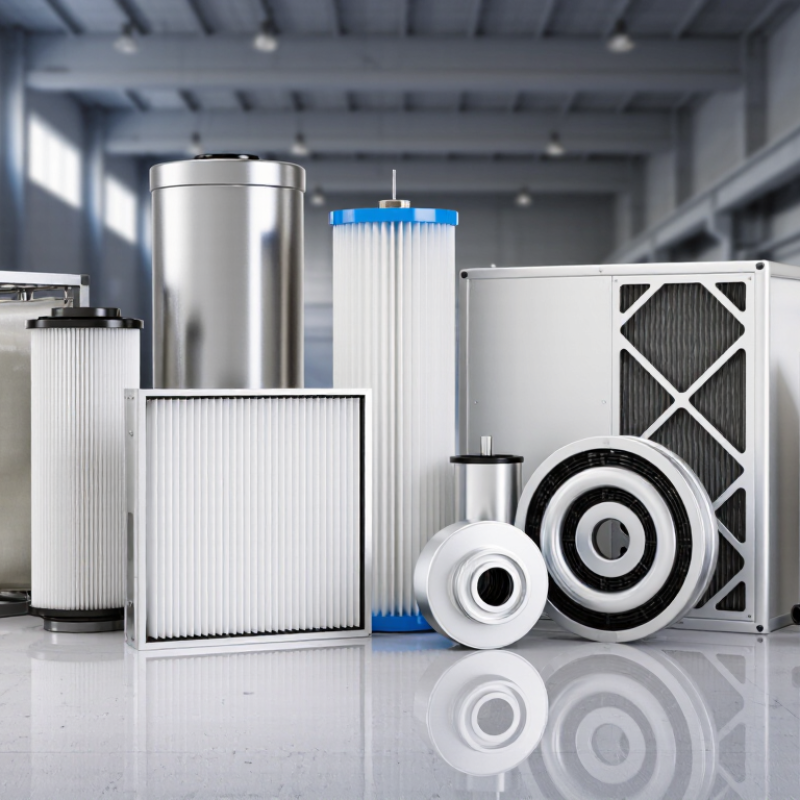
What a Filter Unit Is and How It Removes Contaminants
A filter unit is an assembly that directs air or liquid through a material designed to capture, separate, or reduce unwanted substances. It may contain a cartridge, screen, membrane, or layered media inside a sealed housing. The right design depends on the fluid, contaminant, flow rate, and required level of cleanliness. “Filter” is a broad term.
Some units remove particles by trapping them in tiny openings. Others use fibers that catch dust, sediment, or droplets as the fluid passes through. Activated media can bind certain dissolved compounds to its surface, while membranes separate substances according to size. A unit may combine these methods, but no single design removes every contaminant. It is not magic.
In practical use, a clogged filter can reduce flow or change pressure. A clear-looking liquid may still contain substances that a basic screen cannot capture. Check the unit’s stated filtration rating and the conditions it was tested under; ratings are not always directly comparable. Maintenance matters, too. Replacing media too late can undermine performance, while replacing it too early wastes usable material. The word “clean” can be too broad, so users should identify which contaminants need control and verify that the filter is suited to them.
The Main Ways Filter Units Are Classified
Filter units are classified by how they capture contaminants, what they remove, and where they operate. Some trap particles in fibrous media; others use electrical charge, gravity, or a selective barrier. A filter’s name may describe its shape or its function. These labels can overlap, so comparing units by name alone can mislead.
Common forms include panel, pleated, bag, and cartridge filters. HEPA units are designed to capture very fine airborne particles under specified test conditions. Activated-carbon units adsorb certain gases and odors. Electrostatic units charge particles, while cyclone units separate them through spinning airflow. Membrane and sand-media filters suit different liquid-filtration tasks. That makes ten familiar types, but not ten equal categories.
Other useful classifications include the material filtered, particle size, airflow or liquid-flow rate, and installation method. A pleated unit, for example, may serve a ventilation system, while a cartridge may be used in a liquid line. Check the rated efficiency and the pressure drop; tighter filtration can restrict flow. Fit matters, too. A poorly seated filter can let dust pass around its edges. In practice, product labels sometimes simplify these trade-offs, and I would verify the test conditions before comparing claims.
Ten Common Types of Filter Units
Filter units differ by the particles they capture and the fluid or air they treat. Sediment cartridges trap visible grit and rust. Pleated cartridges provide more surface area in a compact housing. Bag filters collect larger particles in liquid streams and are often practical when solids are heavy. Screen filters and strainers catch coarse debris, such as flakes or leaves, before it reaches sensitive equipment.
Disc filters use stacked grooved elements to hold particles. Sand or other media-bed units filter water through layers of granular material. Activated carbon units adsorb certain odors and dissolved compounds, but they do not remove every contaminant. Membrane units separate very fine particles, with performance depending on pore size and operating conditions. For air, HEPA units capture very small airborne particles when correctly installed and maintained. Electrostatic units charge particles and collect them on plates. Different job.
Selection depends on flow rate, particle size, pressure limits, and cleaning needs. A cartridge that works well in clear water may clog quickly in a stream carrying lots of sediment. Real installations are less tidy than product charts suggest. Maintenance matters. Check seals, pressure drop, and replacement intervals; a poorly fitted unit can let contaminants bypass the filter. A little uncertainty remains until the fluid or air is tested under actual operating conditions.
How Filter Types Differ by Design and Application
Filter units differ by what they capture, how air moves through them, and how often they need service. Panel and pleated filters sit in HVAC frames; pleats add surface area without enlarging the frame. Bag filters use deep fabric pockets for dusty, high-volume systems. Cartridge filters fit compact housings and are common in process equipment. HEPA and ULPA units use dense media for very fine particles, but require compatible fans and careful seals. Small gaps matter.
Activated-carbon filters adsorb many gases and odors, while electrostatic units charge particles for collection. Ceramic filters are washable and durable, though cleaning and flow rates affect performance. Membrane filters provide a fine barrier in liquid or specialized air applications. These ten designs solve different problems; choosing by efficiency alone can create excess pressure drop or frequent replacement.
For room air cleaners, the U.S. Environmental Protection Agency’s Guide to Air Cleaners in the Home recommends a smoke CADR of at least two-thirds of the room’s area, assuming an eight-foot ceiling.
A 300-square-foot room therefore calls for about 200 CADR.
ASHRAE Standard 52.2 rates HVAC filters across particle-size ranges, helping compare media under test conditions. Real installations can differ. Dust loading, bypass leaks, and fan capacity all matter, and these details are easy to underestimate.
How to Choose a Filter Unit for a Specific Need
Choosing a filter unit starts with the material you need to clean. Air, water, oil, and process liquids require different designs. Common options include sediment cartridges, bag filters, activated-carbon units, membrane filters, HEPA units, and electrostatic collectors. Each targets different contaminants, so a unit’s name alone tells you little. Small details matter.
Check the particle size you need to capture, then compare it with the filter’s rated efficiency. A finer rating may improve particle removal but can also increase pressure drop and shorten service life. For example, a workshop handling visible dust may need a different setup from a clean area with fine airborne particles. For liquid service, consider flow rate, fluid viscosity, and chemical compatibility. A quick check of the operating temperature and pressure can prevent costly mismatches.
Think about maintenance before choosing. A bag filter may be simple to replace, while a membrane system may need careful cleaning and monitoring. Where will used elements be changed, and how often can the process stop? Those questions are easy to overlook. I would compare expected running costs, not just purchase price, and confirm performance against the supplier’s test data. Real conditions can differ from a neat specification sheet. If the application is unusual, trialing a sample unit may reveal problems that calculations miss.
Top 10 Filter Unit Types: Typical Filtration Rating
Approximate nominal particle-size ranges are shown in micrometers (µm). Ratings vary by design and manufacturer; reverse osmosis and adsorption filters are not included because they are not consistently described by a particle-size rating.
Choosing a filter: Match the filter to the contaminant and required removal level, then check flow rate, pressure drop, fluid compatibility, and maintenance needs. Use the rating as a starting point, not a guarantee of performance.