
Choosing a reliable supplier for Cast Iron Castings takes more than comparing prices or polished product photos. China has foundries serving different markets, processes, and order sizes, so a useful manufacturer overview should explain how its candidates were assessed. Casting researcher John Campbell is often quoted as saying, “The quality of a casting is determined by the quality of the liquid metal.” That principle points to practical questions: How does a foundry control melt chemistry, pouring temperature, and testing? Can it explain its process clearly?
A credible shortlist should consider material grades, casting methods, machining capacity, inspection procedures, and experience with comparable components. Look for evidence such as sample inspection reports, traceability records, and clear answers about defect handling. Details matter. A polished brochure is not proof. Buyers should also confirm whether a supplier can meet drawing tolerances and provide consistent production, not merely a promising prototype. When available, independent audits and recognized quality-management certifications can add useful context, but they do not replace product-specific verification.
This guide introduces China-based manufacturers of Cast Iron Castings and the capabilities buyers may want to compare. It is not a universal ranking: the right choice depends on part geometry, annual volume, delivery needs, and technical support. Some information may be incomplete or change over time. That deserves honest scrutiny. Request current documentation, discuss a representative part, and assess how carefully the supplier handles questions before placing an order. A thoughtful comparison takes effort, but it can reveal differences that a low quotation alone cannot.
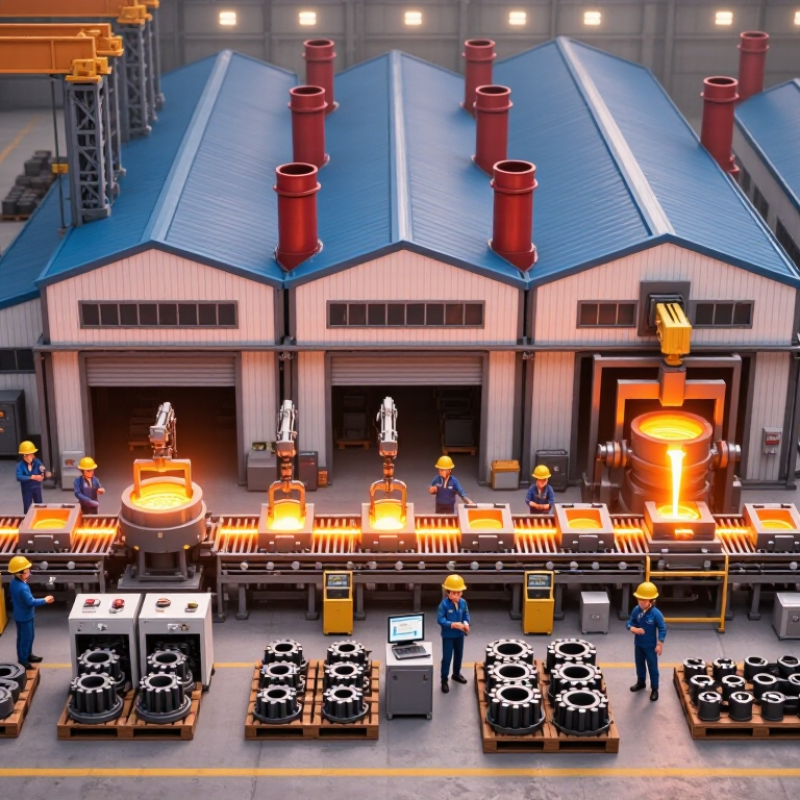
China’s cast iron casting industry serves construction, water infrastructure, machinery, agricultural equipment, and automotive supply chains. Producers commonly work with gray iron and ductile iron, selecting grades for strength, vibration damping, wear, and machinability. Sand molding remains widely used for complex shapes and varied order sizes. Other processes may suit tighter requirements. The right choice depends on geometry, volume, and inspection needs. Details matter.
Quality is shaped by more than the furnace. Charge materials, melt chemistry, inoculation, mold moisture, and cooling conditions can influence defects and mechanical properties. A capable foundry should explain its process controls and provide records for dimensional checks and material tests. Machining capacity also matters when castings must fit pump housings or valve assemblies without costly rework. Not always.
China’s supplier base is broad, but capabilities differ by plant and product category. Buyers can compare drawings, tolerances, order volumes, traceability, and sample approval methods before assessing quotations. A low unit price may exclude tooling, finishing, or inspection costs. I would not assume a large facility guarantees consistent output; documented controls and repeatable samples offer better evidence. Some uncertainty remains when specifications are incomplete. Clear communication helps, but it cannot replace verification.
China Top Cast Iron Castings Manufacturers?
Cast iron production begins with an approved drawing and a pattern that shapes the mold cavity. Foundries make sand molds and cores, then melt iron in induction furnaces or cupolas. Operators adjust the melt’s chemistry and temperature before pouring it into the mold. After cooling, workers remove the sand, trim gates, and clean the casting. Modern Casting’s 58th Census of World Casting Production reports that China produced about 51.8 million metric tonnes of castings in 2022, reflecting the scale of its foundry sector.
Inspection follows. Depending on the part, checks may include dimensional measurement, hardness testing, and nondestructive examination. Some castings also need heat treatment or machining to meet drawing tolerances. A clean process chart can hide the messy part: sand moisture and pouring temperature can vary, affecting defects and consistency. Small differences matter.
Tips: Ask suppliers for material test records, inspection criteria, and sample results. Confirm how they control mold preparation and melt chemistry. For a critical component, review the first article closely; a smooth surface alone does not prove internal quality.
Leading cast iron casting manufacturers in China serve industries ranging from pumps and valves to agricultural equipment. Their capabilities differ: some focus on high-volume molded parts, while others handle large, custom castings. A supplier’s location matters less than its control of melting, molding, finishing, and inspection. Details matter.
When evaluating a foundry, ask how it controls chemical composition and pouring temperature. Request material certificates and inspection records for comparable parts. For a pump housing, for example, checks may include wall thickness, dimensional tolerances, and pressure testing after machining.
Confirm whether machining is performed in-house, and clarify how patterns are stored and maintained. These practical questions reveal more than a broad claim of advanced production.
A site visit can show how sand, cores, and castings move through the workshop. Look for organized work areas, calibrated measuring tools, and clear records linking batches to inspections. Still, a tidy factory visit cannot guarantee consistent results across every order. That is worth remembering.
A pilot batch can help assess surface finish, porosity, and delivery communication before production scales up. Share drawings, expected volumes, and acceptance criteria early; vague specifications often create avoidable rework.
China’s cast-iron foundries work across gray iron, ductile iron, and alloy grades. The World Foundry Organization’s 2022 Global Casting Production Census recorded 105.5 million metric tons of castings worldwide in 2020, with China producing about 51.8 million tons. That scale supports broad material and process options, but capacity alone does not prove a supplier fits a specific part. Gray iron suits housings where vibration damping and machinability matter. Ductile iron offers greater strength and toughness for hubs, pipe fittings, and load-bearing components. Alloyed grades can improve wear or heat resistance, though they may raise cost and complicate machining.
Chinese foundries commonly offer sand casting, shell molding, core making, heat treatment, and CNC machining. A buyer should check whether these steps happen in-house or through subcontractors; the distinction can affect lead time and traceability. Ask for material certificates, tensile-test results, dimensional inspection records, and sample castings from the intended production process. For a pump body, inspect core alignment and wall thickness around internal passages. These details matter. Not every foundry excels at every alloy or casting size, and published capability lists can be optimistic. A trial order may reveal issues that a polished brochure misses.
Minimum tensile strength for selected gray iron (HT) and ductile iron (QT) grades specified in Chinese standards.
Values are grade-level tensile-strength benchmarks in MPa, based on GB/T 9439 for gray iron and GB/T 1348 for ductile iron. They are not production or market-share figures; properties in finished castings depend on factors such as section thickness and the applicable test requirements.
Choosing a cast iron casting manufacturer starts with the part, not the sales pitch. Share the drawing, operating conditions, and expected annual volume. Ask which iron grades the foundry pours and how it controls chemistry, cooling, and section thickness. These choices affect strength, machinability, and defect risk. Request sample inspection records, including dimensions and material test results. A polished certificate is useful, but it should match the actual production process. Ask how the supplier handles porosity, shrinkage, and rejected castings. Small details matter. Promises are easy.
Review the tooling plan, core-making method, and machining capability before comparing prices. A first-article casting can reveal warping or machining problems that drawings alone may not show. Ask to inspect the part against agreed tolerances, and clarify who pays for pattern changes. For repeat orders, check whether process settings and batch records are retained. Compare quotes line by line; a low price may exclude testing, finishing, or packaging. My own bias is to favor detailed reports, though shop-floor consistency matters just as much. No audit removes every risk. Treat early samples as evidence, not a guarantee, and discuss how production issues will be investigated and corrected.
Use this practical comparison framework to assess foundries without relying on company names or unverified rankings. Confirm each capability against the specific part drawing, material specification, production volume, and inspection plan.
| Evaluation dimension | What to verify | Useful evidence or reference | Scoring guide |
|---|---|---|---|
| Material and grade control | Confirm the foundry can produce the specified gray or ductile iron grade and control chemistry, microstructure, and mechanical properties. | Request a sample material test report and confirm the applicable specification, such as EN 1561 for gray cast iron, EN 1563 for spheroidal graphite cast iron, ASTM A48/A48M for gray iron, or ASTM A536 for ductile iron. | 1 = grade unclear 3 = reports available 5 = repeatable, traceable results |
| Casting process fit | Match the production process to part geometry, required surface quality, batch size, and tooling budget. | Ask whether the proposed route is green-sand, resin-bonded sand, shell molding, or another suitable process, and request an explanation of its trade-offs for the actual part. | 1 = no process rationale 3 = suitable route proposed 5 = route supported by trials |
| Dimensional capability | Check that critical dimensions, datum features, machining allowances, and drawing tolerances are understood before tooling approval. | Request a dimensional inspection report from a representative casting. ISO 8062-3 provides a system of dimensional tolerance grades for castings; the appropriate grade depends on the process, size, and drawing requirements. | 1 = no inspection plan 3 = critical features checked 5 = documented capability and corrective action |
| Defect prevention and inspection | Review controls for shrinkage, porosity, inclusions, sand-related defects, and other risks relevant to the part. | Ask for the control plan and sample records. Where required by the drawing or application, verify access to suitable non-destructive testing, such as radiographic or magnetic-particle testing, and agree acceptance criteria in advance. | 1 = visual checks only 3 = risk-based checks 5 = agreed, traceable inspection plan |
| Pattern and tooling management | Confirm who owns the pattern, how it is stored and maintained, and how revisions are controlled. | Request a tooling agreement covering ownership, maintenance responsibility, identification, revision history, and access or transfer arrangements. | 1 = terms not defined 3 = written terms 5 = controlled records and clear ownership |
| Machining and finishing | Determine whether the supplier can deliver as-cast parts, machined parts, or complete components while protecting functional features. | Review machining capability, fixture and datum plans, surface-finish requirements, dimensional reports, and the proposed method for preventing corrosion during packing and shipment. | 1 = capability unverified 3 = sample evidence available 5 = integrated, documented process |
| Quality system and traceability | Check how production lots, material heats, inspection results, nonconformances, and corrective actions are recorded. | Review the current quality-management certificate and its scope, where applicable, but also assess actual production records. A certificate alone does not establish that a specific casting meets its requirements. | 1 = limited records 3 = lot-level traceability 5 = complete, retrievable records |
| Production capacity and delivery | Check available melting, molding, finishing, machining, and inspection capacity against forecast demand and required lead time. | Request a capacity and production schedule for the relevant part family, including tooling lead time, sample approval, batch size, peak-load assumptions, and contingency arrangements. | 1 = no capacity evidence 3 = schedule provided 5 = capacity demonstrated and monitored |
| Quotation and total cost | Compare the complete commercial scope rather than unit price alone. | Check whether the quotation identifies material grade, process, tooling, sampling, testing, machining, packaging, delivery terms, and charges for engineering changes or rework. | 1 = scope unclear 3 = major costs itemized 5 = assumptions and exclusions explicit |
| Sample approval and ongoing control | Ensure the initial sample process demonstrates that the production route can meet agreed requirements and that later changes are controlled. | Agree sample quantity, inspection scope, approval criteria, and change-notification requirements before ordering. Confirm how process, material, or tooling changes will be reviewed. | 1 = informal approval 3 = documented sample review 5 = formal approval and change control |
How to use the table: Score each dimension from 1 to 5, then compare suppliers against the same part-specific requirements. Standards and certification requirements should be confirmed against the current applicable edition and the purchase contract; capability and tolerance depend on the casting, process, and specification.