7 Best Industrial Automation Lens Suppliers Worldwide?
Choosing the right Industrial Automation Lens can determine whether a factory camera detects defects or quietly misses them. In high-speed production, a lens must preserve detail while conveyors vibrate, lighting changes, and operators adjust machine settings. The best supplier is not always the largest name. Application support, optical consistency, delivery reliability, and documented testing matter just as much.
Alexander Hornberg, a recognized machine-vision author and optics specialist, has expressed a practical principle: “The lens determines how much useful information reaches the sensor.” This idea guides the suppliers examined in this article. Their products are compared across resolution, distortion control, working distance, sensor format, mounting options, and performance under demanding industrial conditions. A stainless-steel food-processing line needs different protection from a clean electronics assembly station. A wide-field inspection system also needs different optical behavior from a telecentric measurement setup.
There is no universal winner. Sometimes, a less famous supplier delivers better results for a specific camera and lighting arrangement. Product catalogs can also appear impressive while hiding limitations at the image edges. That is why real testing remains essential. Engineers should inspect sample images, measure distortion, confirm wavelength compatibility, and evaluate focus stability after temperature changes. The following list highlights seven worldwide suppliers that deserve serious consideration. It is not a perfect ranking. Supplier availability, regional service, and application complexity can change the outcome. That uncertainty is worth acknowledging before any purchasing decision.
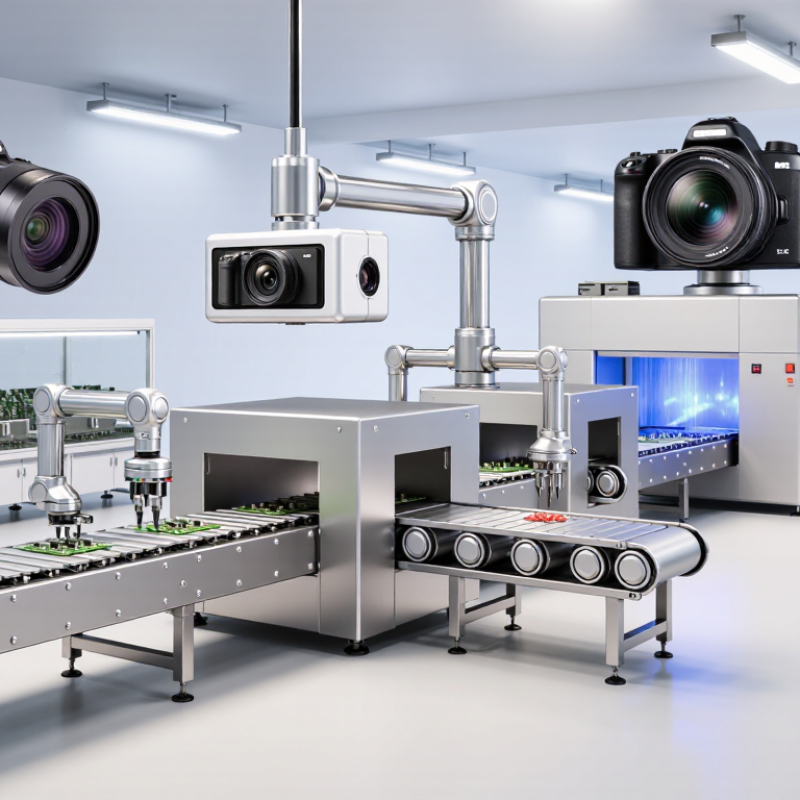
Industrial Automation Lenses: Definition, Functions, and Applications
Industrial Automation Lenses: Definition, Functions, and Applications
Industrial automation lenses are optical components that form precise images for cameras used in production systems. They control magnification, field of view, distortion, and light transmission. In practice, lens choice can decide whether a vision system detects a 0.2-millimeter surface defect or misses it. No lens is perfect.
Their functions extend beyond basic imaging. A low-distortion lens supports accurate measurement, while a telecentric lens reduces size changes caused by object distance. Fixed focal lengths often suit stable inspection stations. Motorized lenses help when products vary in size. According to the International Federation of Robotics, 541,302 industrial robots were installed worldwide in 2023. Each robotic cell may require dependable imaging for positioning, inspection, or quality control. Lens performance therefore affects equipment uptime, not only image sharpness.
Applications include semiconductor inspection, battery assembly, packaging, automotive parts, and logistics sorting. High-speed lines need short exposure times and strong light transmission. Dusty factories may require sealed housings and protective windows. A practical supplier assessment should examine working distance, sensor compatibility, spectral range, calibration support, and long-term availability. MarketsandMarkets estimates that the global machine vision market will reach about 16 billion dollars by 2028, reflecting growing demand for reliable optical inspection. However, report definitions differ, and published forecasts are not guarantees. A lens selected from a catalog may still fail after vibration, heat, or changing illumination. Testing under real production conditions remains essential.
Industrial Automation Lenses: Focal Length and Horizontal Field of View
For a 1/1.8-inch machine-vision sensor with an approximate 7.2 mm sensor width, shorter focal lengths provide a wider field of view, while longer focal lengths provide a narrower view for inspecting distant or detailed objects.
Technical basis: The horizontal field of view is calculated using the rectilinear-lens formula: 2 × arctangent(sensor width ÷ (2 × focal length)). The focal lengths shown are common machine-vision lens options and are presented without company or brand data.
Lens Technologies and Product Features Across the Top Suppliers
7 Best Industrial Automation Lens Suppliers Worldwide: Lens Technologies and Product Features Across the Top Suppliers
Industrial automation lenses now support inspection, robotic guidance, barcode reading, and measurement. The need is growing. The International Federation of Robotics reported 541,302 industrial robots were installed worldwide in 2023. Each camera system needs stable imaging, even beside vibration, dust, and changing illumination.
A 2024 MarketsandMarkets report valued the machine vision market at approximately 11.9 billion dollars in 2024. It also forecasts continued growth through 2029. Leading lens suppliers respond with practical technologies, including low-distortion designs, telecentric lenses, liquid lenses, and short-wave infrared compatibility. Telecentric models keep object dimensions consistent across depth. That matters when a metal component moves several millimeters under a camera. Liquid lenses change focus electronically, reducing mechanical movement during rapid inspection.
Small details matter.
Top suppliers typically offer C-mount and larger formats, broad sensor coverage, anti-reflective coatings, and selectable working distances. Some industrial housings provide sealing against dust and moisture, while rugged barrels reduce focus drift during temperature changes. Testing should include modulation transfer function, distortion, corner sharpness, and performance at the actual aperture. Catalog figures alone can mislead. A lens may resolve a high-resolution sensor but lose contrast near the image edge. A larger aperture is not always better; it can reduce depth of field and expose alignment errors. The ranking of seven suppliers remains imperfect without identical camera, lighting, and factory trials. Real production evidence deserves more weight than impressive specifications.
How to Select the Right Supplier for Your Automation System
Selecting an industrial automation lens supplier requires more than comparing catalog prices. The lens must match your camera sensor, working distance, field of view, and lighting conditions. Check resolution, distortion, aperture range, and wavelength performance. A lens that looks sharp in a showroom may produce blurred edges beside a fast conveyor. I have seen projects fail because engineers ignored vibration and thermal changes. Small details matter.
Ask suppliers for measured optical data, not only general claims. Reliable documentation should include test methods, tolerances, coating information, and compatibility details. Request sample units for a controlled trial. Test them with your actual camera, lighting, enclosure, and production speed. Review environmental ratings when dust, oil mist, or temperature variation is present. Technical support also matters. Can the supplier explain a focus shift clearly? Can they provide replacement parts and stable production records? Experience is useful, but evidence is stronger.
Tips: Define your inspection target before contacting suppliers. Photograph the smallest defect you must detect. Compare at least two samples under identical conditions. Check mounting threads and cable clearance early. Keep a written acceptance checklist. Do not trust one successful image. Repeat the test after warm-up, vibration, and minor lighting changes. A supplier may offer a cheaper lens, but the real cost appears later through false rejects, downtime, and repeated adjustment. Reconsider your requirements when test results disagree with expectations. That uncomfortable step often reveals an incomplete specification.