Top Milled Parts Manufacturers for Global Buyers?
Choosing among the top Milled Parts manufacturers requires more than comparing hourly rates. Global buyers need evidence of process control, material traceability, inspection capability, and dependable delivery. A polished website is not enough. Sometimes, it hides the gaps.
Grand View Research reports that the global CNC machine market is expanding steadily through 2030, driven by aerospace, automotive, medical, and electronics production. This growth increases supplier competition, but it also raises buyer expectations. Deloitte’s 2024 Global Manufacturing Industry Outlook highlights connected operations, workforce skills, and supply-chain resilience as major manufacturing priorities. These findings matter when evaluating a milling partner across borders.
A reliable manufacturer should explain its equipment clearly. Look for five-axis machining, calibrated coordinate measuring machines, documented first-article inspection, and controlled revision management. Ask how aluminum chips are separated, how steel parts are protected from corrosion, and how a 0.01-millimeter tolerance is verified. Details reveal experience.
Quality certifications can support trust, but certificates alone cannot guarantee consistent Milled Parts. Request sample inspection reports, process capability data, and references from comparable industries. ISO 9001 certification is useful, while AS9100 or ISO 13485 may be relevant for regulated applications. Still, every claim deserves verification.
This guide compares leading manufacturers using practical criteria. These include engineering communication, production capacity, surface finishing, packaging, lead time, and export experience. Pricing remains important. It should never stand alone. Supplier selection is rarely perfect, and even strong manufacturers may struggle with unusual materials or urgent design changes. Careful questioning exposes those limitations before they become costly delays.
What Are Milled Parts and Why Do Global Buyers Need Them?
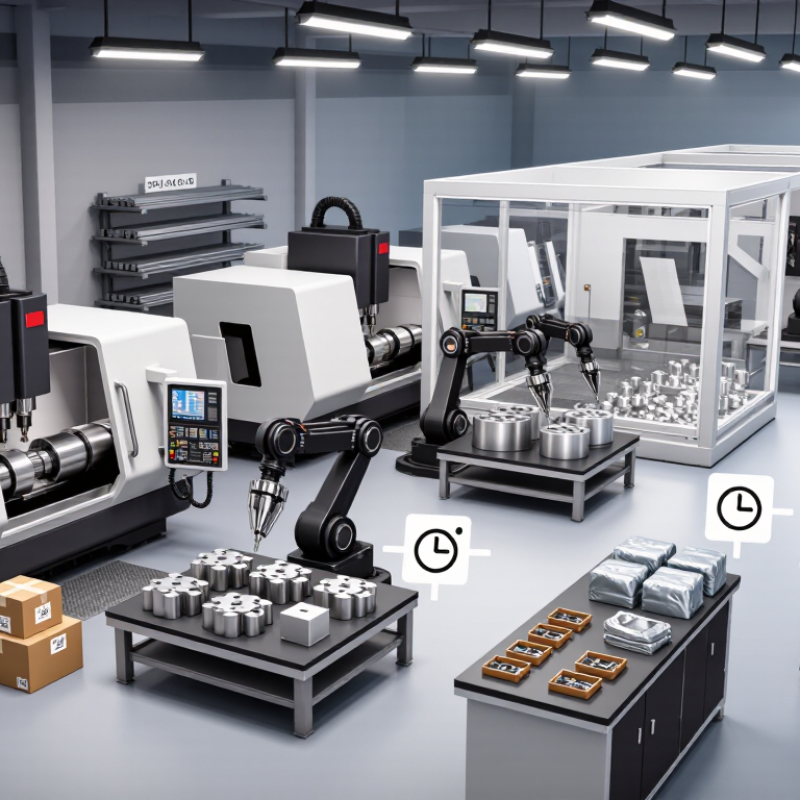
Milled parts are components shaped by removing material from a solid block. A cutting tool follows digital instructions to create holes, slots, pockets, and curved surfaces. Common materials include aluminum, stainless steel, brass, engineering plastics, and titanium. Their uses range from machine frames to medical equipment housings. Small errors matter.
Global buyers need milled parts when assemblies require accurate fit and repeatable performance. A shaft may need a smooth bore, while a housing may require flat mounting faces within a narrow tolerance. Tolerance is not decoration. It determines whether parts assemble cleanly or create vibration, leakage, and costly rework. Experienced buyers review material grades, surface finishes, heat treatment, and expected service conditions before approving production.
Reliable sourcing also depends on process evidence. Buyers should request dimensional inspection reports, material certificates, sample approvals, and clear revision control. For complex parts, coordinate measuring machines can verify critical features more precisely than manual tools. Packaging deserves attention too. A finished aluminum component can still arrive scratched if separators and moisture protection are inadequate. I have seen technically correct drawings fail to answer basic questions about burr removal or edge breaks. That gap creates delays. A practical supplier should clarify unclear specifications, communicate achievable tolerances, and provide traceability from raw material to shipment. No process is perfect, and buyers should allow a controlled pilot run before committing to large volumes.
How to Evaluate Milled Parts Manufacturers Worldwide
Evaluating milled parts manufacturers worldwide requires more than comparing hourly rates. Request a sample made from the same drawing, alloy, and tolerance range. Inspect flatness, edge condition, burr control, and actual measurement records. A polished website proves little.
The ISO Survey 2023 recorded more than 1.26 million ISO 9001 certificates across 189 countries. Certification supports process discipline, but it does not guarantee machining accuracy. Ask for calibration dates, inspection methods, and corrective-action records. Confirm whether the factory measures critical dimensions in-house. A coordinate-measuring machine matters when tolerances reach ±0.01 mm. Photos are not enough.
Location also affects delivery risk. The World Bank’s 2023 Logistics Performance Index assessed logistics systems in 139 economies. Use its findings as background, then test the supplier directly. Request a realistic quotation with packaging, customs documents, tooling, and freight separated. Check capacity during peak months. Ask how rejected parts are replaced and who owns revised engineering files. I would also place a small pilot order before approving production. That step costs time. It may expose weak fixturing, unstable tool wear, or vague communication earlier. Supplier evaluation remains imperfect, especially when audit evidence is outdated. Verify recent performance, not only certificates.
Key Manufacturing Capabilities and Quality Standards to Compare
Top Milled Parts Manufacturers for Global Buyers?
A capable milling supplier should show more than machine counts. Compare five-axis access, work envelope, material experience, and repeatable tolerances. Ask for recent inspection records, not only equipment lists. Critical dimensions should include CMM reports, calibrated gauges, and clear sampling plans. Surface finish matters too, especially on sealing faces and sliding components.
Look for documented traceability from raw material certificates to final inspection. ASME Y14.5 or ISO GPS practices help prevent drawing interpretation errors. ISO 9001 is useful, but it does not guarantee perfect parts. The ISO Survey 2022 recorded more than 1.2 million ISO 9001 certificates worldwide, showing its broad adoption. It also shows why certification alone cannot separate strong suppliers from average ones. Ask whether measurement systems follow ISO/IEC 17025 calibration principles. Review Cp and Cpk data for demanding dimensions, when available. A supplier may claim ±0.01 mm, yet provide no evidence across production batches. That is a warning sign. Small details matter.
Industry buyers should also examine nonconformance handling, corrective-action records, and first-article inspection procedures. The 2023 World Quality Report identifies data quality and process visibility as continuing manufacturing challenges. Digital dashboards look impressive, but handwritten inspection notes may still reveal gaps. Request sample reports, packaging photographs, and a pilot batch before approving larger volumes. Allow room for questions. Specifications are sometimes unclear, and buyers can share that responsibility.
Top Milled Parts Manufacturers for Global Buyers
Key manufacturing capability benchmark: ISO 2768-1 medium-class tolerances for unspecific linear dimensions.
The chart shows the permitted dimensional variation defined by ISO 2768-1 tolerance class “m” across common nominal size ranges. Global buyers should compare these baseline tolerances with a supplier’s stated CNC accuracy, inspection method, material traceability, and ability to apply drawing-specific GD&T requirements.
Leading Regions and Supplier Types for Milled Parts
Global buyers often compare milled parts manufacturers by region, capacity, and technical control. East Asia remains strong for volume production, especially when suppliers offer automated CNC cells and stable material sourcing. Central Europe is known for close-tolerance work, detailed inspection records, and strong engineering support. North American suppliers often suit prototype programs, urgent orders, and complex assemblies. Southeast Asia is gaining attention for cost-sensitive production and expanding machining capacity.
Supplier type matters as much as location. Large contract manufacturers can manage several processes under one production plan. They may provide milling, turning, surface treatment, and final assembly. Specialist job shops are often better for difficult geometries, low volumes, or frequent design changes. Engineering-led suppliers can review drawings before production and suggest practical changes, such as adding tool access or reducing unnecessary tight tolerances.
A capable supplier should explain its inspection method clearly. Ask for equipment lists, material certificates, first-article reports, and sample measurement data. Check whether operators understand datum selection and surface-finish requirements. Communication quality is also evidence of reliability. Slow replies may indicate internal pressure, though this is not always true. Some smaller workshops lack polished documents but deliver excellent parts through skilled technicians. That possibility deserves consideration. Buyers should compare verified process control, not only hourly rates or attractive delivery promises.