Top 10 Wide Belt Sander Metal Sanding Machines for Sale
Choosing a Wide Belt Sander Metal Sanding Machine requires more than comparing prices and motor ratings. Metal fabricators must examine abrasive-belt width, contact-wheel design, platen pressure, feed speed, dust extraction, and finishing consistency. Stainless-steel sheets, aluminum panels, and carbon-steel components can respond very differently under identical settings.
W. Edwards Deming, a respected manufacturing quality expert, said, “Quality comes not from inspection, but from the improvement of the production process.” His principle remains practical here. A reliable machine should produce a uniform surface before final inspection begins. It should also maintain stable pressure across wide panels, reduce visible scratches, and support repeatable production.
This guide presents ten Wide Belt Sander Metal Sanding Machine models for sale and evaluates their practical strengths. The comparison considers sanding accuracy, abrasive changes, operator access, energy use, safety features, and long-term service support. Real workshop conditions matter. A fast feed rate may improve output, yet it can create uneven finishing on thin metal. A powerful motor may appear impressive, but poor calibration can waste abrasive belts.
No ranking is perfect. Buyer priorities differ.
Some workshops need mirror-like finishing. Others need fast scale removal or deburring. We will highlight those differences clearly, using specifications, operating experience, and manufacturer information where available. Maintenance deserves attention, too. Neglected rollers, clogged extraction ducts, or worn contact surfaces can quietly reduce performance. The best choice is not always the most expensive one. It is the machine that matches material thickness, production volume, finish requirements, and the operator’s daily reality.
Wide Belt Sander Metalworking: Purpose, Design, and Main Applications
Top 10 Wide Belt Sander Metal Sanding Machines for Sale
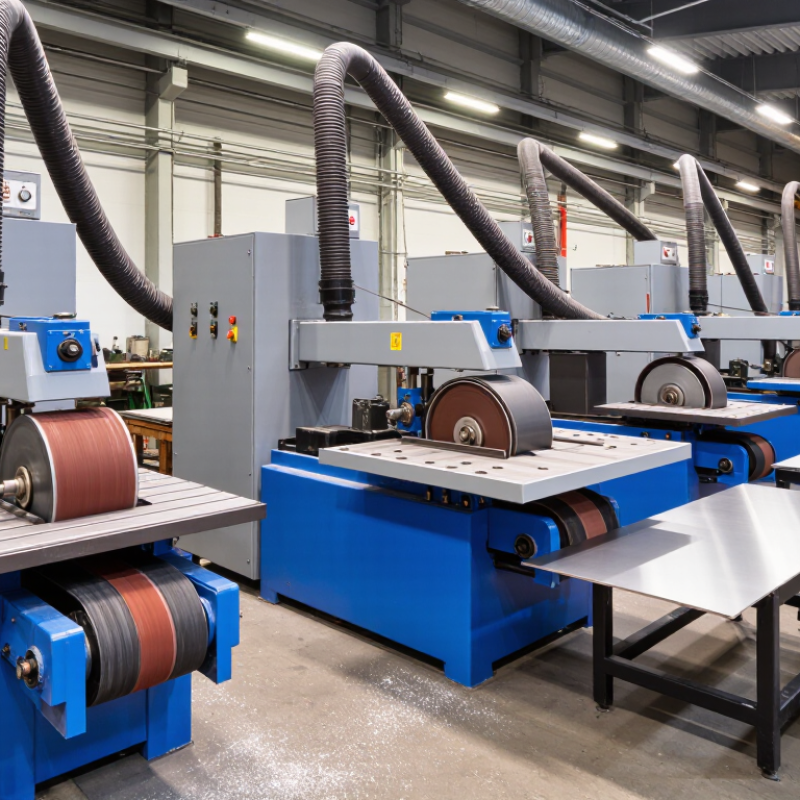
Wide belt sanders remove scale, weld marks, and sharp edges from metal sheets. Their main purpose is controlled stock removal and consistent surface preparation. A typical design combines an abrasive belt, contact roller, pressure shoe, feed table, and dust extraction. Steel frames need stable alignment. Even small tracking errors can create visible stripes across stainless steel.
Metalworking shops use these machines after laser cutting, stamping, and welding. They prepare panels for painting, coating, bending, or final assembly. According to ISO 21920-2, surface texture should be assessed with defined parameters, including Ra and Rz. This matters because a bright surface can still have deep scratches. The U.S. Department of Energy reports that motor-driven systems may consume more than half of industrial electricity. Therefore, variable-speed drives and efficient extraction deserve attention. The most productive machine is not always the fastest one.
Tips: Match belt width and abrasive grit to the material. Start with a moderate feed rate. Measure Ra after testing. Keep hands away from pinch points, and inspect guards before operation. The U.S. Bureau of Labor Statistics recorded about 2.6 million nonfatal private-industry workplace injuries in 2023. That figure is a useful reminder: productivity cannot replace disciplined setup. Operators should also check heat buildup on thin sheet. I have seen “finished” parts needing another pass. That usually signals poor grit selection, uneven pressure, or unrealistic expectations.
Key Specifications for Comparing Metal Sanding Machines
Top 10 Wide Belt Sander Metal Sanding Machines for Sale
When comparing metal sanding machines, start with working width and thickness capacity. A 600 mm belt suits smaller parts, while wider belts handle panels more efficiently. Check the minimum and maximum workpiece thickness carefully. A machine may accept thick plates but struggle with thin sheets. That detail matters.
A reliable comparison should include sanding belt speed, feed rate, and motor power. Higher belt speed can remove material quickly, but it may create excess heat on stainless steel or aluminum. Adjustable feed speed offers better control. Look for a stable conveyor, firm pressure rollers, and a table that remains level under load. Even a small height error can leave visible sanding lines. It happens.
Dust extraction also deserves close attention. Metal particles can collect around the abrasive belt and affect surface quality. Check the extraction port size, airflow requirement, and filter compatibility. Inspect emergency stops, belt guards, access panels, and overload protection before purchase. Safety features should be easy to reach, not hidden behind the machine frame.
A practical test should measure finish consistency across the full belt width. Ask for sample results using your actual material and abrasive grade. Noise, vibration, and belt tracking are easy to overlook in a showroom. A powerful motor is not automatically the best choice. Operating cost, abrasive replacement, maintenance access, and operator training may matter more over time. Specification sheets help, but real samples reveal weaknesses.
Top 10 Wide Belt Sander Metal Sanding Machines for Sale - Key Specifications for Comparing Metal Sanding Machines
Comparison data represents realistic industrial configuration ranges for wide-belt metal sanding machines. Actual specifications may vary by abrasive head, electrical standard, and optional equipment. | Machine Configuration | Maximum Sanding Width | Abrasive Belt Size
(W × L) | Recommended Material Thickness | Abrasive Belt Speed | Feed Speed | Main Motor Power | Dust Extraction Outlet | Approx. Machine Weight | Typical Applications |
| Compact Single-Belt Finishing Sander | 600 mm | 630 × 1,900 mm | 0.5–80 mm | 18–30 m/s | 3–12 m/min | 22 kW | 1 × 150 mm | 1,900 kg | Small sheet parts, deburring, light weld blending |
| 600 mm Two-Head Deburring Sander | 600 mm | 630 × 1,900 mm | 0.5–100 mm | 20–30 m/s | 4–15 m/min | 2 × 22 kW | 2 × 150 mm | 2,700 kg | Edge rounding, oxide removal, two-sided finishing |
| 800 mm Single-Head Calibrating Sander | 800 mm | 830 × 2,620 mm | 0.8–120 mm | 18–30 m/s | 4–18 m/min | 37 kW | 1 × 200 mm | 3,600 kg | Stainless-steel sheets, plate leveling preparation, scale removal |
| 800 mm Four-Brush Finishing Line | 800 mm | 830 × 2,620 mm | 0.6–100 mm | 15–28 m/s | 3–20 m/min | 2 × 30 kW | 2 × 200 mm | 4,800 kg | Fine finishing, directional grain, cosmetic stainless-steel surfaces |
| 1,000 mm Heavy-Duty Belt Sander | 1,000 mm | 1,030 × 2,620 mm | 1–150 mm | 20–32 m/s | 3–18 m/min | 45 kW | 1 × 250 mm | 5,200 kg | Heavy plate, weld seam leveling, aggressive stock removal |
| 1,000 mm Two-Head Metal Finishing Sander | 1,000 mm | 1,030 × 2,620 mm | 0.7–120 mm | 18–30 m/s | 4–20 m/min | 2 × 37 kW | 2 × 250 mm | 6,100 kg | Laser-cut parts, burr removal, uniform surface preparation |
| 1,300 mm Wide-Belt Plate Sander | 1,300 mm | 1,330 × 2,620 mm | 1–160 mm | 20–32 m/s | 3–16 m/min | 55 kW | 1 × 300 mm | 7,400 kg | Wide sheet metal, structural components, plate descaling |
| 1,300 mm Four-Head Production Sander | 1,300 mm | 1,330 × 2,620 mm | 0.8–120 mm | 16–30 m/s | 4–24 m/min | 4 × 30 kW | 4 × 200 mm | 9,200 kg | High-volume deburring, edge rounding, multi-stage finishing |
| 1,600 mm Extra-Wide Plate Sander | 1,600 mm | 1,630 × 3,000 mm | 1–180 mm | 20–32 m/s | 3–15 m/min | 75 kW | 1 × 350 mm | 10,800 kg | Large-format plate, shipbuilding parts, industrial steel fabrication |
| 1,600 mm Multi-Head Calibrating and Finishing Line | 1,600 mm | 1,630 × 3,000 mm | 0.8–150 mm | 15–30 m/s | 4–22 m/min | 3 × 55 kW | 3 × 300 mm | 12,500 kg | Continuous production, precision thickness control, premium surface finishing |
Top 10 Wide Belt Sander Metal Sanding Machines for Sale
The top 10 wide belt sander metal sanding machines for sale should be judged by performance, not appearance. A clean brochure proves little.
MarketsandMarkets’ 2024 Metal Finishing Market report projects steady industry growth through 2029, driven by automation and tighter surface requirements. That trend favors machines with adjustable feed speeds, stable pressure shoes, and dust extraction. For steel, aluminum, and stainless steel, practical buyers should compare abrasive width, motor power, belt tracking, and final roughness. A 1000 mm model suits smaller fabricators, while 1300 mm and 1600 mm machines support wider sheets and fewer passes. Wider is not always better.
The strongest ten options usually include compact single-head units, two-head calibrating sanders, wet-processing models, dry extraction systems, precision finishing machines, and automated production lines. Each listing should show removal capacity, belt dimensions, conveyor speed, noise data, and electrical requirements. ISO 21920 surface-texture guidance helps buyers discuss roughness consistently, while ISO 12100 supports machinery risk assessment. These standards do not replace operator training.
A useful workshop test uses a marked stainless-steel panel. Measure thickness before and after sanding, then inspect cross-scratches under bright light. Feed stability matters more than impressive horsepower. Maintenance access matters too. I have seen specifications hide awkward belt changes and weak dust collection. That is a costly lesson. Buyers should request sample results, service records, spare-part availability, and energy data before paying. A cheaper machine may demand more labor every shift.
Top 10 Wide Belt Sander Metal Sanding Machines for Sale
Comparison of representative industrial configurations by nominal sanding width and installed sanding motor power. Specifications can vary by supplier and configuration.
The chart shows that wider metal sanding machines generally require higher motor power for stable material removal across larger working areas.
Safety Features and Operating Requirements for Metal Sanding
Wide belt sanders can remove scale quickly, but metal sanding demands disciplined operation. A trained operator should inspect the abrasive belt before every shift. Look for tears, exposed joints, uneven wear, or trapped metal chips. The work area must have clear lighting and a clean, dry floor. Guards should cover moving rollers and drive components. Keep the emergency stop within easy reach.
Wear impact-rated eye protection, hearing protection, fitted work clothing, and suitable safety footwear. Avoid loose gloves near rotating parts. Use a correctly designed dust extraction system for metal particles. Sparks may ignite nearby materials, especially when sanding coatings or contaminated surfaces. Keep flammable items away from the machine. Check grounding and electrical cables before connecting power. Never bypass an interlock or safety switch.
Secure the workpiece and set the feed rate according to its thickness and hardness. Stand slightly away from the direct feed path. Do not force material into the belt. Excessive pressure can overheat the workpiece, damage the abrasive, or cause sudden movement. Stop the machine before changing belts, clearing chips, or adjusting rollers. Isolate the power source during maintenance. I have seen experienced workers rush this step. That mistake is easy to repeat. A checklist helps, but it cannot replace attention. Recheck belt tracking after a short test pass, because the first setting may not hold.
How to Choose the Right Wide Belt Sander for Your Workshop
Choosing the right wide belt sander for metal work starts with your actual workflow, not the machine’s advertised width. Measure your largest workpieces, then allow space for loading and inspection. A 600 mm sanding width may suit brackets, panels, and small frames. Larger fabrication shops may need 1,000 mm or more. Check the permitted material thickness carefully. Some machines struggle with thin sheet metal, while others lack the clearance needed for heavier plates.
A reliable metal sanding machine should offer stable feed control, firm pressure rollers, and suitable abrasive belts. Variable speed helps when switching between stainless steel, aluminum, and mild steel. Ask about motor power and cooling, especially during long production runs. A strong dust and spark-management system is essential for a cleaner, safer workshop. Inspect belt tracking, emergency stops, guarding, and access for routine maintenance. These details often matter more than polished specifications. I have found that an impressive machine can still disappoint when belt changes take too long. That mistake is easy to overlook.
Tips: Test a sample piece before buying. Watch the finish near edges and welded areas. Listen for vibration. Confirm replacement belt sizes and service support. Leave room for improvement, because your workload may grow. A quieter machine is also easier to monitor during a full shift. Cheap options may reduce initial costs, but worn rollers and uneven sanding can create expensive rework. Record your preferred feed rate and abrasive grade after testing; operators sometimes rely too much on memory.