
post thumbnail
Our pricing model is flexibly designed to give you the most possible advantages of a continuing partnership.

What Is a Wet Grid Ball Mill and How Does It Work?

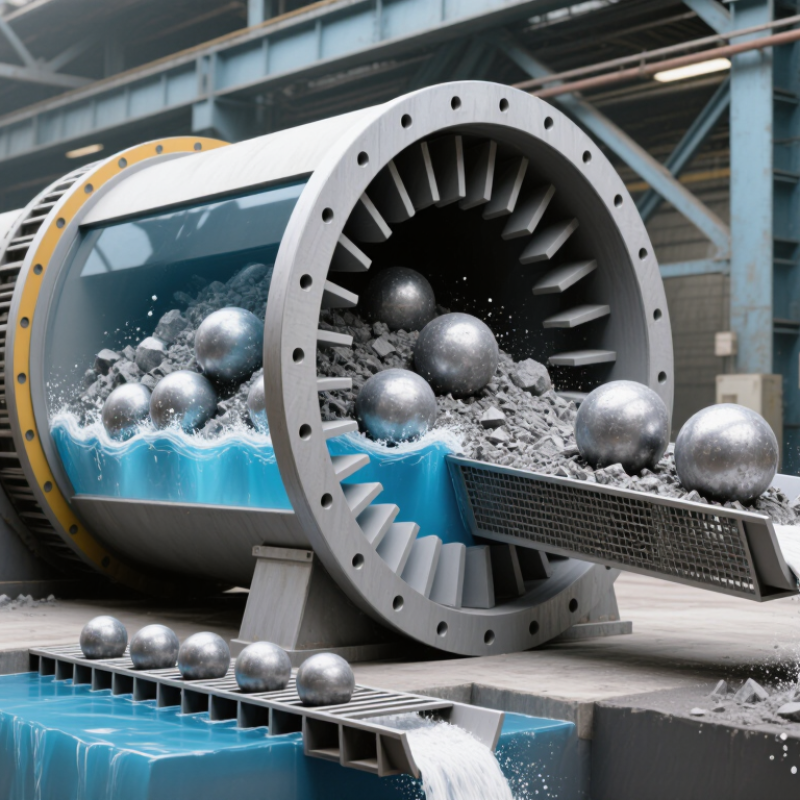
A Wet Grid Ball Mill is a heavy-duty grinding machine used in mineral processing plants. It reduces crushed ore inside a rotating cylinder filled with steel balls and water. The slurry moves through a discharge grid, while larger grinding media remain inside the mill. This simple separation improves continuous operation and limits unwanted over-grinding.

Barry A. Wills, a respected mineral-processing authority, has described grinding as “the most energy-intensive operation in mineral processing.” That observation explains why mill selection matters. A Wet Grid Ball Mill must balance drum speed, ball size, slurry density, feed rate, and discharge conditions. Even a small change can affect product fineness, power consumption, and recovery results.

This guide explains what a Wet Grid Ball Mill is and how it works. It follows the material path from feed inlet to grid discharge. It also examines the rotating shell, lifting liners, grinding balls, and slurry flow. Picture the process clearly: ore enters as coarse fragments, water forms a thick pulp, and steel balls strike the particles repeatedly. The result is not always perfectly uniform. Real plants face changing ore hardness, worn liners, blocked grids, and unstable water levels. Those details are easy to underestimate.

A reliable operation therefore requires practical observation, not specifications alone. Operators should inspect mill noise, motor load, discharge texture, and screen results. Experienced engineers also compare laboratory tests with field performance. This article will connect those measurements with the mill’s working principles, helping readers judge when a Wet Grid Ball Mill is suitable, efficient, and worth improving.
What Is a Wet Grid Ball Mill and How Does It Work?

Wet Grid Ball Mill: Definition and Basic Purpose

A wet grid ball mill is a rotating cylinder filled with steel balls, ore, and water. Its basic purpose is to reduce crushed ore into a controlled slurry for later separation. Inside the shell, lifters raise the balls before impact and abrasion break the particles.

A discharge grid holds back larger grinding media and coarse particles. Pulp lifters then move the ground slurry through the grate. This design often suits primary grinding, especially when a high-throughput circuit needs stable discharge.

Water does more than prevent dust. It carries fine particles, moderates heat, and helps classification equipment receive a pumpable feed. However, excessive water can lower slurry density and weaken grinding action. The U.S. Department of Energy’s Mining Industry Energy Bandwidth Study estimated practical energy-saving potential of about 41% across mining operations. Grinding remains a major target because mill speed, ball charge, and slurry density strongly influence power use. The figure is useful, but not universal. Ore hardness changes everything.

Tips: Check mill feed size, pulp density, motor load, and discharge appearance together. A thin, watery stream may signal poor control. Record liner wear and particle-size results weekly. Operators should also question stable readings; a quiet mill can still produce the wrong product. A small sample taken at the discharge often reveals more than a dashboard value. The Global Mining Guidelines Group recommends disciplined monitoring and documented process control for safer, more reliable plant performance.

Key Components and Their Functions

What Is a Wet Grid Ball Mill and How Does It Work?

A wet grid ball mill grinds ore with steel balls and process water. The rotating shell lifts the balls before they fall through the ore bed. This repeated impact and rubbing reduce particles to the required size. Water carries the ground material toward the discharge end.

The shell provides the main grinding chamber. Replaceable liners protect its inner surface and improve lifting action. Steel balls supply the grinding force, while the feed inlet introduces ore and water at a controlled rate. A motor and gearbox turn the shell through heavy-duty trunnions and bearings. These parts must stay aligned. Small misalignment can create heat, vibration, or uneven liner wear.

At the outlet, a grid plate holds back larger balls and oversize particles. Slurry passes through the openings, then moves into a discharge chamber. Some mills use a trommel to remove unwanted debris before classification. Operators should watch the water ratio, motor load, sound, and discharge texture. A thin, fast slurry may lower grinding efficiency, while a thick slurry can restrict flow. Experience matters here. The same setting may behave differently with harder ore or worn liners. One practical weakness is measurement delay. By the time a size problem appears downstream, the mill may have operated poorly for several minutes. Regular liner checks and stable feed control help reduce this risk.

Wet Grid Ball Mill: Typical Operating Parameters

A wet grid ball mill uses rotating steel balls to grind ore in water. The grid liner helps discharge ground particles while retaining oversized grinding media inside the mill.

The chart shows representative operating values commonly used in wet grinding design. Actual settings vary with ore hardness, feed size, mill diameter, and required product size.

Step-by-Step Wet Grinding Operation

A wet grid ball mill grinds ore with steel balls, water, and controlled rotation. Its grid plate allows suitably fine slurry to leave the grinding chamber.

The operation begins with a clean mill, checked liners, lubricated bearings, and a correctly installed grid. Operators add water before feeding material, preventing excessive dust and reducing dry friction. The feed enters steadily, not in sudden surges. Inside the drum, lifting liners raise the balls, which then fall and crush the particles. Abrasion continues as the slurry moves through the rotating charge.

Keep the pulp density within the planned range. Too much water may reduce grinding efficiency, while too little can cause a thick, unstable slurry. Watch motor current, sound, discharge flow, and bearing temperature. These signals often reveal problems earlier than a sample test. The grid retains oversized particles, while finer slurry passes through the openings. A pump or suitable discharge system then carries the product forward.

Small changes matter.

Experienced operators adjust water and feed rate gradually. A sudden correction can overload the mill or create uneven discharge. Sampling the outlet helps confirm particle size, although one sample cannot describe every operating condition. Check the grid for blockage and inspect liners during scheduled shutdowns. In practice, the ideal settings are rarely permanent; ore hardness, moisture, and ball charge can change during the same shift.

How the Grid Discharge System Works

A wet grid ball mill grinds ore inside a rotating shell filled with steel balls and water. The slurry moves toward the discharge end as the shell turns. Its grid system controls this movement. The grid is not a simple screen.

Behind the grate, pulp lifters create a pumping effect. Ground particles pass through grate slots, while larger balls remain inside the grinding chamber. The lifters then raise and release slurry into the discharge cone. This action helps move coarse, dense pulp away from the mill. It also limits unnecessary residence time.

That matters.

Compared with overflow discharge, a grid system can reduce overgrinding when operators maintain the correct water flow and mill speed. However, blocked slots can increase internal pulp level and reduce capacity. Operators should watch motor load, slurry density, grate pressure, and discharge appearance together. One indicator is rarely enough.

The Coalition for Eco Efficient Comminution reports that comminution may consume 3–4% of global electricity and more than half of mine-site energy. Small discharge losses therefore become expensive. Technical guidance from the Society for Mining, Metallurgy & Exploration commonly places wet grinding slurry near 65–75% solids, although ore properties can shift this range.

The uncomfortable detail is variability. A setting that works for hard sulfide ore may perform poorly with soft, clay-rich feed. Testing remains essential.

Operating Factors, Advantages, and Applications

What Is a Wet Grid Ball Mill and How Does It Work?

A wet grid ball mill grinds ore inside a rotating drum filled with steel balls and water. Lifters raise the charge, then gravity creates repeated impact and abrasion. The slurry leaves through a discharge grid, which limits oversized particles. This design suits copper, gold, iron ore, and industrial minerals.

Operating results depend on several practical factors. Mill speed, ball filling, feed size, slurry density, and residence time must remain balanced. Excess water can reduce grinding efficiency. Too little water may increase viscosity and block the grid. Operators often monitor power draw, cyclone pressure, and product size rather than relying on one reading. Small changes matter. A 1% shift in solids concentration can alter flow behavior noticeably, although the exact effect depends on ore texture and mineralogy.

Wet grinding offers better control for dusty or sticky materials and supports continuous classification. It can also prepare fine feed for flotation or magnetic separation. The U.S. Geological Survey’s Mineral Commodity Summaries 2025 estimated global mined copper output at about 22 million metric tons in 2024, showing the scale of grinding demand in base-metal processing. The International Energy Agency reports that industrial efficiency remains essential as heavy industry expands. Yet wet mills consume substantial water and power. Site trials are still necessary, because laboratory results may not predict full-scale performance perfectly.

What Is a Wet Grid Ball Mill and How Does It Work? - Operating Factors, Advantages, and Applications

Category Dimension Typical Information Practical Significance
Mill Definition Equipment type A rotating cylindrical grinding mill that uses water or another liquid as the grinding medium carrier. The liquid helps transport slurry through the mill and supports wet size reduction.
Primary grinding action Impact and attrition between the ore, grinding media, and mill liners. Breaks coarse particles into finer particles while the rotating shell lifts and drops the media.
Grid discharge A grate or grid near the discharge end controls slurry exit and helps limit oversized material passage. Supports controlled discharge and can reduce excessive over-grinding compared with unrestricted overflow discharge.
Product form A pumpable slurry consisting of ground solids and process water. Allows direct integration with classification, flotation, gravity separation, or other wet-process stages.
Operating Factors Mill speed Often operated below critical speed; many industrial ball mills operate approximately within 60–80% of critical speed, depending on design and duty. Speed affects media trajectory, impact intensity, power draw, wear, and grinding efficiency.
Critical speed The theoretical speed at which grinding media would centrifuge against the shell instead of falling. Operation too close to critical speed can reduce the useful cascading and cataracting motion of the media.
Solids concentration Common slurry solids levels are frequently around 60–80% by weight, but the suitable range depends on ore properties and circuit design. Too much water may reduce grinding efficiency, while too little water can increase viscosity and restrict flow.
Feed size Feed size varies widely by circuit; ball mills commonly receive material already reduced by crushing or autogenous grinding. A suitable feed size prevents overload and improves the use of available grinding energy.
Grinding media Steel balls are commonly used; media diameter and charge volume are selected according to feed size and target product size. Larger balls provide stronger impact for coarse feed, while smaller balls provide more contact points for fine grinding.
Retention time Controlled by mill volume, feed rate, slurry flow, grate design, and downstream classification. Longer effective residence time generally increases size reduction but may raise energy consumption and over-grinding risk.
Liner and grate condition Liners protect the shell and influence lifting action; grate openings regulate discharge behavior. Wear can change mill capacity, power draw, product size, and slurry transport.
Advantages High reduction capability Can produce fine material suitable for mineral liberation and downstream separation. Useful when valuable minerals are locked within relatively coarse particles.
Controlled discharge The grid and pulp-lifter arrangement promote positive slurry removal. Helps maintain mill throughput and can reduce slurry pooling inside the grinding chamber.
Lower dust generation Material is processed as slurry rather than as dry powder. Can reduce airborne dust in the grinding area, although water management and other safety controls remain necessary.
Process compatibility The slurry can flow directly to hydrocyclones, screens, flotation cells, or leaching circuits. Reduces the need for intermediate drying between wet processing stages.
Flexible circuit use Can operate in open or closed circuits with classification equipment. Closed-circuit operation can return coarse particles for additional grinding and improve product-size control.
Applications Metallic ores Copper, gold, iron, lead-zinc, nickel, and other ores after primary and secondary size reduction. Produces a particle size that supports mineral liberation and recovery.
Flotation feed preparation Wet grinding before flotation to expose valuable mineral surfaces. Appropriate grinding is essential because both under-grinding and over-grinding can reduce flotation performance.
Leaching circuits Preparation of finely ground slurry for hydrometallurgical treatment. Smaller particles can increase exposed surface area, subject to process-specific optimization.
Industrial minerals Wet processing of materials such as limestone, silica-bearing minerals, and other nonmetallic feedstocks. Supports fine particle production where water-based processing is acceptable or required.
Ceramic and raw-material processing Wet milling of selected ceramic raw materials, pigments, and mineral mixtures. Helps create a homogeneous slurry and reduce particle size before forming or further treatment.
Regrinding operations Secondary or tertiary grinding of classified material to achieve a finer target size. Useful when additional liberation is needed after an initial grinding stage.