
post thumbnail
Our pricing model is flexibly designed to give you the most possible advantages of a continuing partnership.

What Are the Best Metal Scaffolding Planks?

Choosing the best Metal Scaffolding Planks is not simply a matter of comparing prices. The right plank must support workers, tools, weather exposure, and repeated handling without creating hidden hazards. OSHA’s 29 CFR 1926.451 requires scaffold platforms to support their intended loads and remain properly secured. That requirement sounds simple. Field conditions are not.

Construction remains a high-risk industry. The U.S. Bureau of Labor Statistics recorded 1,075 construction fatalities in 2023, with falls continuing as a major cause of death. OSHA also identifies scaffold-related falls, falling objects, and structural failure as serious hazards. These figures explain why plank material, load rating, slip resistance, span, and corrosion protection deserve careful comparison. A lightweight aluminum plank may improve handling, while galvanized steel can offer greater durability. Neither option is automatically best.

Scaffolding safety engineer David V. MacCollum states, “A scaffold must be treated as a complete system, not a collection of separate parts.” His point matters here. A strong plank can still fail as part of a poorly assembled platform. The ANSI/ASSP A10.8 standard and manufacturer test data should guide selection, alongside local inspection practices. In real projects, dust, wet boots, bent hooks, and rushed inspections change the risk profile. That is easy to overlook. A useful comparison must therefore examine actual jobsite experience, not only laboratory numbers or marketing claims. The following overview evaluates Metal Scaffolding Planks through those practical and technical measures.
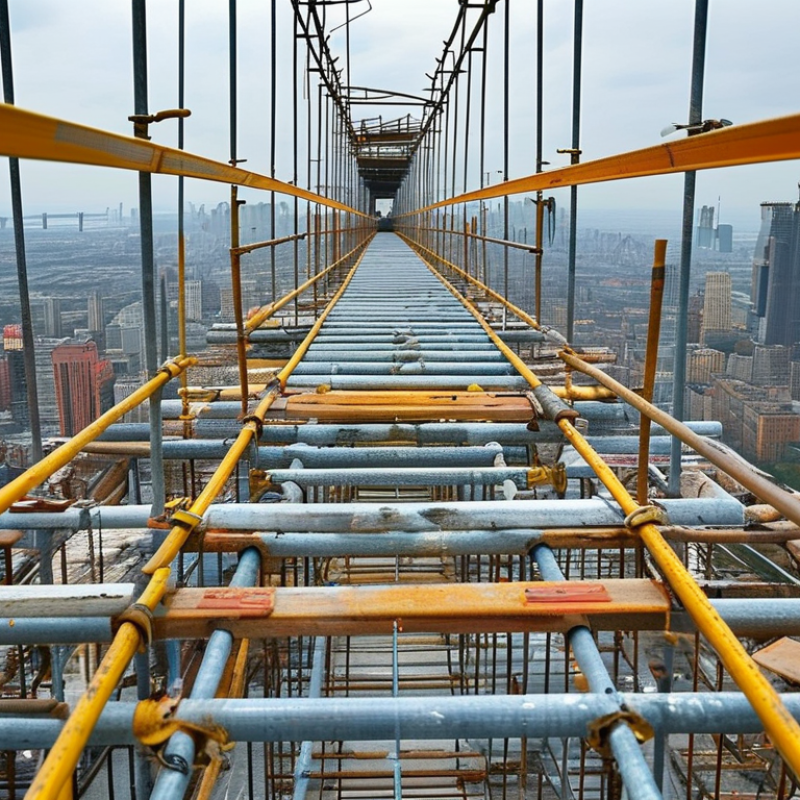
What Are the Best Metal Scaffolding Planks?

What Metal Scaffolding Planks Are and How They Work

What Are the Best Metal Scaffolding Planks?

Metal scaffolding planks are reusable deck units made from steel or aluminum. They rest across scaffold frames and create a stable working surface. Most designs use folded edges, internal stiffeners, and locking hooks. These parts transfer workers, tools, and materials toward the supporting frames. Perforated surfaces can improve grip and allow rain, dust, and small debris to pass through.

Load capacity is the key working principle. OSHA 29 CFR 1926.451 requires scaffold platforms to support their own weight and at least four times the maximum intended load. EN 12811-1:2003 also evaluates temporary scaffold platforms for strength, stiffness, and serviceability. These requirements explain why plank length, support spacing, and deflection matter. A wider plank is not automatically safer.

The best choice depends on the site. Steel planks usually provide high stiffness and strong resistance to rough handling. Aluminum versions are lighter, which can reduce lifting strain during installation. However, damaged hooks, bent edges, or hidden corrosion can weaken either type. It is tempting to trust a load table alone. That is not enough. A practical inspection should check plank seating, frame spacing, surface damage, and visible deformation before use. The weak point may be the connection, not the metal. Small gaps also deserve attention, because OSHA generally limits platform openings to one inch. Industry guidance is useful, but real conditions still require careful judgment.

Key Materials Used in Metal Scaffolding Planks

What Are the Best Metal Scaffolding Planks?

Key Materials Used in Metal Scaffolding Planks

Material choice determines how a scaffolding plank performs under weight, weather, and repeated handling. Steel remains common because it offers high strength and limited flexing. Galvanized steel adds a zinc layer that helps resist rain, humidity, and surface rust. This protection can wear away around drilled holes, cut edges, and rough welds.

Aluminum is lighter and easier to carry between levels. It suits projects where workers frequently reposition planks or where access equipment has limited lifting capacity. However, aluminum generally has lower stiffness than steel, so plank design and span length require careful checking. A light plank is not automatically a safer plank. It may also dent after contact with dropped tools.

Some metal planks combine a steel body with perforated or embossed surfaces. These patterns improve grip and allow mud or water to pass through. Solid surfaces can feel more stable, but they may become slippery during rain. Powder coatings can improve appearance and add another protective layer, although damaged coating still needs inspection.

In site inspections, I would check weld continuity, end hooks, corrosion marks, and visible deformation. Load labels should remain readable. Testing should follow the applicable safety standard and the manufacturer’s stated capacity. No material is perfect. Even well-protected steel needs maintenance, especially beside coastal air or chemical exposure. Choosing the best plank means matching material, span, surface design, and working conditions.

What Are the Best Metal Scaffolding Planks? - Key Materials Used in Metal Scaffolding Planks

Material Typical Characteristics Corrosion Resistance Relative Weight Common Applications Key Considerations
Hot-Dip Galvanized Steel High strength, rigid construction, and a zinc coating that helps protect the steel substrate. Good in outdoor environments when the coating remains intact; cut edges and damaged areas require attention. High General construction, exterior scaffolding, masonry, and heavy-duty access platforms. Strong and durable, but heavier to handle than aluminum.
Painted or Powder-Coated Steel High load capacity with a protective organic coating available in various colors. Moderate to good, depending on coating quality, surface preparation, and damage control. High Indoor construction, industrial maintenance, and locations where color coding is useful. Scratches or impact damage can expose the steel and may lead to localized corrosion.
Aluminum Alloy Lightweight, naturally oxide-protected, and easier to transport and install. Generally good in normal atmospheric conditions; suitability varies in marine or highly chemical environments. Low Mobile scaffolds, frequent relocation, indoor work, and projects where manual handling is important. Lower density reduces handling effort, but the design must account for alloy strength and deflection.
Stainless Steel Strong, durable, and highly resistant to staining and corrosion when the appropriate grade is selected. Very good in many wet or hygienic environments; resistance depends on grade, exposure, and maintenance. High Food processing, pharmaceutical facilities, water-related work, and demanding industrial sites. Typically costs more than carbon steel and may still require cleaning in chloride-rich environments.
Zinc-Aluminum Coated Steel Steel core combined with a metallic coating designed to improve atmospheric corrosion protection. Good, with performance influenced by coating thickness, environment, and handling damage. High Longer-term outdoor use and applications requiring a coated steel walking surface. Inspect coating damage, edges, welds, and contact points during service.

Selection should be based on required load capacity, span, plank dimensions, slip resistance, environmental exposure, handling requirements, and applicable scaffolding regulations.

How to Compare Strength, Weight, and Durability

What Are the Best Metal Scaffolding Planks?

Strength should be checked before weight. OSHA 29 CFR 1926.451 requires each scaffold component to support its own weight and four times its maximum intended load. EN 12811-1 classifies working areas from 0.75 to 6.0 kN/m². These figures help match planks with workers, tools, and stored materials.

A practical inspection should examine span, locking points, welds, and visible deformation. A plank that feels solid may still flex dangerously across a long bay. Shorter spans usually improve stiffness, but they can increase handling time.

Weight affects setup speed and worker fatigue. Yet a lighter plank is not automatically better. Check its rated capacity, deflection performance, surface grip, and corrosion protection. Galvanized steel often tolerates rough handling, while lighter alloys may reduce lifting strain.

HSE guidance recommends inspecting scaffold components before use and after events that could affect stability. That includes impact, modification, and severe weather. Field conditions are rarely perfect. Mud can hide corrosion, and paint can disguise cracks.

I would not judge durability from appearance alone. Records of inspections matter more than polished surfaces. Load calculations should also reflect real materials, not optimistic estimates. That small mistake can change a safe platform into an overstressed one.

Safety Standards and Features to Examine

Metal scaffolding planks should be judged by safety evidence, not appearance. OSHA estimates that about 2.3 million construction workers use scaffolds, with roughly 4,500 injuries and 50 deaths potentially preventable each year. That figure comes from OSHA’s Scaffolds Safety and Health Topics report. It shows why plank selection deserves more than a quick visual check.

Check the plank’s rated load, span, width, and deflection limits. OSHA 29 CFR 1926.451 requires scaffold components to support their own weight and at least four times the maximum intended load. A suitable plank should have a slip-resistant walking surface, secure end connections, and no sharp deformation. EN 12811-1 also addresses working-platform performance, including strength, stiffness, and access conditions. Rust around welds matters. So does a bent edge.

Ask for traceable test records and clear inspection instructions. ANSI/ASSP A10.8 emphasizes scaffold design, erection, inspection, and use. Inspectors should look for cracks, deep corrosion, blocked locking points, and damaged hooks before every shift. Never ignore small defects. That is where judgment can fail. A plank may appear solid but still flex under concentrated loads, especially near an unsupported joint. In practice, workers often notice movement before paperwork does. Record that observation, remove questionable planks, and reassess the layout. Safety standards guide decisions, but disciplined inspection keeps those standards meaningful.

What Are the Best Metal Scaffolding Planks?

The best metal scaffolding plank is selected by its certified load class, secure platform support, slip-resistant surface, corrosion protection, and compatibility with the scaffold system. The chart shows the uniformly distributed design loads defined by EN 12811-1 load classes.

Higher load classes support greater uniformly distributed working loads, but the plank, scaffold bay, supports, access arrangement, and complete scaffold system must all be rated for the intended use. Before installation, examine plank identification, maximum span, locking or anti-lift details, surface condition, deformation, welds, corrosion, and slip resistance. Never exceed the manufacturer’s certified capacity or the scaffold designer’s limits.

Choosing the Best Plank for Each Scaffolding Application

What Are the Best Metal Scaffolding Planks?

Choosing the Best Plank for Each Scaffolding Application

The best metal scaffolding plank depends on the work, not a universal ranking. A bricklaying platform needs predictable load capacity, while painting work may require easier handling. Steel planks handle demanding spans and rough sites. Aluminum planks reduce lifting effort, but they may feel less rigid under heavy, concentrated loads. Check the rated load, clear span, width, and locking system before ordering.

On wet or muddy sites, perforated surfaces can improve drainage and reduce slippery buildup. However, small openings may trap mortar, tools, or debris. Solid decks clean faster. For interior finishing, a smooth, lightweight plank often helps crews move around doorways and corners.

For masonry, inspect support points carefully. Uneven loading can create dangerous deflection, even when the total weight seems acceptable. Steel handles abuse.

I have seen crews choose by price, then lose time carrying planks that were simply too heavy. That choice looked efficient. It was not. Confirm compatible hooks, end details, plank dimensions, and guardrail clearance. Measure the actual bay, not an assumed standard size. Before each shift, check bent edges, cracked welds, corrosion, missing locks, and damaged anti-slip surfaces. Remove questionable planks from service and record the inspection. A cautious revision may be necessary after weather, crew size, or materials change. On a narrow renovation bay, that may mean choosing a shorter, lighter plank rather than the strongest available option.