What Are the Top Types of Metal Railings?
Metal Railings do more than mark an edge. They shape how a stair, balcony, or deck feels, and they help people move through it with confidence. The best choice depends on the space, the users, and the conditions the railing will face. A slim stainless-steel system can suit a coastal balcony, while powder-coated steel may bring a crisp, dark line to an entry stair. Wrought iron adds decorative detail; aluminum offers a lighter option. Each has trade-offs in upkeep, strength, appearance, and cost. No single type fits every project.
Industrial designer Charles Eames once said, “The details are not the details. They make the design.” His observation applies well to railing choices: the handrail profile, post spacing, finish, and connection points can change both appearance and everyday use. This guide compares popular types of Metal Railings, including steel, aluminum, stainless steel, and wrought iron. It also considers where each works best and what to check before choosing one. Look closely at how a railing meets the floor; that small joint can collect water or show wear. Installation and safety requirements vary by location, so confirm applicable rules with a qualified local professional. A good-looking sample is not the whole story. Finishes can age differently outdoors, and maintenance promises deserve a closer look. The practical choice may be less striking, but easier to live with.
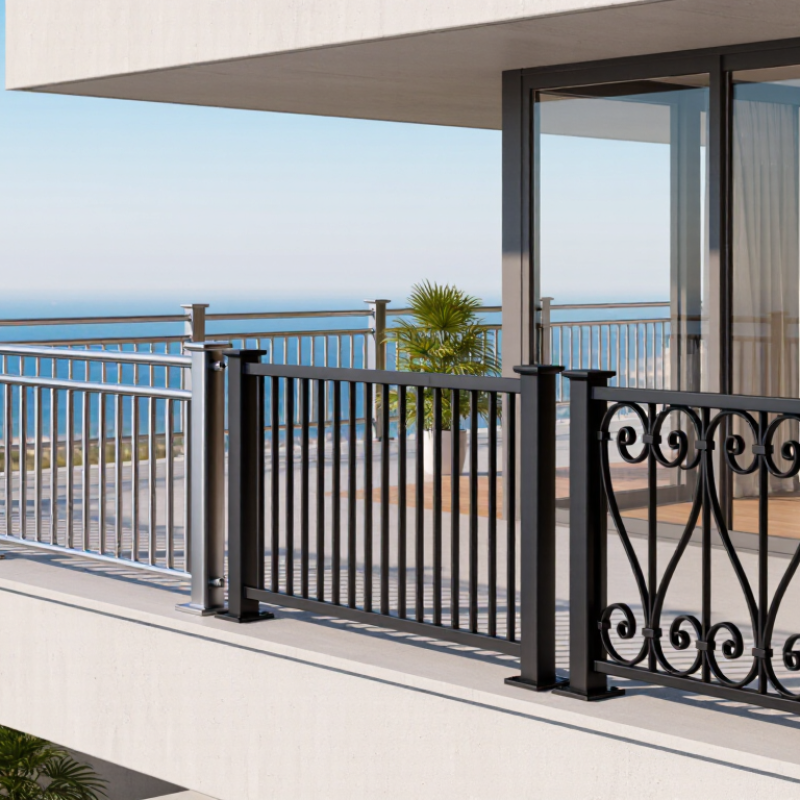
Classify Metal Railings by Material, Construction, and Building Use
Metal railings are commonly classified by material, and each choice behaves differently outdoors. Steel offers high strength and suits busy stairs, balconies, and commercial entries. It needs a durable protective finish, since scratches can expose metal to moisture. Aluminum is lighter and resists corrosion, making it practical near coastal air or for easier installation. Wrought iron provides decorative curves and a substantial feel, but it is heavy and usually needs regular coating checks. Details matter.
Construction changes the look and maintenance needs. Welded railings create rigid, continuous frames, while modular systems use joined sections that can simplify replacement or adjustment. Vertical balusters offer a traditional barrier; horizontal bars create a cleaner profile but may be less suitable where climbing is a concern. Cable systems preserve open views, though tension and fittings require careful inspection. Glass panels paired with metal posts reduce visual obstruction, but fingerprints and water marks show quickly. Not always an easy choice.
Building use helps narrow the options. A home staircase may prioritize a comfortable grasp and closely spaced supports, while a rooftop terrace may need weather-resistant finishes and unobstructed views. Public buildings often require robust connections and consistent spacing under applicable local codes. Product labels alone cannot confirm suitability; check installation details, substrate condition, and maintenance access. Categories overlap, and real sites are rarely perfect. A railing that looks right in a sample may feel too cold or visually heavy.
Compare Steel and Wrought Iron: ASTM A500 Covers Structural Tubing
Steel and wrought iron can create very different railing looks, but the names are not always used precisely. Steel tubing is common in modern railings because it can be cut, joined, and finished in consistent sections. Traditional wrought iron has a hand-worked, ornamental character. Today, some products sold as “wrought iron” are actually steel shaped to look similar. Check the material description, not just the style.
ASTM A500 covers cold-formed welded or seamless carbon-steel structural tubing, including round and shaped sections. It sets requirements for properties such as strength and dimensions. That makes it relevant when a railing uses structural tube for posts, rails, or supports. It does not, by itself, certify a finished railing or determine whether its design suits a particular location. That distinction matters. Ask for documentation identifying the tubing and grade, and confirm that the fabricator has considered connections, loads, and protective finishes.
In practical terms, steel tube often gives a clean profile: a square post, a smooth top rail, and evenly spaced infill. Wrought-iron-style work can add curls or forged-looking details, though those features may need more cleaning and coating attention. Both materials can corrode if water collects around joints or damaged finishes. Details still matter. A specification may look reassuring on paper, yet a poorly sealed weld or thin coating can become the weak point. When comparing bids, look beyond appearance and ask how the railing will be fabricated, finished, and maintained.
Steel and Wrought Iron Railings: Comparing Structural Tubing
ASTM A500 specifies minimum yield strengths for structural tubing, with values varying by grade and section shape. Wrought iron is not covered by ASTM A500 and has no single standardized yield-strength value for direct comparison. Railing design should also account for the applicable building code, loads, connections, and material specifications.
Yield strength values shown are minimums in ksi (thousand pounds per square inch), per ASTM A500.
Assess Aluminum and Stainless Steel for Corrosion Resistance and Maintenance
Aluminum and stainless steel both resist corrosion, but they behave differently outdoors. Aluminum develops a thin oxide layer that helps protect its surface. It will not rust like ordinary iron, though salt spray and grime can leave dull patches or pitting over time. Its lighter weight can make installation easier, especially on balconies with long railing runs.
Stainless steel is strong and often suits slim, modern railings. Its corrosion resistance depends on the steel grade, surface finish, and exposure. Coastal air, trapped moisture, and cleaning chemicals can still cause staining, including tea-colored marks near joints. That detail is easy to miss. Neither material is maintenance-free, and the better choice depends on the site, not appearance alone. In a sheltered garden, aluminum may need little attention; beside the sea, regular care matters more.
Tips: Rinse railings with fresh water after salt exposure, then wipe them dry with a soft cloth. Use mild soap for routine cleaning, and avoid chlorine-based cleaners or abrasive pads. Check fasteners and welds occasionally; small stains around a joint can signal that moisture is lingering.
Review Cable and Mesh Guards Against the IBC 4-Inch Sphere Rule
Cable and mesh guards can both create a clean, open look, but their openings need careful attention. Under the commonly applied IBC guard rule, a 4-inch sphere must not pass through openings in many guard areas. The exact requirements can depend on the adopted code edition and location, so confirm them with the local building official.
With cable railings, measure the clear gaps between cables, not just the spacing shown on a drawing. Cables can deflect when pushed, and long runs may need closer posts or tension adjustments. Mesh guards seem simpler: check the actual aperture size, including openings near posts, frames, and the bottom rail. Small details matter. A cut edge or widened corner can create a gap that a quick visual check misses. IBC compliance is not the only design question, either; avoid openings that invite climbing, and inspect the finished installation rather than relying solely on product dimensions. That extra check can feel fussy, but it is worth doing.
What Are the Top Types of Metal Railings? - Review Cable and Mesh Guards Against the IBC 4-Inch Sphere Rule
| Railing Type | Common Construction | How It Relates to the 4-Inch Sphere Rule | Key Considerations |
| Vertical metal picket | Vertical steel or aluminum bars between rails or posts. | Picket spacing is commonly designed so a 4-inch-diameter sphere cannot pass through the openings. | A straightforward option to inspect. Check clear openings, including at posts, rails, and the ends of the guard. |
| Cable guard | Tensioned horizontal stainless-steel cables supported by posts. | Cable gaps must be assessed with cable movement and deflection in mind; a gap that appears compliant at rest may not remain so under applicable conditions. | Requires suitable cable tension, closely considered support spacing, and ongoing inspection. Verify the installed assembly rather than relying on nominal spacing alone. |
| Welded-wire mesh guard | A rigid grid of welded metal wires held in a perimeter frame. | Mesh openings can be selected to prevent passage of a 4-inch sphere, subject to the applicable code requirements. | Rigid panels help maintain consistent openings. Inspect panel edges, joints, and any gaps where the mesh meets its frame. |
| Expanded-metal mesh guard | A sheet of metal slit and stretched into a diamond-shaped pattern. | The actual clear openings depend on the mesh pattern and orientation; verify that a 4-inch sphere cannot pass through. | Offers a continuous infill, but the specified mesh opening and installation details matter for compliance. |
| Perforated-metal panel guard | A sheet-metal panel with punched or drilled openings, mounted in a frame. | Hole size and spacing can be specified to restrict passage of a 4-inch sphere. | Check panel perforations as well as perimeter clearances and connections between panels. |
| Ornamental metal railing | Decorative steel or aluminum construction, often combining bars, scrolls, and other shapes. | Compliance depends on the largest clear opening in the finished design, not on the railing’s overall appearance. | Review decorative gaps, transitions, and spaces around posts; complex patterns can create irregular openings. |
Code note: The International Building Code (IBC) generally limits guard openings so a 4-inch-diameter sphere cannot pass through, with specified exceptions. Guard height and other requirements can vary by application, adopted code edition, and local amendments. Confirm the design and installed assembly with the applicable code and building official; cable guards may require particular attention to deflection and tension.
Verify IBC Dimensions: 42-Inch Guards and 34–38-Inch Handrails
What Are the Top Types of Metal Railings?
Steel, aluminum, and wrought-iron railings suit different settings, but material choice does not change the required height. The International Code Council’s 2021 International Building Code (IBC), Section 1015.3, sets a 42-inch minimum for guards where the code requires them. Section 1014.2 sets handrails at 34–38 inches, measured vertically from stair nosings or the ramp surface.
Check the code edition adopted by your local authority; amendments and project conditions can affect the details.
Measure carefully. A guard helps prevent falls at an open edge, while a handrail gives people a graspable support along stairs or ramps. They may sit close together, but they serve different purposes.
A frequent drawing mistake is measuring a stair handrail from the landing floor instead of the nosings. Small difference. Still important.
Confirm finished heights after flooring, coatings, and nosings are installed, since these layers can shift the final measurement.
ICC’s IBC is a technical code reference, not a substitute for project-specific review by the authority having jurisdiction.