
post thumbnail
Our pricing model is flexibly designed to give you the most possible advantages of a continuing partnership.

Why Choose Seamless Pipe for Industrial Applications?

Industrial piping rarely gets a second chance to perform once it is buried, insulated, or carrying hot fluid through a crowded plant. Seamless Pipe is often selected for demanding service because it has no longitudinal weld seam, reducing one potential weakness in the pipe body. That can matter in high-pressure lines, temperature cycling, and systems exposed to vibration. But seamless construction alone does not guarantee reliability. Material grade, wall thickness, manufacturing quality, and inspection still matter.

The engineering principle of Theodore von Kármán, the applied mathematician and aerospace engineer, is relevant here: “Scientists study the world as it is; engineers create the world that has never been.” In pipe selection, that means matching material and dimensions to actual operating conditions, not relying on a product label. A buyer should review pressure and temperature requirements, fluid compatibility, corrosion risks, applicable specifications, and inspection records. A clean-looking pipe is not proof of sound quality.

Details count. A small mismatch in grade can complicate welding or shorten service life. Seamless Pipe may offer advantages where pressure integrity is critical, yet it can cost more and may not be necessary for every line. It is not automatically better. Engineers should compare qualified options against documented requirements and the consequences of failure. That practical review turns a purchase into a defensible design decision.
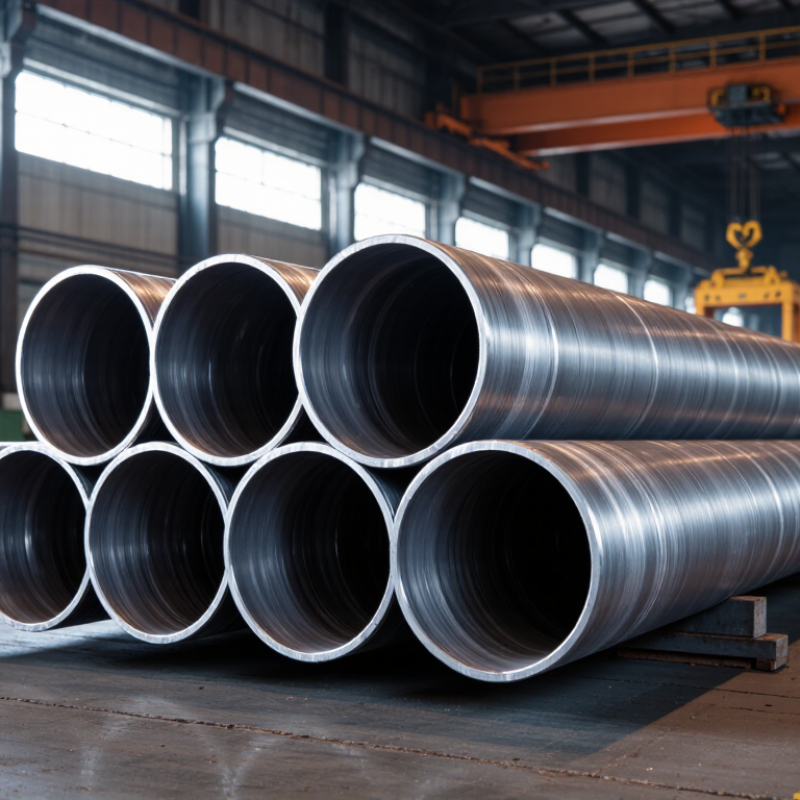
Why Choose Seamless Pipe for Industrial Applications?

What Seamless Pipe Is and How It Is Manufactured

Seamless pipe is a hollow steel product made without a longitudinal welded joint. Its continuous wall can be useful where pressure, temperature, or cyclic loading demands careful material selection. “Seamless” does not mean flawless, though. Material quality still matters.

Manufacturing usually begins with a solid steel billet, heated until it can be formed. A piercing tool pushes through the billet’s center, creating a hollow shell. Rolling then stretches and reduces the shell to the required diameter and wall thickness. It is hot work, and the metal’s temperature must be controlled. Small process variations can affect dimensions and properties.

The pipe may be heat-treated, straightened, cut to length, and inspected. Checks can include measurements, visual examination, and nondestructive testing; the exact methods depend on the specification and intended service. A hydrostatic test may also be required. No single test tells the whole story. Engineers should compare grade, dimensions, manufacturing requirements, and operating conditions before choosing a pipe. Seamless construction removes one type of joint, but it does not automatically make every pipe the best fit.

Why Choose Seamless Pipe for Industrial Applications?

Wall thickness for selected schedules of NPS 2 (DN 50) pipe

Seamless pipe is manufactured by heating a solid steel billet, piercing it to form a hollow shell, and rolling or sizing it to the required dimensions. Because it has no longitudinal weld seam, it is often selected for demanding service where uniform construction is important.

The chart shows standardized nominal wall thicknesses; schedule alone does not determine pressure capacity. Material, temperature, design code, and other factors also matter. Dimensions: ASME B36.10M.

How Its Structure Supports Strength and Pressure Resistance

Why Choose Seamless Pipe for Industrial Applications?

How Its Structure Supports Strength and Pressure Resistance

Seamless pipe is formed from a solid billet, which is pierced and rolled into a hollow tube. It has no longitudinal weld seam. That matters under load. Without a welded joint, stress is not concentrated along a seam that could become a weak point. The continuous wall can help the pipe withstand internal pressure, vibration, and changing temperatures. Still, “seamless” does not mean failure-proof. Steel grade, wall thickness, heat treatment, and manufacturing quality all affect performance.

In a pumping system, for example, pressure acts against the pipe’s inner surface along its length. A uniform wall helps distribute that load, while a suitable diameter and thickness help prevent deformation. Seamless pipe is often selected for demanding service, but it may not be the right choice for every line. A careful specification matters more than the label alone. One detail is easy to overlook: corrosion, poor supports, or sudden pressure changes can undermine even well-made pipe.

Tips: Match the pipe grade and wall thickness to the operating pressure and temperature. Check inspection records and dimensional tolerances before installation. Keep supports properly spaced, and inspect for corrosion over time. Small gaps in maintenance can become expensive problems.

Which Industrial Conditions Benefit from Seamless Pipe

Seamless pipe can suit industrial systems where pressure, temperature, or repeated loading makes consistent wall integrity important. It is formed without a longitudinal weld, so there is no weld seam to assess along the pipe body. That can simplify decisions in some demanding services. It does not remove the need for inspection.

Conditions with frequent pressure changes, such as pump discharge lines, may benefit from seamless construction. High-temperature process lines also need careful control of material strength and dimensional tolerances. In a plant, even a small wall-thickness variation can affect fitting alignment or support spacing. Details matter.

Seamless pipe is often specified for compact layouts, high-pressure equipment, and applications where fatigue is a concern. But seamless does not automatically mean safer or longer-lasting. Corrosion resistance depends on the selected alloy, fluid chemistry, temperature, and maintenance conditions. Engineers should verify pressure ratings, manufacturing standards, and inspection records for the intended service. One point is easy to miss: the right pipe choice can still fail if installation stresses or operating conditions differ from the design assumptions. A little humility helps.

Why Choose Seamless Pipe for Industrial Applications? — Which Industrial Conditions Benefit from Seamless Pipe
Industrial condition Why seamless pipe may be suitable Relevant material or standard example Selection considerations
High-pressure fluid or gas service Seamless pipe has no longitudinal weld seam, which can be advantageous where eliminating that seam is a design or inspection preference. ASTM A106/A106M seamless carbon steel pipe is specified for high-temperature service. Pressure capacity depends on material grade, outside diameter, wall thickness, temperature, manufacturing tolerances, and the applicable design code. Seamless construction alone does not determine the allowable pressure.
Elevated-temperature process lines A seamless product made from a suitable grade can be used in high-temperature piping applications where the material retains the required mechanical properties. ASTM A106/A106M covers seamless carbon steel pipe for high-temperature service. Check design temperature, oxidation and corrosion conditions, creep considerations where applicable, and the piping code. Select the grade and wall thickness for the actual service.
Low-temperature service Seamless pipe can be specified when the selected material and product specification meet the required low-temperature toughness and impact-testing requirements. ASTM A333/A333M covers seamless and welded steel pipe intended for low-temperature service. Confirm the required grade, minimum design temperature, impact-test requirements, and applicable code. Seamless construction does not by itself guarantee low-temperature toughness.
Corrosive process fluids Seamless pipe is available in corrosion-resistant alloys and can avoid a longitudinal weld seam, but corrosion performance is primarily determined by material selection and operating conditions. ASTM A312/A312M covers seamless, welded, and heavily cold-worked austenitic stainless steel pipe. Evaluate the fluid composition, concentration, temperature, pressure, contaminants, and corrosion mechanism. Choose an alloy based on compatibility; stainless steel is not resistant to every environment.
Systems with demanding inspection or fabrication requirements Removing the longitudinal seam can simplify some seam-specific inspection and fabrication considerations, depending on the project specification. Product specifications and project requirements determine the permitted manufacturing route and inspection scope. Seamless pipe still requires the inspections, testing, traceability, and acceptance criteria specified by the applicable standard and project documents.
General-purpose pipeline service Seamless pipe is one available manufacturing option; it may be selected when required by the specification or preferred for a particular application. API Specification 5L includes requirements for both seamless and welded line pipe. Compare the approved manufacturing options, grade, dimensions, delivery condition, inspection requirements, availability, and total installed cost. Welded pipe can also be suitable when it meets the governing requirements.

How Seamless Pipe Compares with Welded Pipe

Seamless and welded pipe differ most at the manufacturing seam. Seamless pipe is formed without a longitudinal weld, while welded pipe is made from formed strip or plate joined along its length. ASTM A106 covers seamless carbon-steel pipe for high-temperature service; ASTM A53 includes seamless and welded types. These specifications define product requirements, not a universal winner.

For pressure design, ASME B31.3 considers material allowable stress and, where applicable, longitudinal weld quality. The relevant values depend on the material specification, manufacturing route, and examination requirements. That matters. A weld seam is not automatically a weak point, but it does require appropriate controls and documentation. Mill test reports and inspection records help confirm the pipe meets the project specification.

In practice, seamless pipe may suit demanding pressure or temperature conditions where avoiding a weld seam is valuable. Welded pipe can offer consistent dimensions and may be more economical, especially in common sizes. Check the actual grade, wall thickness, operating conditions, and inspection scope—not just the product label. A tidy comparison chart can hide those details. I would also avoid assuming seamless pipe has tighter dimensional tolerances; verify the applicable specification and supplier’s measured data.

What to Consider When Selecting Seamless Pipe for an Application

When selecting seamless pipe, begin with the service conditions, not the catalog description. Record the fluid, operating pressure, temperature range, and any pressure surges. A pipe carrying hot process water faces different demands from one exposed to corrosive chemicals. Choose a material grade suited to that environment, then check its compatibility with connected valves and fittings.

Tips: Confirm outside diameter, wall thickness, and length against the installation drawing. Ask for material test records and verify that inspection requirements match the project specification. Small documentation gaps can slow acceptance.

Do not assume seamless construction automatically means better performance. It avoids a longitudinal weld, but the right choice still depends on grade, dimensions, manufacturing quality, and testing. Check tolerances carefully: a small wall-thickness difference can affect fit-up or available flow area. Also consider handling and installation, especially where long sections must pass through tight spaces. One easy-to-miss detail is the inspection method; clarify whether visual, dimensional, or nondestructive checks are required before ordering. Specifications can be imperfect, too, so review them against actual operating conditions rather than copying an old project unchanged.

Article Source: