post thumbnail
Our pricing model is flexibly designed to give you the most possible advantages of a continuing partnership.

2026 Top Precision CNC Milling Types for Global Buyers

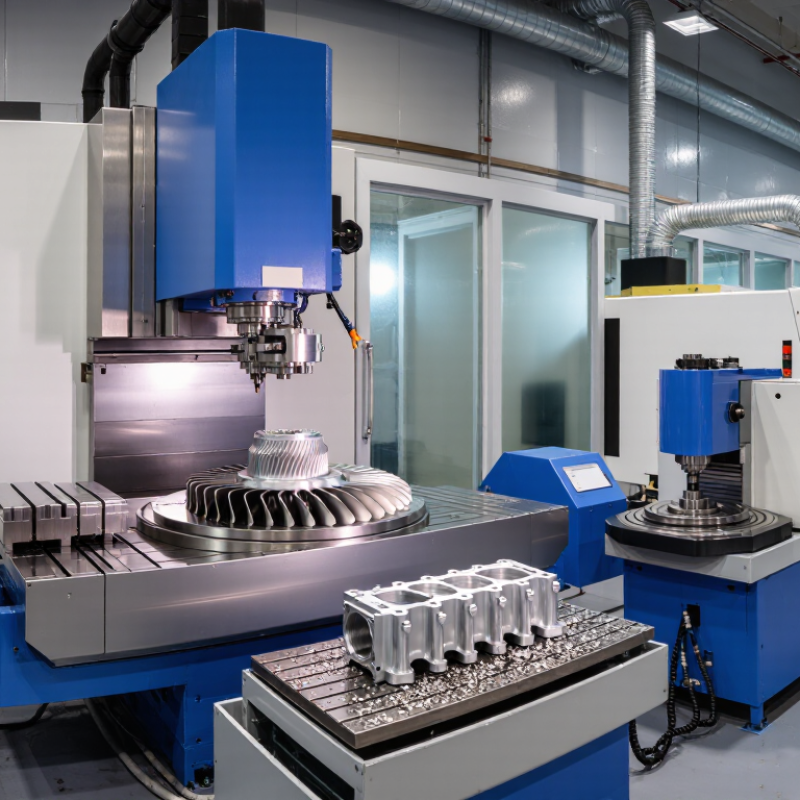
For global buyers, precision CNC milling is no longer defined by accuracy alone. Machine type, material, geometry, automation, and supplier capability now influence the final result. A vertical three-axis mill may suit aluminum brackets and repeatable plates. A four-axis machine adds rotary access for indexed features. Five-axis milling reaches complex turbine blades, medical components, and aerospace contours with fewer setups.

Market evidence supports this broader view. Grand View Research identifies growing demand for computer numerical control machines, driven by automation, tighter tolerances, and advanced manufacturing. MarketsandMarkets also links CNC market expansion with aerospace, automotive, medical, and electronics production. These reports indicate opportunity, but they do not replace technical evaluation. Market forecasts can hide regional differences, especially in labor costs, energy prices, and service coverage.

This 2026 guide compares the leading precision CNC milling types for international purchasing teams. It examines three-axis, four-axis, five-axis, high-speed, micro-milling, horizontal, vertical, and mill-turn platforms. Each section considers work envelope, spindle speed, repeatability, tooling access, chip evacuation, and practical maintenance. ISO 230 testing principles and ISO 9001 quality systems provide useful reference points for machine verification and supplier control.

Small details matter. A 0.01-millimeter deviation can affect a sealed interface. A poorly managed coolant line can damage surface finish. A fast spindle is not automatically better. The best choice depends on the part, not the brochure. Some recommendations remain imperfect because published data often reflects ideal conditions. Buyers should request sample machining, inspection records, acceptance criteria, and service commitments before signing a global purchase agreement. That step prevents expensive assumptions.

2026 Top Precision CNC Milling Types for Global Buyers

What Precision CNC Milling Means in Modern Manufacturing

Precision CNC milling means controlling cutting movement, material removal, and inspection with exceptional consistency. In modern manufacturing, digital models guide machines across metals, plastics, and engineered materials. A three-axis mill suits many flat or accessible parts. Four- and five-axis machines reach angled surfaces and reduce repeated setups. More axes can mislead. The correct choice depends on geometry, tolerance, quantity, and tooling access.

Experienced machinists study the drawing before selecting feeds, speeds, and cutting tools. They consider burr formation, heat, vibration, and material behavior. A calibrated coordinate measuring machine can verify critical holes, datums, and profiles. Surface finish also matters, especially where seals, bearings, or sliding parts are involved. Measure twice. Small thermal changes can affect a tight tolerance.

Reliable production requires traceable inspection records, clear revision control, and realistic tolerances. Material certificates and process notes help global buyers compare suppliers fairly. However, no milling process is flawless. A tool may wear earlier than expected, or a thin wall may shift during machining. Variation still happens. Engineers should question perfect first-run results and review measurements from multiple batches. That habit supports safer decisions, steadier quality, and fewer expensive surprises.

2026 Top Precision CNC Milling Types for Global Buyers

Precision CNC milling types are commonly classified by the number of controlled axes and machining flexibility. Three-axis mills are suitable for prismatic parts, four-axis machines add rotary indexing, five-axis machines can approach complex surfaces from multiple directions, and mill-turn centers combine milling with turning operations. Higher axis counts can reduce setups and improve access to complex geometries, although actual accuracy depends on machine construction, calibration, tooling, material, and process conditions.

Main Types of Precision CNC Milling Machines

Precision CNC milling machines differ mainly by axis count, spindle direction, and workholding method. Three-axis mills move along X, Y, and Z. They suit plates, brackets, pockets, and repeatable parts with accessible surfaces. They remain practical for many global buyers because setup is simpler and programming costs are lower.

Four-axis machines add rotary movement around one linear axis. This feature supports indexed machining on several faces without repeated clamping. Five-axis mills rotate the tool or workpiece in two directions. They can produce turbine-like surfaces, medical components, and complex aerospace structures with fewer setups. However, more axes also increase programming difficulty and maintenance demands. More capability is not always better.

Vertical machining centers place the spindle above the workpiece. They offer clear visibility and flexible tooling for general production. Horizontal machining centers improve chip evacuation and support pallet-based, high-volume work. A 2024 Grand View Research report estimated the global CNC machine market at about USD 83.99 billion in 2023, reflecting strong demand for automated metalworking. Another industry forecast from MarketsandMarkets projects continued growth through 2028, driven by tighter accuracy requirements and labor shortages. Buyers should still inspect real test cuts. Reported accuracy may change after thermal drift, tool wear, or imperfect fixturing. A 0.01 mm promise means little if the operator cannot repeat it.

Key Features and Applications of Each Milling Type

2026 Top Precision CNC Milling Types for Global Buyers

Key Features and Applications of Each Milling Type

Three-axis CNC milling remains practical for flat plates, pockets, brackets, and general machine parts. Its cutting motion is simple, stable, and easier to program. Buyers often choose it for repeat orders with accessible surfaces. It can achieve tight results when tooling, fixturing, and temperature control are managed carefully. However, deep cavities may require several setups.

Four-axis milling adds rotary positioning around one axis. This feature helps machine shaft features, radial holes, and components with multiple faces. It reduces manual repositioning and can improve alignment between surfaces. Its applications include valve bodies, indexed housings, and compact mechanical assemblies. The setup still needs careful inspection.

Five-axis milling tilts and rotates the workpiece during cutting. This supports impellers, medical-shaped components, aerospace structures, and complex molds. Shorter tools can reach angled surfaces, reducing vibration and improving surface quality. High-speed milling suits aluminum parts and detailed molds, while micro-milling serves miniature connectors and precision instruments. These machines cost more and demand stronger programming skills.

No milling type is perfect. A five-axis machine can still produce errors through poor workholding or incorrect tool compensation. Global buyers should compare tolerance, material, batch size, surface demands, and operator capability. A cheaper process may become expensive after repeated rework. Real production data matters more than impressive specifications.

How Global Buyers Should Compare CNC Milling Options

2026 Top Precision CNC Milling Types for Global Buyers

Global buyers should compare CNC milling options by part risk, not machine labels. A three-axis mill may suit flat plates, pockets, and brackets. A five-axis system can reduce repositioning, fixture errors, and tool reach problems on curved aerospace or medical components. However, five-axis capability does not automatically guarantee better accuracy. Ask for measured tolerances, inspection methods, material experience, and repeatability records.

Deloitte’s 2024 Smart Manufacturing and Operations Survey found that 86% of manufacturers expect smart manufacturing to become a primary competitiveness factor within five years. This supports evaluating suppliers beyond cutting speed. Review their digital traceability, in-process probing, revision control, and corrective-action process. A practical test is simple: request a sample inspection report showing datum references, actual dimensions, and uncertainty.

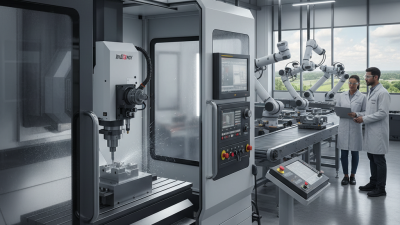
Automation also deserves careful comparison. The International Federation of Robotics reported 541,302 industrial robots installed worldwide in 2023. Robotic loading may improve consistency for repeated aluminum or steel parts, but it can add cost for short runs. Cycle time matters. So does changeover time. Buyers should compare total cost per acceptable part, including programming, tooling, inspection, packaging, and scrap. I would not trust the cheapest quotation without checking fixture design and tolerance evidence. That judgment can be wrong when volumes are uncertain. A pilot batch often reveals more than a polished capability brochure.

2026 Top Precision CNC Milling Types for Global Buyers - How Global Buyers Should Compare CNC Milling Options

CNC Milling Type Typical Axis Configuration Best-Suited Part Geometry Typical Accuracy Level* Setup and Fixturing Common Materials Typical Production Fit Main Advantages Key Limitations Global Buyer Comparison Point
3-Axis Vertical Milling X, Y and Z linear movement; spindle is normally vertical. Prismatic parts, plates, pockets, slots, holes, 2.5D profiles and relatively accessible surfaces. Approximately ±0.025 to ±0.100 mm for many production machines, depending on machine condition, tooling, workholding and inspection method. Usually straightforward. Multiple faces may require manual repositioning or additional fixtures. Aluminum, steel, stainless steel, brass, copper, engineering plastics and titanium with suitable cutting parameters. Prototypes, maintenance parts, low-to-medium volume production and general-purpose machining. Cost-effective
Simple programming, broad availability and easy operator access.
Several setups may be required for multi-face work. Tool access is limited in deep cavities and undercuts. Compare usable work envelope, spindle power, tool capacity, repeatability, probing options and local service support.
4-Axis Indexed Milling Three linear axes plus one rotary axis, commonly an A-axis or B-axis. The rotary axis is positioned and then locked during cutting. Parts requiring machining on multiple sides, radial holes, bolt circles, flanges and indexed features. Approximately ±0.020 to ±0.075 mm on many industrial applications; rotary positioning accuracy must be checked separately. Fewer manual setups than 3-axis machining. Rotary chuck, tombstone or trunnion-style workholding may be used. Aluminum alloys, carbon steel, stainless steel, brass, plastics and selected titanium applications. Low-to-medium volume parts with repeated features around a central axis. Fewer setups
Improved positional consistency and efficient access to several faces.
Not equivalent to continuous simultaneous 4-axis machining; complex freeform surfaces may still require additional operations. Verify rotary-axis through-bore, maximum part diameter, indexing resolution, collision clearance and post-processor compatibility.
5-Axis Indexed Milling Three linear axes plus two rotary axes. Rotary axes position the workpiece before 3-axis cutting begins. Complex parts with multiple angled faces, compound holes, impellers, medical components and aerospace-style geometries. Approximately ±0.015 to ±0.050 mm is common for demanding work, but volumetric accuracy depends strongly on calibration and thermal control. Often completed in one or two setups. Specialized trunnions, angle heads or custom fixtures may be required. Aluminum, titanium, stainless steel, nickel alloys, tool steel and technical plastics. Complex prototypes, low-to-medium volume production and parts where setup reduction has high value. Reduced handling
Better access to angled surfaces, shorter tools and improved feature-to-feature consistency.
Higher machine, programming and inspection costs. Rotary-axis limits can reduce usable work envelope. Compare rotary travel, table load, pivot distance, machine kinematics, calibration method and programming capability.
5-Axis Simultaneous Milling Three linear axes and two rotary axes move at the same time during cutting. Freeform molds, turbine blades, impellers, orthopedic components, aerospace structures and deep or heavily contoured parts. Approximately ±0.010 to ±0.050 mm for many precision applications; surface quality and accuracy depend on kinematic calibration, thermal stability and toolpath quality. One primary setup is often possible, although support fixtures and careful workholding remain important. Titanium, nickel-based alloys, stainless steel, aluminum, hardened steels and composite-related tooling materials. High-value, complex, low-to-medium volume work where quality and setup reduction outweigh machine cost. Maximum geometric access
Shorter tools, fewer setups, improved surface continuity and efficient machining of complex contours.
Requires advanced CAM, skilled programming, collision simulation and rigorous post-processor validation. Assess simultaneous-axis performance, rotary smoothness, TCP control, CAM compatibility, simulation workflow and operator expertise.
Horizontal Machining Center Spindle is horizontal; commonly configured with three linear axes and an optional rotary or pallet system. Box-shaped parts, engine components, housings, manifolds and workpieces needing access from several sides. Approximately ±0.015 to ±0.050 mm for many production applications, subject to thermal conditions and machine specification. Excellent for tombstone fixtures, palletized production and multi-face machining with automatic indexing. Cast iron, steel, stainless steel, aluminum, ductile iron and other production metals. Medium-to-high volume production and heavy-duty machining. High productivity
Good chip evacuation, strong fixturing options and efficient multi-face production.
Usually higher purchase and installation cost; less convenient for very small or flat workpieces. Compare pallet size, pallet-changing time, spindle torque, chip management, automation interfaces and floor-space requirements.
Vertical Machining Center Vertical spindle with three-axis movement; may include fourth- or fifth-axis attachments. General prismatic components, dies, fixtures, brackets, covers and precision plates. Approximately ±0.020 to ±0.075 mm for many standard production applications. Flexible and accessible. Vises, modular fixtures, vacuum tables and rotary tables are commonly used. Aluminum, steel, stainless steel, brass, copper, plastics and hardened materials with suitable tooling. Prototype, job-shop, maintenance and low-to-medium volume production. Flexible platform
Easy loading, broad tooling availability and relatively simple programming.
Chip evacuation can be less efficient in deep cavities; multiple setups may be needed for complete part access. Check spindle speed range, torque curve, table dimensions, Z-axis clearance, automatic tool changer capacity and probing.
High-Speed CNC Milling Usually 3-axis or 5-axis, with high spindle speed, fast acceleration and optimized control for light cutting. Small detailed components, graphite electrodes, molds, dies, thin-wall parts and fine surface contours. Approximately ±0.010 to ±0.050 mm in suitable applications; high-speed cutting does not automatically guarantee higher dimensional accuracy. Requires rigid, balanced tooling, stable workholding and careful control of vibration and thermal growth. Aluminum, graphite, copper, plastics, tool steels and selected hardened steels. High-detail prototypes, molds, electrodes and precision components with significant finishing requirements. Shorter cycle times
Fine surface finish and efficient removal of material in light-to-medium cutting conditions.
May provide insufficient torque for heavy cuts. Tool balance, runout, cooling and thermal management are critical. Compare maximum speed with available torque, acceleration, tool balancing requirements, cooling system and vibration control.
Micro CNC Milling Typically 3-axis or 5-axis equipment designed for very small tools and miniature features. Microfluidic parts, miniature medical components, electronic connectors, watch-related components and small molds. Often approximately ±0.005 to ±0.025 mm, while achievable feature size depends on tool diameter, runout, material and inspection capability. Requires precision collets, low-runout holders, fine probing and highly stable fixtures. Aluminum, brass, stainless steel, titanium, copper, engineering plastics and specialty alloys. Prototype and small-batch production of miniature parts. Fine feature control
Suitable for small tools, narrow slots and delicate geometries.
Low material-removal rate, higher tool-breakage risk and demanding inspection requirements. Confirm minimum tool diameter, spindle runout, positioning resolution, microscope or vision inspection and minimum order economics.
Heavy-Duty CNC Milling Large vertical or horizontal machine with high-torque spindle, rigid structure and long-axis travel. Large bases, structural components, dies, energy-sector parts, machine frames and heavy industrial components. Approximately ±0.025 to ±0.100 mm for many large-part applications; accuracy is affected by part mass, temperature, travel length and fixturing. Needs engineered workholding, lifting equipment, large fixtures and careful loading plans. Carbon steel, stainless steel, cast iron, aluminum, nickel alloys and large forgings. Large-part prototypes, repair work and low-to-medium volume industrial production. High cutting capacity
Suitable for large workpieces and deep material removal.
Higher installation, transport and energy costs; long cycle times may occur on complex surfaces. Compare table load, travel, spindle torque, machine foundation, crane access, maximum part weight and transport constraints.
*Accuracy values are indicative application ranges rather than universal guarantees. Final capability depends on machine design, calibration, thermal environment, material, tooling, workholding, programming, inspection equipment and the agreed acceptance standard. Buyers should request a capability study, sample inspection report and clearly defined tolerances before placing an order.

Quality Standards, Materials, and Supplier Selection Factors

2026 Top Precision CNC Milling Types for Global Buyers

Choosing a CNC milling process starts with geometry, not marketing language. Three-axis milling suits flat plates, pockets, and repeatable prismatic parts. Four-axis machining adds rotary access for indexed features. Five-axis milling reduces setups on turbine-like parts, medical housings, and complex molds. Mill-turn platforms may combine milling and turning, but their value depends on tolerance, volume, and inspection needs.

Quality evidence should be measurable. ISO’s 2023 Survey recorded more than 1.2 million ISO 9001 certificates worldwide. Certification supports process control, but it does not guarantee every part is accurate. Ask for capability studies, inspection records, calibration dates, and material certificates. For tight work, review Cpk results and confirm the measurement method. A clean surface can still hide position errors.

Material selection changes tool wear, heat control, and delivery risk. Aluminum machines quickly, while stainless steel demands stable cutting parameters and coolant control. Titanium needs careful heat management. Plastics require attention to clamping pressure and thermal expansion. ASTM and ISO material standards help define composition and testing requirements. Supplier assessments should also examine traceability, export documentation, corrective-action speed, and subcontractor control. Deloitte’s 2024 manufacturing research found that 86% of surveyed leaders viewed smart manufacturing as important for competitiveness. Useful, but not conclusive. A connected factory can still produce poor parts. Visit the shop floor when possible. Watch one setup, inspect one batch, and question one deviation.