Why Choose Machined Parts for Your Manufacturing Needs?
In today’s competitive manufacturing landscape, the choice of materials and components is crucial. Experts like Dr. Emily Carson, a leader in precision engineering, emphasize the importance of machined parts. She states, “Quality machined parts can significantly impact product performance and reliability.” This underscores the core benefits of using machined parts in various industries.
Machined parts are precisely crafted components. They ensure higher accuracy and better tolerances compared to many alternatives. This reliability is essential for high-stakes applications such as aerospace and medical devices. However, it may be tempting to choose lower-cost options. This can lead to poor performance and safety issues, resulting in higher long-term costs.
Choosing the right machined parts requires careful consideration. Manufacturers must weigh the benefits of precision against budget constraints. While the upfront costs can be higher, the investment pays off in durability and efficiency. Being aware of the potential pitfalls in parts selection can lead to better production outcomes. Balancing quality with cost is an ongoing challenge that requires expertise and thoughtful decision-making.
Benefits of Utilizing Machined Parts in Manufacturing Processes
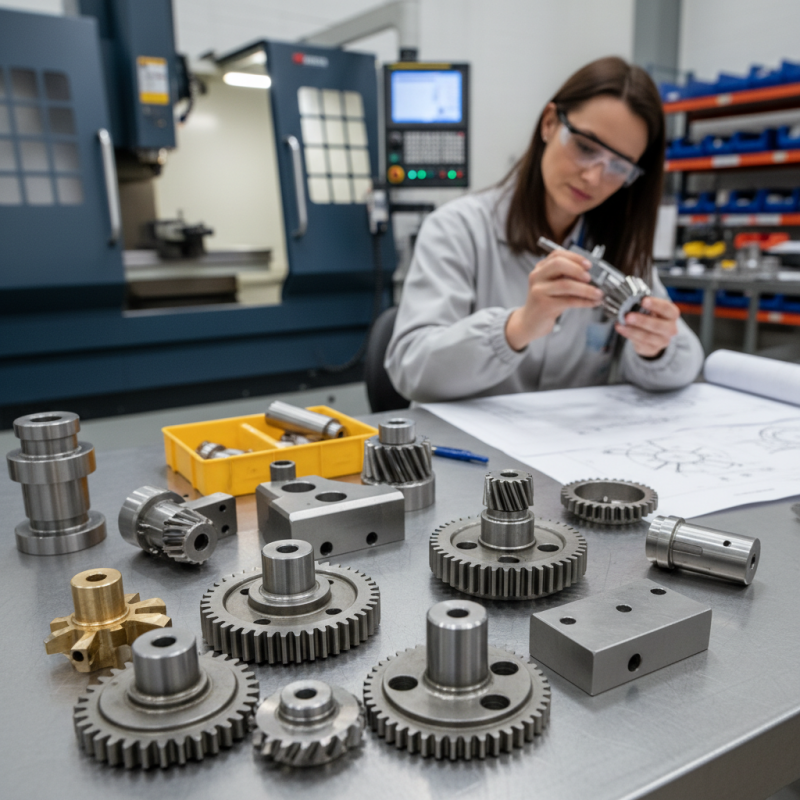
Machined parts play a crucial role in modern manufacturing processes. They offer remarkable precision and consistency. This accuracy is vital for industries where even minor variations can lead to significant issues. For example, in aerospace, a small error can result in catastrophic failures. The ability to produce parts to tight tolerances contributes to safer and more reliable products.
Another key advantage is the versatility of machined parts. They can be made from various materials such as metals, plastics, and composites. Each material brings unique properties, allowing manufacturers to choose the best fit for their specific applications. This adaptability enhances the overall efficiency of production. However, not all materials are suited for every project. Manufacturers must carefully evaluate which material to use.
Cost-effectiveness is also an important benefit. While the initial setup for machining may be higher, the long-term savings can be substantial. Reduced waste and shorter lead times can lead to better margins. Still, this method is not without challenges. Skilled labor is essential for maintaining quality. In some cases, companies may struggle to find qualified machinists, which can be a critical hurdle.
Benefits of Utilizing Machined Parts in Manufacturing Processes
Key Considerations in Selecting Machined Parts for Your Projects
When selecting machined parts for your projects, precision is key. Evaluate the material carefully. Different metals and plastics offer various strengths and weaknesses. Consider factors like temperature resistance, corrosion resistance, and weight. Each project has unique requirements that dictate the best material choice.
Another important aspect is tolerances. Machined parts often have specified tolerances. These determine how closely the part must match the intended design. If these tolerances are not met, the parts could fail in their intended function. Higher precision often leads to better performance. However, that can also increase costs and production time.
Lastly, consider the manufacturing process itself. Some methods, like CNC machining, provide enhanced accuracy. Others may be more cost-effective but offer lower precision. It's essential to balance these aspects based on your project's budget and timeline. Machined parts can be ideal for many applications, but careful consideration is vital to avoid pitfalls.
Comparison of Machined Parts vs. Other Manufacturing Methods
When evaluating manufacturing methods, the choice of machined parts stands out. Machined parts offer precise dimensions and fine tolerances, crucial for high-performance applications. According to a report by Grand View Research, the global CNC machining market is expected to reach $100 billion by 2025, indicating a robust demand due to its efficiency and accuracy.
In contrast, other manufacturing methods, like injection molding or 3D printing, often struggle with precision. For instance, additive manufacturing can produce complex shapes but usually lacks the fine surface finish and dimensional accuracy that CNC machining provides. A study from Statista indicates that CNC machining is preferred in industries requiring stringent specifications, such as aerospace and medical devices. The reported accuracy can be within ±0.005 inches, a significant advantage for critical applications.
Moreover, while traditional machining requires time and skilled labor, it allows for effective material utilization and waste reduction. Machining often results in less scrap compared to other methods. However, setups can be costly and time-consuming, a drawback that requires careful consideration. The challenge is to balance time efficiency and cost-effectiveness with the need for high-quality output.
Common Applications of Machined Parts Across Industries
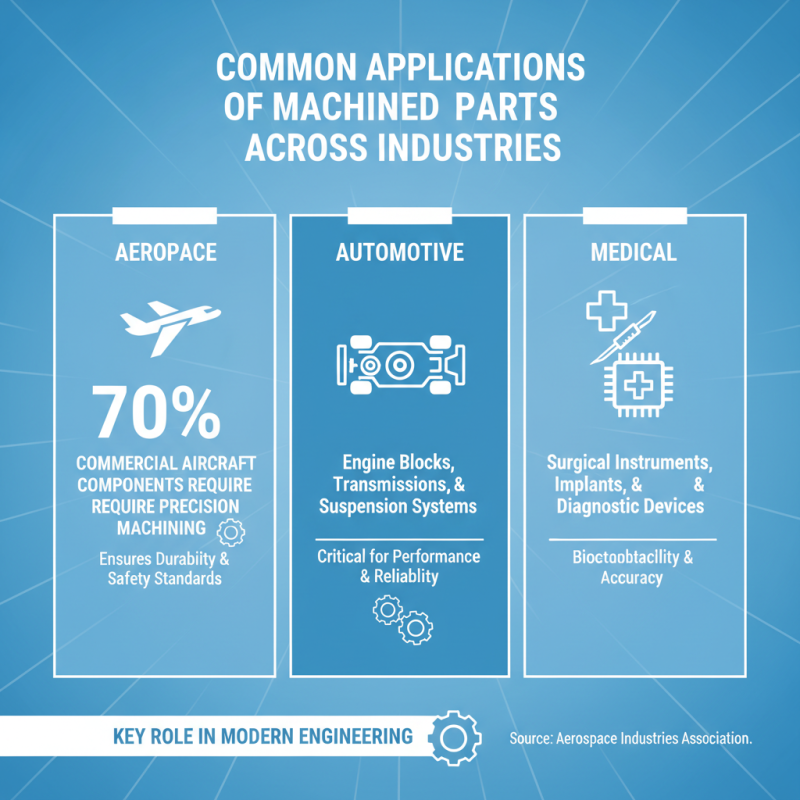
Machined parts are integral to various industries, including aerospace, automotive, and medical. In aerospace, precision is crucial. According to the Aerospace Industries Association, over 70% of commercial aircraft components require intricate machining. This process ensures not only durability but also compliance with strict safety standards.
In the automotive sector, machined parts play a vital role as well. A report by the International Organization of Motor Vehicle Manufacturers indicates that about 65% of a vehicle's weight comes from machined components. These parts contribute to efficiency and performance. However, the challenge lies in balancing cost and precision. Manufacturers often face trade-offs between quality and expense.
The medical industry also relies heavily on machined components. Custom instruments and implants demand accuracy and reliability. According to a study published in the Journal of Medical Devices, nearly 85% of medical devices utilize precision machining techniques. Yet, sourcing high-quality materials remains a concern for many manufacturers. Impurities can jeopardize patient safety, prompting ongoing scrutiny of supply chains and production methods.
Future Trends in Machined Parts Manufacturing Technologies
As the manufacturing landscape evolves,
machined parts are at the forefront of innovation. The integration of advanced technologies is driving efficiency.
Additive manufacturing is gaining traction, allowing for intricate designs that traditional machining cannot achieve.
This fosters creativity and
precision in production.
Artificial intelligence is also shaping this field.
AI-driven systems can analyze data
rapidly, optimizing processes in real-time. These systems minimize waste while enhancing quality.
However, the reliance on AI raises questions about the potential for reduced human oversight.
Striking a balance is essential for maintaining quality and control.
Sustainability is becoming a priority in machined parts
production. Eco-friendly materials and processes are being explored. Manufacturers are rethinking supply
chain practices to reduce their carbon footprint. Yet, transitioning to sustainable methods often involves
initial costs and challenges. The journey towards greener practices in manufacturing requires
commitment and
innovation.