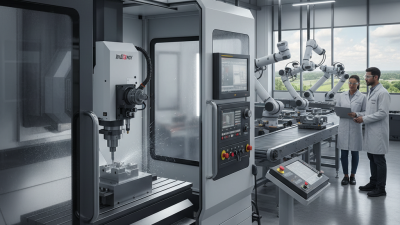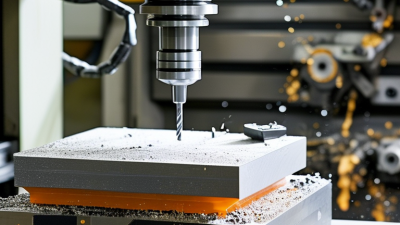
Choosing the best 5 axis CNC machine in 2026 requires more than comparing spindle speed or price. A production floor tells a different story. Tool access, thermal stability, control software, operator training, and service response can decide whether a machine earns money or stands idle.
Grand View Research estimates that the global CNC machine market could grow at about 7.3% annually from 2024 to 2030. MarketsandMarkets also identifies automation, complex components, and shorter production cycles as major growth drivers. These reports cover CNC equipment broadly, not only five-axis systems. That distinction matters. Market numbers can look impressive, yet they may not reflect your aerospace, medical, mold-making, or energy workload.
Peter Zelinski, editor-in-chief of Modern Machine Shop, has emphasized the practical value of five-axis work: “The real advantage is positioning the tool closer to the ideal cutting direction.” His point remains useful when comparing machines. A compact impeller, for example, may need smooth simultaneous motion, strong rotary-axis accuracy, and reliable collision control. A large aluminum bracket may prioritize travel, chip evacuation, and rapid setup.
There is no perfect checklist.
This guide examines accuracy, machine architecture, controller capability, workholding, maintenance, and total ownership cost. It also questions common assumptions. More axes do not automatically mean better results. A cheaper machine may become expensive after software upgrades, calibration, and downtime. The right 5 axis CNC machine should match your parts, materials, tolerances, operators, and realistic production volume. Data helps. Shop-floor evidence matters more.
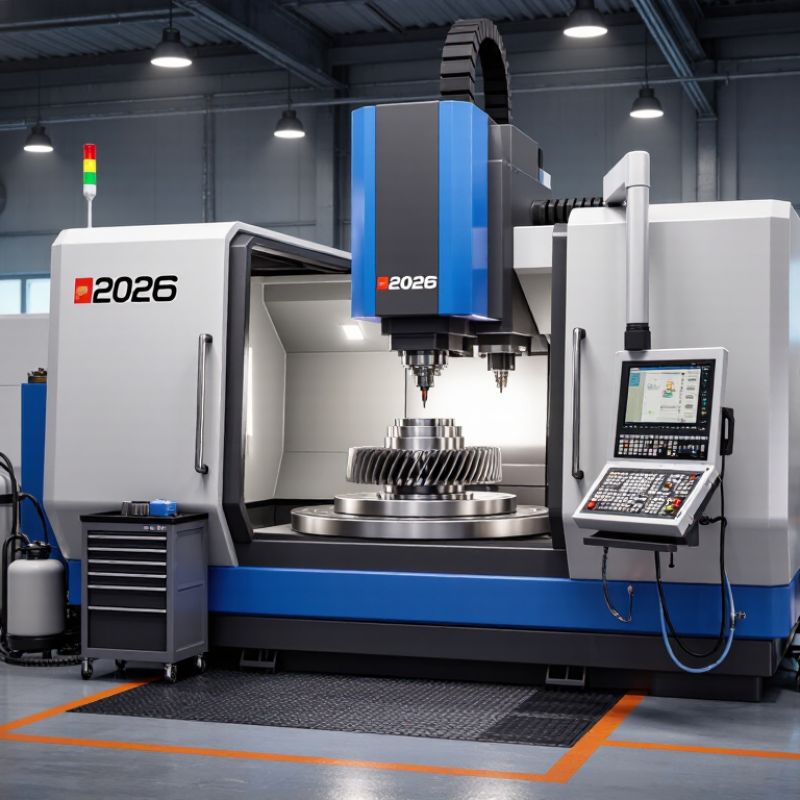
How to Choose the Best 5 Axis CNC Machine in 2026?
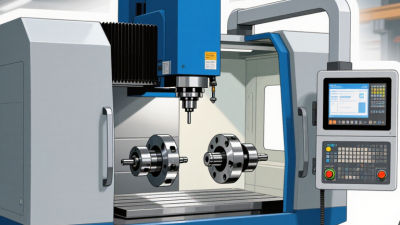
In 2026, configuration matters more than advertised axis counts. A five-axis machine usually combines three linear axes with two rotary axes. The main layouts are table-table, head-table, and head-head. Table-table designs suit compact parts and stable workholding. Head-head systems handle larger workpieces but demand stronger thermal control. Head-table machines offer a practical middle ground.
The machining method also matters. A 3+2 machine positions the tool, then cuts with three axes. Simultaneous five-axis machining moves all axes together. It can reduce setups and reach complex surfaces, especially turbine blades, molds, and orthopedic components. However, simultaneous motion needs careful post-processing and operator experience. More freedom can create more errors.
Grand View Research valued the global CNC machine market at approximately 83.7 billion dollars in 2023. Its 2024 analysis forecasts a 9.5% compound annual growth rate through 2030. Demand is strongest in aerospace, automotive, and medical manufacturing. These figures support investment, but they do not choose a machine for you. Check the rotary torque, spindle taper, accuracy test method, and actual work envelope. A larger envelope is not automatically better. I would also test a sample part before purchasing. That step is often skipped, and regretted later.
Five-axis CNC machines combine three linear axes (X, Y, and Z) with two rotary axes selected from A, B, or C. Indexed 3+2 machining positions the rotary axes before cutting, while simultaneous five-axis machining coordinates all five axes during the toolpath.
Choosing a 5 axis CNC machine starts with the part, not the machine brochure. Define the largest workpiece, tightest tolerance, surface finish, and required batch size. A small medical component needs different capacity than a heavy aerospace housing. Measure everything.
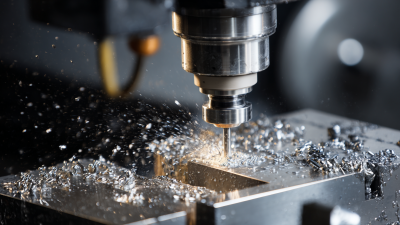
Review the materials carefully. Aluminum allows faster cutting, while titanium demands rigid construction, controlled heat, and stable fixturing. Hardened steel may require high spindle torque and slower, predictable toolpaths. Consider tool length, coolant delivery, chip evacuation, and the machine’s working envelope. These details often decide whether production remains stable.
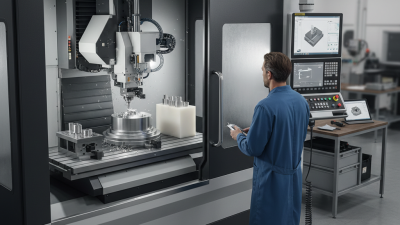
Your production goal matters just as much. For prototypes, flexible programming and quick setup can outweigh maximum spindle speed. For repeated parts, automatic tool measurement, probing, and reliable pallet handling may reduce labor. Check real cycle-time data, not optimistic demonstrations. Ask for a test cut using your material and a representative geometry.
I once focused too heavily on rapid positioning and underestimated setup time. The machine looked impressive, but operators needed extra probing steps. That mistake was expensive. Review maintenance access, operator training, service response, and calibration records before purchase. Verify repeatability with documented tests and calibrated instruments. Leave some capacity for future work. Growth rarely follows the original forecast.
Comparing Accuracy, Spindle Performance, and Machine Capacity
Accuracy should be judged under real cutting conditions, not from brochure figures alone. Check positioning accuracy, repeatability, and volumetric performance. Thermal drift matters during long aluminum or steel cycles. Ask for a documented calibration report. Then run a test cut using your typical toolpath. Measure hole size, surface location, and contour deviation. Small errors become expensive during multi-sided machining.
Spindle performance involves more than maximum speed. A high-speed spindle may suit small cutters and aluminum, while steel needs stable torque at lower rpm. Review power curves, bearing design, cooling, and tool-holding balance. Listen during cutting. Chatter, heat, or changing pitch can reveal weaknesses before inspection does. I would not select a spindle from rpm alone. That choice often looks impressive and performs poorly.
Machine capacity must match the largest part, fixture, and tool assembly. Leave clearance around rotary axes and allow room for chip evacuation. Check table load, axis travel, door opening, and crane access. A heavy fixture can consume capacity quickly. Consider five-axis kinematics, collision avoidance, and post-processor support. These details affect daily reliability. A machine can be accurate yet frustrating. Recheck your assumptions with a sample part, because my first capacity estimate would probably be too optimistic.
How to Choose the Best 5 Axis CNC Machine in 2026?
Software, automation, maintenance, and operator support deserve more attention than spindle speed. Deloitte’s 2023 Smart Manufacturing Survey found that 86% of manufacturers expect smart manufacturing to become a major competitiveness driver within five years. For a 5 axis machine, that means checking postprocessor reliability, collision simulation, tool libraries, and data access before comparing cutting power. A fast machine with unstable software can waste hours beside the control cabinet. I have seen this happen.
Automation should fit the workshop, not impress visitors. Test probing cycles, pallet changes, tool measurement, and recovery after an interrupted program. Ask whether one operator can monitor several machines safely. The World Economic Forum’s Future of Jobs Report 2025 estimates that 39% of current worker skills may change by 2030. Training cannot be an afterthought. Choose suppliers offering practical setup lessons, remote diagnostics, clear manuals, and local response times. Short videos help. Real troubleshooting matters more.
Maintenance planning should be visible during the buying process. Request service intervals, spare-part availability, lubrication requirements, and expected repair lead times. Review alarm histories from comparable installations, if available. Predictive features may detect temperature or vibration changes, but they still need disciplined inspections. Sensors do not replace experience. Budget for operator refreshers and software updates, too. A common mistake is assuming automation removes human judgment. It usually changes where judgment is needed. Evaluate the machine on an ordinary production day, with real tools, real fixtures, and an imperfect operator.
The purchase price rarely predicts a five-axis CNC machine’s real value. Calculate total cost before comparing specifications. Include installation, probing systems, CAD/CAM software, tooling, fixtures, training, financing, maintenance, energy, and floor preparation. A practical spreadsheet should also include lost production during commissioning.
An illustrative machine priced at $250,000 may require another $60,000 initially. If it creates $145,000 in annual benefits, but adds $35,000 in yearly costs, net benefit becomes $110,000. The simple payback period is about 2.8 years.
Use measured shop data, not optimistic quotations. Record current labor hours, subcontracting bills, scrap rates, changeover time, and machine utilization. Then model conservative, expected, and optimistic scenarios.
The Deloitte 2024 Smart Manufacturing Survey reports that 86% of executives view smart manufacturing as a major competitiveness driver within three years.
That supports investment, but does not guarantee profit. Utilization decides more than machine complexity. A machine running 35% of available hours may underperform a simpler machine running 75%. Small detail. Big consequence.
Long-term value also depends on maintenance access, control-system support, operator training, and compatible software. The U.S. Bureau of Labor Statistics projects 15% employment growth for industrial machinery mechanics, machinery maintenance workers, and millwrights from 2023 to 2033.
Skilled labor may become harder to secure. Budget for training and preventive maintenance from day one. My own cost models often underestimate fixturing and engineering time. Recheck those assumptions with actual job records every quarter.