How to Choose a Steel Fabrication Supplier?
Choosing a steel fabrication supplier can shape a project’s safety, schedule, and final cost. It is not merely a purchasing decision. It is a technical partnership.
Charles J. Carter, former president of the American Institute of Steel Construction, has emphasized a practical principle: “Quality is built into the process, not inspected into the product.” This idea deserves attention when comparing fabricators. A polished workshop does not automatically guarantee dependable work. Look closer.
Examine the supplier’s experience with your steel grade, connection details, tolerances, and project scale. Ask for verifiable project references, current certifications, and documented quality-control procedures. Request sample inspection reports. Check how welds are qualified, measured, and recorded. A reliable supplier should explain these steps without vague promises.
Visit the facility if possible. Observe material labels, plate storage, welding stations, and finished assemblies. Are heat numbers traceable? Are drawings controlled? Are rejected parts clearly separated? Small details reveal daily discipline.
Communication matters just as much. Confirm who handles revisions, nonconformance reports, delivery planning, and site questions. One missed drawing revision can create expensive rework. Sometimes, the cheapest quotation hides weak coordination.
Still, no checklist is perfect. A supplier with impressive equipment may struggle under schedule pressure. A smaller fabricator may offer stronger attention but limited capacity. That trade-off requires honest assessment.
Compare suppliers through evidence, not confidence alone. Review technical competence, production capacity, inspection systems, safety culture, and financial reliability. Then consider whether their working style fits your team. Good steel fabrication depends on accurate steel, capable people, and consistent decisions. The right supplier should make those qualities visible before production begins.
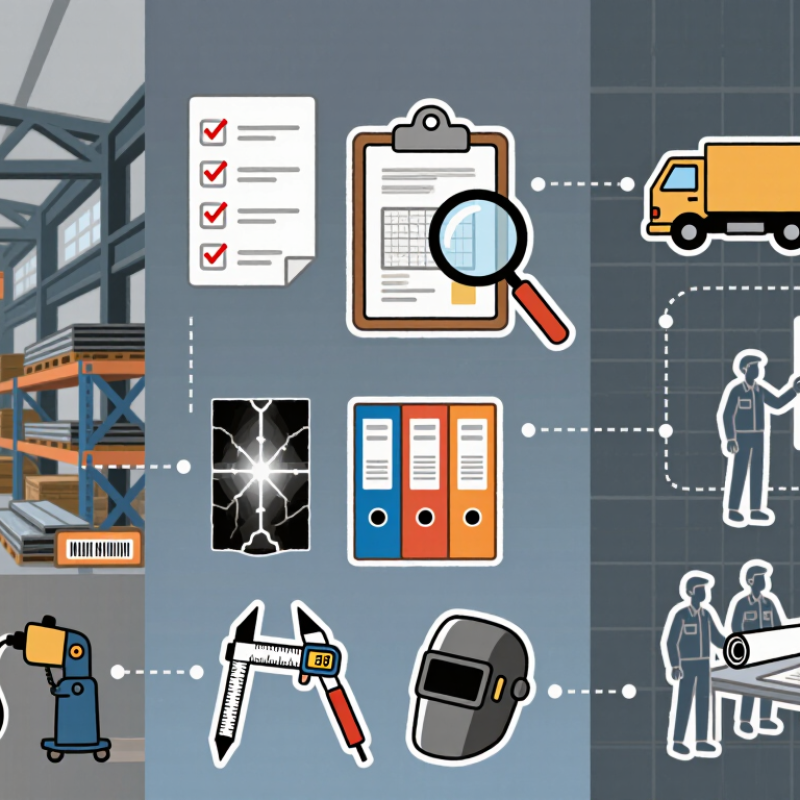
Define Your Steel Fabrication Project Requirements
Before choosing a steel fabrication supplier, define exactly what your project needs. A vague request often produces accurate work for the wrong purpose. Prepare drawings, three-dimensional files, material grades, dimensions, and quantity estimates. Include weld locations, hole patterns, surface treatment, and permitted tolerances.
Be specific about performance conditions. Explain whether the steel will face heavy loads, outdoor moisture, heat, vibration, or frequent handling. State the required fabrication standards and inspection documents. A qualified supplier should discuss welding procedures, traceability, dimensional checks, and non-destructive testing where necessary. Ask how finished parts will be packed and protected during transport. Scratched surfaces can create expensive problems later.
Your schedule should include approval time, production, inspection, and delivery. Share the installation location and access limits, especially when components are large or heavy. Request a clear quotation that separates materials, labor, finishing, testing, tooling, and shipping. This makes comparison more reliable. I have seen projects lose time because a “finished” part still needed drilling on site. That assumption was avoidable. However, even careful specifications can miss practical details. Leave room for technical questions and revise the document after supplier feedback. A short site visit or sample review may reveal conflicts that drawings hide. Small details matter.
Evaluate Materials, Fabrication Processes, and Quality Control
How to Choose a Steel Fabrication Supplier?
Choosing a steel fabrication supplier requires more than comparing prices. Start by checking material grades, thickness tolerances, and traceability records. A reliable supplier should provide mill certificates and identify each batch clearly. On a recent structural project, we found that small plate variations affected fit-up during welding. That detail was easy to miss.
Study the fabrication process closely. Ask how the supplier handles cutting, bending, welding, and surface preparation. CNC cutting can improve accuracy, but only when drawings and machine settings are reviewed carefully. Experienced welders should follow qualified procedures and record essential parameters. Inspect the workshop, if possible. Clean work areas often reveal better control, although appearances can mislead.
Quality control should exist throughout production, not only before shipment. Look for dimensional checks, weld inspections, coating tests, and documented corrective actions. Independent inspection may be appropriate for critical components. Do not accept vague promises. Request sample reports and inspection points before production begins. A supplier can meet a specification and still deliver parts that are awkward to install. We learned this after overlooking access for site bolting. That mistake was ours. Supplier evaluation should therefore include technical communication, realistic lead times, packaging, and post-delivery support. Reliable records matter.
Compare Quotations, Lead Times, Contracts, and Payment Terms
Choosing a steel fabrication supplier starts with more than the lowest quotation. Ask each supplier to price the same drawings, steel grades, tolerances, surface treatment, packaging, and delivery point. Otherwise, a cheap offer may exclude essential work. Request a line-item breakdown. It should show cutting, welding, inspection, finishing, freight, and taxes. Check the quotation’s expiry date and assumptions. Small omissions become expensive revisions.
Compare lead times against your installation schedule, not an attractive promise. Ask for dates covering drawing review, material purchasing, fabrication, inspection, and dispatch. A reliable supplier explains capacity and identifies bottlenecks. Request evidence from similar projects, such as inspection records or anonymized delivery data. Build a modest buffer. Steel delays often begin with one late approval. I have seen schedules fail because “delivery” meant shipment, not arrival. That wording deserves attention.
The contract should define drawings, tolerances, quality standards, change control, rejected work, warranty limits, and unused material ownership. Payment terms also require careful comparison. A deposit may support material purchasing, while milestone payments can protect both parties. Link payments to measurable outputs, such as approved drawings or completed inspection. Confirm currency, bank charges, retention, and late-payment consequences. Do not ignore cash flow. A strong quotation can still become a poor deal when terms remain vague. Ask uncomfortable questions early. Silence is not protection.
Verify Communication, Delivery Performance, and After-Sales Support
Choosing a steel fabrication supplier requires more than comparing quotations. Communication often reveals operational discipline before production starts. Ask how drawings, tolerances, material grades, and finish requirements will be recorded. A dependable supplier assigns a technical contact and confirms changes in writing. Request sample progress updates, not polished promises. Clear answers matter. During a previous project, vague email responses delayed approval because one revision was misunderstood. That mistake taught us to use marked drawings and dated meeting notes.
Delivery performance should be checked with evidence. Ask for recent on-time delivery figures, typical lead times, and explanations for delays. Review how the supplier handles steel shortages, rejected welds, or transport disruption. A realistic schedule includes inspection, packing, and buffer time. “On time” must mean arrival at your site, not dispatch from the workshop. Visit the fabrication floor when possible. Look for labeled materials, visible inspection records, and a production plan matching the promised date. Still, one visit cannot prove consistency.
After-sales support becomes important when dimensions vary or installation exposes a hidden issue. Confirm response times, inspection procedures, replacement policies, and technical assistance after delivery. Ask who pays for rework when the cause is unclear. Keep photos, measurements, and delivery records for every claim. Good support is practical, not merely friendly. Test it with a small question before signing a large order. Suppliers may perform well yet lack follow-up capacity. That risk deserves a clear service agreement and regular communication throughout the project.
How to Choose a Steel Fabrication Supplier? - Verify Communication, Delivery Performance, and After-Sales Support
| Evaluation Area |
Measurable Indicator |
Recommended Benchmark |
Evidence to Request |
Suggested Weight |
Risk Level if Below Benchmark |
| Communication |
Initial quotation response time |
Within 1–3 business days for standard fabrication inquiries |
Quotation timestamps, response-time records, and a defined quotation workflow |
10% |
Medium |
| Communication |
Drawing and specification clarification |
Written questions and marked-up drawings before production approval |
Sample RFQ review, revision-control procedure, and approved drawing register |
10% |
High |
| Communication |
Progress reporting frequency |
Weekly updates during fabrication, with photos for key milestones |
Project communication plan, sample progress report, and escalation contacts |
8% |
Medium |
| Delivery Performance |
On-time delivery rate |
At least 95% of orders delivered on or before the confirmed date |
Anonymized delivery records covering the previous 12 months |
20% |
High |
| Delivery Performance |
Schedule-change notification |
Written notice within 1 business day after a material delay is identified |
Delay-notification template, corrective-action process, and sample notices |
8% |
High |
| Delivery Performance |
Production lead-time accuracy |
Actual lead time within approximately ±10% of the quoted production schedule |
Recent production schedules, capacity plans, and lead-time assumptions |
12% |
High |
| Quality and Documentation |
Inspection and test documentation |
Inspection plan, material certificates, dimensional reports, and coating records when required |
Anonymized inspection package from a comparable project |
12% |
High |
| After-Sales Support |
Acknowledgement of complaints |
Acknowledgement within 1 business day and an action plan within 3 business days |
Warranty procedure, service-level commitments, and complaint log format |
8% |
High |
| After-Sales Support |
Warranty coverage and remedy |
Clear written coverage, exclusions, claim process, and repair or replacement responsibilities |
Draft warranty terms and examples of closed corrective-action reports |
7% |
High |
| After-Sales Support |
Root-cause and corrective-action capability |
Documented root-cause analysis with corrective and preventive actions |
Anonymized 8D report or equivalent corrective-action report |
5% |
Medium |
| Total Evaluation Weight |
100% |
Use with technical and commercial review |
Benchmark values are general procurement guidelines for supplier screening and should be adjusted according to project complexity, material grade, inspection requirements, transport distance, and contractual terms.