What Are the Best CNC Systems From China?
Choosing the best cnc systems from China requires more than comparing prices or screen layouts. A capable system must match the machine, cutting process, operator skill, and service network. In a busy workshop, the difference appears in small details: smoother corner motion, faster program transfer, stable probing, and fewer alarms during a long aluminum cut.
This guide examines Chinese CNC controllers through practical and technical criteria. It considers interpolation quality, servo compatibility, PLC flexibility, interface design, remote diagnostics, documentation, and after-sales support. Brands such as Syntec, GSK, Weihong, and LNC serve different machine categories and production needs. Their strengths are not identical. Some suit standard milling centers, while others fit routers, lathes, or customized automation lines more effectively.
Real-world evidence matters. A system should be tested with representative programs, including drilling cycles, tight-radius contours, tool changes, and recovery after power interruption. Screenshots may look convincing. Shop-floor behavior tells more. No comparison is flawless, because software versions, installers, and machine builders can change the result. That limitation deserves attention.
The discussion will also consider total ownership cost, not only the purchase quote. Training time, spare parts, parameter protection, and technician availability can influence productivity for years. The “best” choice may therefore be the most dependable fit, rather than the most advanced model. Readers should verify specifications with manufacturers and test compatibility before ordering. That final check is essential.
What Defines a CNC System and Its Core Functions
What Are the Best CNC Systems From China?
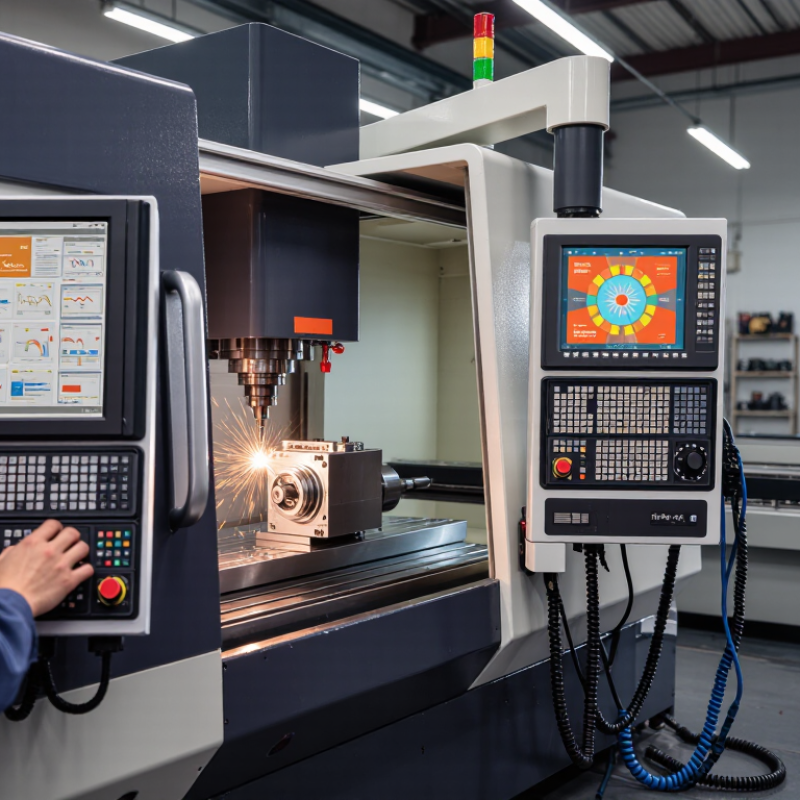
A CNC system is the control center of a machine tool. It converts programmed coordinates into synchronized axis and spindle movement. Its core functions include program interpretation, interpolation, motion control, tool compensation, feedback processing, and operator communication. A reliable system must also manage alarms, limits, lubrication signals, and emergency stops. ISO 6983 describes traditional G-code programming, while ISO 14649 supports richer product and process information. These standards help buyers compare practical compatibility, not just screen appearance.
Industrial demand is becoming more connected. The International Federation of Robotics reported 541,302 industrial robots were installed worldwide in 2023. That figure does not measure CNC systems directly, but it shows the growing need for coordinated automation. In Chinese workshops, system selection should match the machine’s structure, motor feedback, encoder resolution, and network requirements. A five-axis controller needs more than extra buttons. It must calculate smooth tool paths, protect collision zones, and recover accurately after interruption. A system can look impressive. Cutting results reveal more.
Tips: Test a sample part using your real material, tooling, and feed rates. Check cycle-time stability, surface finish, alarm clarity, and restart accuracy. Ask for documented support response times and software update procedures. Do not rely only on brochure specifications. A lower purchase price may hide integration work, training costs, or difficult maintenance. This is where many evaluations become imperfect. The “best” CNC system is not universal; it is the one that remains predictable beside your machine, operator, and production schedule.
What Defines a CNC System? Core Functions and Typical Axis Configurations
A CNC system combines motion control, interpolation, feedback processing, spindle management, program execution, and operator interfaces. The chart shows the coordinated-axis configurations commonly used in industrial CNC machines, from basic turning and milling to advanced mill-turn platforms. Actual capabilities vary by machine architecture and system configuration.
Which Chinese CNC System Brands Serve Different Manufacturing Needs
Chinese CNC systems now serve distinct manufacturing needs, rather than one universal market.
Basic two-axis controls suit small workshops producing standard shafts, plates, and fittings. Mid-range systems support drilling, milling, and turning with better tool monitoring. High-speed platforms target molds, aerospace components, and medical parts requiring tighter tolerances.
Demand is substantial.
The International Federation of Robotics’ World Robotics 2024 report states that China installed 276,288 industrial robots in 2023, representing 51% of global installations.
This automation base encourages local CNC development and faster integration with robots, probes, and production software. For repetitive work, buyers should prioritize stable cycle times and simple operator interfaces. For complex parts, five-axis interpolation, thermal compensation, and advanced simulation matter more than screen size.
There is no perfect choice.
A low purchase price may hide training, service, or post-processor costs. Open-architecture systems can connect more easily with factory networks, but they may demand stronger technical support. Closed systems often simplify commissioning. That trade-off is easy to underestimate. The ISO 230 series remains useful when verifying positioning accuracy, repeatability, and machine-tool performance. Buyers should request test cuts using their actual material, tooling, and tolerances. A system that performs well on a showroom sample may struggle with hardened steel, thin walls, or unstable network conditions. Service response also deserves measurement: ask for spare-part lead times, remote diagnostic procedures, and documented software revision policies.
How Chinese CNC Systems Compare in Control, Precision, and Compatibility
Chinese CNC systems differ widely in control, precision, and compatibility. The best choice depends on the machine, workload, and operator skill. In practical shop evaluations, clear menu structures reduce setup errors and shorten training time. Some systems also support remote diagnostics, which can speed up maintenance.
Precision depends on more than the controller. Servo response, mechanical rigidity, calibration, and thermal stability all matter. A strong system can maintain smooth tool paths during fine engraving and complex milling. However, published accuracy figures may not match daily production results. I would verify repeatability with test cuts, not brochures. Small errors become visible around holes, corners, and thin walls. Compatibility also deserves careful checking. Confirm support for common file formats, post-processors, probing equipment, and existing servo drives. An inexpensive upgrade can become costly if older hardware needs replacement.
Tips: Request a sample program before purchase. Test three-axis and multi-axis movements. Measure the same workpiece several times. Ask about software updates and local technical support. Keep spare cables and documented parameters nearby. A short trial is valuable. Some evaluations miss operator feedback, which can expose confusing screens or slow recovery after alarms. That weakness should be recorded before approval.
What Factors Should Buyers Evaluate Before Choosing a Chinese CNC System
Choosing a Chinese CNC system starts with the machine’s real workload, not a catalog headline. Define axis count, spindle speed, positioning accuracy, and expected cycle time. Ask for test cuts using your material and drawing files. A polished demonstration can hide vibration, heat, or unstable surface finishes. Measure parts with calibrated tools, then compare results against stated tolerances. Keep the evidence.
Control compatibility matters as much as mechanical accuracy. Confirm support for your CAD/CAM post-processor, probing equipment, servo drives, and factory network. Request the full electrical diagram and a clear list of replacement components. Check whether manuals explain alarms in understandable language. Ask who provides remote diagnosis, on-site service, and operator training. Response times should be written into the agreement, not left to friendly promises.
Reliability appears in small details. Review uptime records from similar installations, spare-parts availability, software update practices, and cybersecurity controls. Visit a working customer site when possible. Watch an operator recover from an alarm. That moment reveals more than a sales presentation. I once underestimated training time because the interface looked familiar. The first week proved otherwise. Budget for hands-on instruction and realistic ramp-up periods. Also compare total ownership costs, including energy, maintenance, tooling errors, and production delays. A lower purchase price may become expensive when support is slow.
How to Select the Best Chinese CNC System for a Specific Production Setting
Selecting the best Chinese CNC system starts with the production setting, not the catalog price. A three-axis milling workshop needs stable interpolation, simple training, and fast program transfer. A five-axis aerospace line needs stronger look-ahead control, collision checking, and reliable thermal compensation. Turning shops should examine spindle synchronization and rigid tapping performance.
Production volume changes the decision. IFR’s World Robotics 2024 report recorded 276,288 industrial robot installations in China during 2023, representing 51% of global installations. This scale shows why automation compatibility matters. Check fieldbus support, PLC integration, alarm diagnostics, and data collection before purchase. Grand View Research’s 2024 CNC machine market assessment also identifies automation and multi-axis machining as major growth drivers.
Test the system with your actual parts. Run a heavy roughing cycle, a fine contour, and a restart after interruption. Measure cycle time, surface variation, positioning accuracy, and recovery speed. Ask the supplier for local service response times and spare-part availability. A low purchase price may hide training costs or long downtime. I would not trust a polished demonstration alone. Real materials behave differently. One test may still miss seasonal temperature changes. Record the results, involve operators, and leave room for revision before signing the specification.