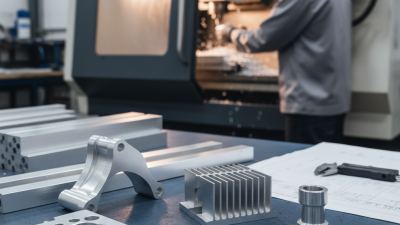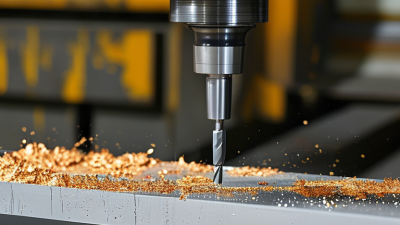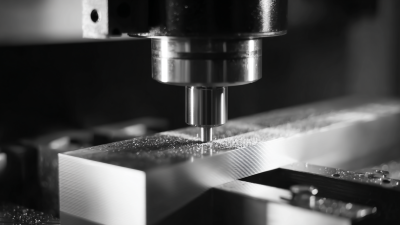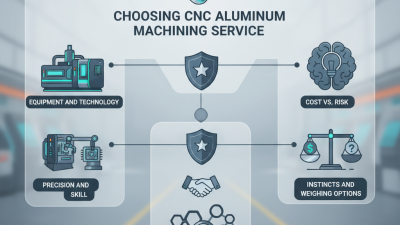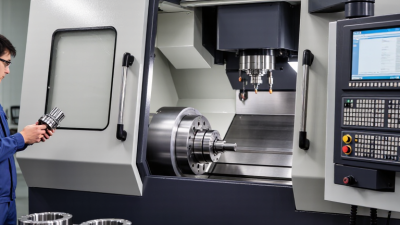
Choosing a reliable CNC aluminum manufacturer is no longer a simple price comparison. Global buyers must examine machining accuracy, alloy knowledge, finishing control, production capacity, and communication quality. A supplier may promise tight tolerances, yet the real evidence appears in inspection reports, sample parts, and consistent batches.
W. Edwards Deming, a respected manufacturing quality expert, said, “Quality comes not from inspection, but from the improvement of the production process.” Although Deming was not a CNC aluminum specialist, his principle remains highly relevant. Strong manufacturers control quality before the cutting tool touches the material. They verify aluminum grades, calibrate machines, monitor tool wear, and record dimensional results. Small details matter. A 0.02 mm deviation can affect assembly, sealing, or product performance.
This guide, “2026 Top CNC Aluminum Manufacturers for Global Buyers,” examines suppliers through a practical purchasing lens. It considers engineering support, five-axis capability, prototype handling, surface treatments, packaging, lead times, and export experience. Some companies may appear impressive online but offer limited technical documentation. Others may have excellent machines but weak project communication. That difference is easy to underestimate.
The ranking is not absolute. Buyer requirements vary by industry, volume, tolerance, and destination market. Medical, aerospace, robotics, and consumer products also demand different validation methods. Use this overview as a starting point, not a final decision. Request drawings, material certificates, first-article inspections, and clear quotations. Ask difficult questions early. Reliable partnerships are built through evidence, transparency, and repeated performance—not attractive claims alone.
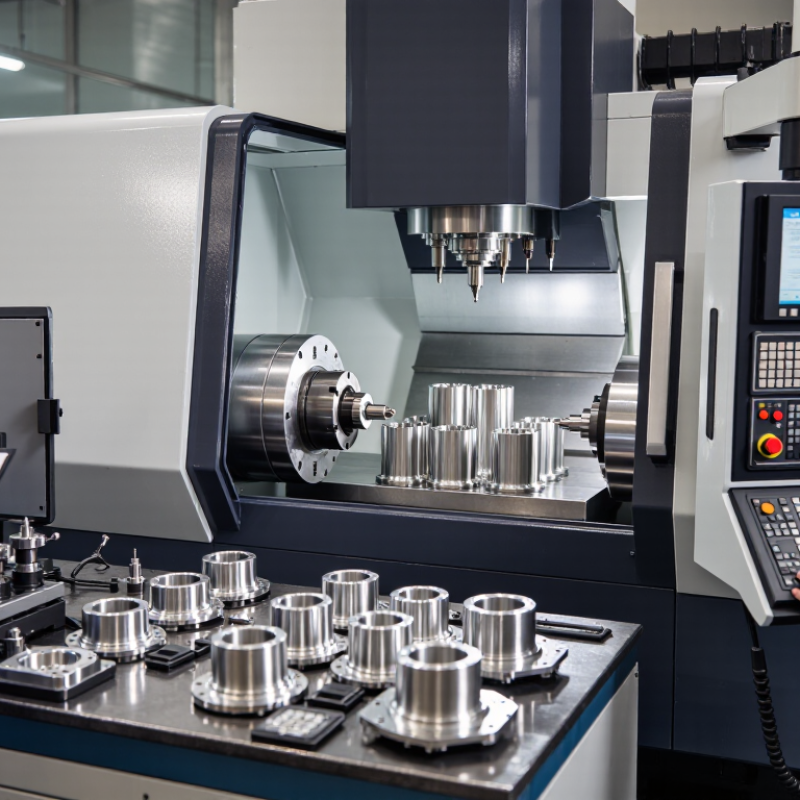
Global buyers often compare CNC aluminum manufacturers by equipment, inspection systems, and application experience. Alloy selection, however, can determine whether a component survives real service. In production work, 6061 remains a practical choice for brackets, housings, frames, and fluid-handling parts. It machines smoothly, resists corrosion reasonably well, and supports reliable anodizing. Its balanced properties also make it easier to source across international supply chains.
7075 aluminum suits lightweight parts exposed to high mechanical loads. Engineers commonly specify it for aerospace structures, robotic arms, tooling plates, and performance equipment. It offers high strength but usually provides lower corrosion resistance than 6061. Protective finishing and careful storage may therefore become necessary.
2024 aluminum is valued for fatigue performance, especially in aircraft-related structures and precision components. It machines well, but its copper content demands stronger surface protection in humid environments.
Some choices fail. A drawing may look complete, yet omit temper, grain direction, or surface requirements. Experienced manufacturers should verify these details before cutting material. They should also provide mill certificates, hardness results, dimensional reports, and traceable inspection records.
Buyers need to review cutting speeds, heat-treatment condition, thread quality, and burr control. A tight tolerance is not automatically useful if the assembly lacks a matching datum. Real reliability comes from linking alloy chemistry, machining practice, finishing, and inspection evidence. Trade-offs remain.
For global buyers, CNC aluminum rankings should begin with verified process control, not attractive websites. The ISO Survey 2022 reported more than 1.2 million ISO 9001 certificates worldwide. However, certification alone does not prove machining quality. Buyers should request current certificates, scope details, corrective-action records, and sample inspection reports.
Three-axis machining suits simpler plates and brackets, while four- and five-axis equipment reduces setups on curved aerospace or medical components. A 2023 industry analysis by the International Federation of Robotics showed continued investment in industrial automation, strengthening the case for digitally monitored production. Still, machine count can mislead. A smaller factory with skilled operators may outperform a larger site with weak inspection discipline.
A ±0.01 mm tolerance claim deserves careful testing. Ask whether it applies to one feature, a batch, or the complete component. Temperature, tool wear, clamping force, and aluminum alloy can shift results. No factory holds ±0.01 mm on every feature, every day. That limitation matters. Require CMM reports, gauge calibration dates, material certificates, and capability data such as Cp and Cpk. The ranking should reward stable evidence across repeated orders, not one perfect sample. Supplier audits should also examine chip control, coolant management, revision tracking, and packaging damage. Small details matter.
For global buyers, a useful supplier profile should reveal more than machine counts. It should explain machining experience, inspection methods, and the aluminum grades handled regularly. Ask whether the supplier works with 6061, 6063, 7075, or custom alloys. Shop-floor photographs can help, but verified process records matter more. Small details matter.
A capable CNC machining supplier should describe tolerances, surface-finish control, and equipment maintenance. Look for coordinate measuring machines, calibrated tools, and documented first-article inspections. Experienced teams can explain how they reduce burrs, distortion, and tool marks. They should also discuss drawings, revision control, and communication across time zones. Vague promises deserve careful questioning.
Anodizing capability requires equal attention. Confirm available colors, coating thickness, masking methods, and testing procedures. Clear profiles should mention racking marks and how visible surfaces are protected. High-volume production demands more than extra machines. Buyers should examine production scheduling, material traceability, packaging, and backup capacity. A supplier may produce thousands of parts monthly yet struggle with one urgent revision. That weakness is worth recognizing. Reliable partners provide sample approvals, realistic lead times, and corrective-action reports when defects appear. A polished website is not proof. Direct technical conversations usually reveal more.
| Supplier Profile | Primary Buyer Fit | Common Aluminum Alloys | Machining Capability | Typical Tolerance | Anodizing Capability | Production Range | Quality & Inspection |
|---|---|---|---|---|---|---|---|
| Profile 01 Precision CNC Specialist |
Medical devices, optical components, robotics, and precision assemblies | 6061-T6, 6063-T5, 6082-T6, 7075-T6 | 3-, 4-, and 5-axis milling; CNC turning; thin-wall and complex-profile work | Typically ±0.01 mm for selected features; tighter tolerances subject to drawing review | Type II sulfuric anodizing, Type III hard anodizing, clear, black, and custom colors | Prototype to medium-volume production; repeat-order programs supported | CMM, height gauges, optical measurement, material certificates, first-article inspection |
| Profile 02 High-Volume Production Partner |
Consumer electronics, automotive components, hardware, and industrial products | 6061-T6, 6063-T5, 6082-T6, 5052-H32 | Multi-axis machining centers, automated loading, palletized production, CNC turning | Common production tolerance of ±0.02 to ±0.05 mm, depending on feature and process | Type II anodizing, hard anodizing, dyeing, sealing, masking, and rack or barrel processing | Large repeat batches; automation is suitable for stable, high-demand part families | Statistical process control, sampling inspection, gauges, CMM access, lot traceability |
| Profile 03 Integrated Machining & Finishing Supplier |
Industrial equipment, automation systems, enclosures, and export OEM programs | 6061-T6, 6063-T6, 6082-T6, 7075-T6 | CNC milling, turning, drilling, tapping, deburring, brushing, and assembly preparation | Generally ±0.03 mm; critical dimensions controlled according to engineering drawings | Anodizing, powder coating coordination, electroless nickel coordination, and laser marking | Prototype, low-volume, and medium-volume production with consolidated sourcing | Incoming, in-process, and final inspection; surface-finish and dimensional reports available |
| Profile 04 Large-Format Aluminum Machinist |
Frames, heat sinks, machine bases, structural parts, and architectural components | 6061-T6, 6063-T5, 6082-T6, 6005A-T6 | Large-bed 3- and 5-axis milling; profile machining; long-part drilling and tapping | Typically ±0.05 mm for general features; tighter control available on selected dimensions | Decorative anodizing, clear anodizing, black anodizing, sealing, and color matching | Small batches to repeat production; suitable for long and oversized components | Dimensional inspection, straightness and flatness checks, surface inspection, alloy traceability |
| Profile 05 Rapid Prototype & Bridge-Production Shop |
Product development, engineering validation, pilot runs, and design iterations | 6061-T6, 6063-T5, 7075-T6, 2024-T3 | 3- and 5-axis CNC milling, fast fixture development, prototype turning, and rapid revisions | Typically ±0.05 mm; precision features can be quoted separately after DFM review | Clear, black, red, blue, and natural Type II anodizing through qualified finishing channels | Single prototypes to several-thousand-piece bridge runs | Drawing review, first-piece approval, dimensional reports, photos, and revision control |
| Profile 06 Export OEM Program Manufacturer |
Global distributors, private-label products, contract manufacturing, and recurring OEM orders | 6061-T6, 6063-T5, 6082-T6, 7075-T6, 5052-H32 | Integrated milling and turning, fixture design, batch scheduling, kitting, and packaging | Typical range of ±0.02 to ±0.05 mm, based on geometry, alloy, and inspection method | Type II and Type III anodizing, sealing, masking, laser engraving, and protective packing | Medium- to high-volume production with forecast-based capacity planning | FAI, PPAP-style documentation when requested, lot records, inspection plans, and traceability |
| Profile 07 Heat-Sink & Thermal Parts Specialist |
LED lighting, power electronics, telecommunications, battery systems, and cooling assemblies | 6063-T5, 6061-T6, 6060-T6, 6063-T6 | Extrusion cutting, CNC milling, fin machining, drilling, tapping, and thermal interface preparation | Profile and mounting features commonly controlled to ±0.03 to ±0.10 mm | Clear or black anodizing, hard anodizing, masking of contact surfaces, and sealing | Prototype heat sinks to sustained high-volume thermal component programs | Flatness checks, dimensional inspection, surface inspection, thermal interface verification when specified |
| Profile 08 Finishing-Focused Aluminum Supplier |
Visible consumer products, premium hardware, automotive trim, and architectural details | 6061-T6, 6063-T5, 6082-T6, 5052-H32 | CNC milling and turning combined with polishing, brushing, deburring, and cosmetic preparation | Generally ±0.05 mm for machined features; cosmetic requirements defined by approved samples | Type II anodizing, hard anodizing, two-tone masking, dye matching, sealing, and cosmetic inspection | Low- to medium-volume production with strong cosmetic process control | Color and gloss checks, surface inspection, dimensional sampling, approved master samples |
Capability ranges are representative commercial benchmarks for aluminum CNC manufacturing and should be confirmed against the supplier’s equipment list, engineering drawings, alloy condition, surface-finish specification, inspection plan, and required annual volume.
In 2026, global buyers compare more than unit price when sourcing CNC aluminum parts. A useful quote shows MOQ, lead time, finish options, and DFM support clearly. MOQ can range from prototype quantities to several hundred pieces. Ask whether setup fees change at lower volumes. This detail often changes the real cost. Read the fine print.
Lead time should separate programming, machining, finishing, inspection, and shipping. A quoted “two weeks” may exclude anodizing or fixture approval. Request milestone dates and one sample inspection report. From practical sourcing experience, realistic schedules are easier to manage than optimistic promises. Still, even experienced teams can miss delays caused by material availability. That is worth admitting. Compare tolerances, alloy availability, and inspection capacity beside the calendar.
Surface finish should identify process, color, gloss, and measurable acceptance limits. For anodizing, ask how color variation is controlled across batches. Be careful with vague phrases like “premium finish.” DFM support adds value before cutting metal. Engineers may flag thin walls, deep pockets, sharp internal corners, or difficult datums. Ask whether revisions are included or billed separately. A clear mark-up on the CAD file is more useful than generic advice. One overlooked hole can affect both price and lead time. Score every quote using the same drawing revision and packaging requirement. Otherwise, comparison becomes misleading.
This anonymous market benchmark compares commonly quoted CNC aluminum order profiles. MOQ is measured in parts, lead time and DFM support in business days, and surface finish represents the number of commonly offered finish categories. Values are indicative reference points rather than company-specific quotations; buyers should confirm specifications, tolerances, material certificates, and shipping terms before placing an order.
For 2026 CNC aluminum sourcing, buyer due diligence should begin with evidence, not a polished brochure. Request current ISO 9001 certificates, audit scope, issuing body, and certificate validity. Add material certificates, dimensional inspection reports, surface-finish records, and nonconformance logs. Trace each record to a batch, drawing revision, and inspection date. A certificate alone proves limited control. It does not prove consistent machining.
Ask how the supplier controls tool wear, coolant contamination, measurement calibration, and first-article approval. Review sample reports with actual tolerances, not only average results. The International Aluminium Institute reports that recycling aluminum can save about 95% of the energy used for primary production. Therefore, verify alloy origin, recycled content claims, and chain-of-custody documents when sustainability affects purchasing decisions. I would also check corrective-action closure rates. Perfect records may be suspicious.
Incoterms must match operational capability. Under the World Bank’s 2023 Logistics Performance Index, customs, tracking, infrastructure, and delivery timeliness all influence trade reliability. Compare FCA, FOB, CIF, and DDP carefully, because insurance, customs clearance, duties, and damage risk change between terms. UNCTAD’s Review of Maritime Transport 2024 recorded 2.4% growth in seaborne trade during 2023, while disruptions still affected routes and costs. Calculate total cost using machining, packaging, inspection, tooling, freight, duty, finance, rejects, and delay exposure. The lowest quotation can become expensive quickly. Build a small contingency.