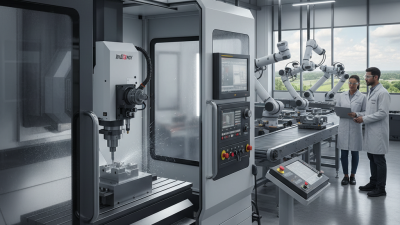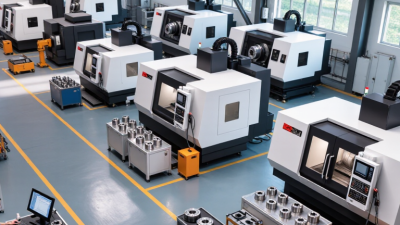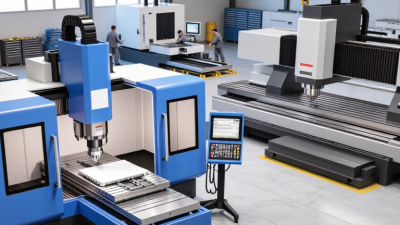
Choosing a reliable CNC plastic machining service can shape a product’s cost, strength, and delivery schedule. Global buyers must look beyond attractive quotes. Material selection, dimensional control, surface finish, communication, and inspection records matter equally.
Dr. Tony Schmitz, a respected manufacturing researcher, offers a practical warning: “Process stability matters more than speed alone.” That principle fits plastic machining well. Acrylic may need careful chip control. PEEK may demand strict temperature management. Nylon can absorb moisture and change dimensions during production. Small details become expensive problems when suppliers overlook them.
This guide reviews ten CNC plastic machining services for international buyers. Each option is considered through technical capability, material experience, quality systems, production capacity, and export communication. We also examine prototype support, tolerance control, and the clarity of engineering feedback. Practical evidence matters more than polished promises.
No ranking is perfect.
A supplier may perform exceptionally on simple UHMW-PE parts yet struggle with tight-tolerance PEEK components. Another may offer advanced equipment but communicate poorly across time zones. Buyers should treat this list as a starting point, not a final verdict. Request samples. Check inspection reports. Confirm lead times in writing.
The strongest CNC plastic partner is not always the cheapest. It is the supplier that understands your geometry, explains realistic limits, and identifies risks before production begins. Mistakes still happen, even with experienced teams. Honest review and careful questioning reduce them.

CNC plastic machining covers more than cutting a shape from a polymer block. It involves material behavior, tool selection, heat control, and inspection. Common choices include PEEK, POM, nylon, PTFE, polycarbonate, ABS, acrylic, and UHMW-PE. Each material responds differently to cutting pressure and temperature.
PEEK suits demanding mechanical and chemical applications, while POM offers stable dimensions and smooth movement. Nylon can absorb moisture, which may change measured size after machining. Acrylic can produce clear edges, but heat and poor tooling may cause melting or stress marks. These details matter when global buyers compare quotations.
Tolerances should match the part’s function. Tight dimensions increase machining time, inspection effort, and cost. ISO 2768 provides general tolerances for unspecified linear, angular, and geometric dimensions. It does not replace critical tolerances on a drawing. A note such as ISO 2768-mK can guide production, but the selected class must fit the design.
Measure twice.
A reliable supplier should confirm material grade, moisture condition, datum references, and inspection equipment before production. First-article reports and material certificates improve traceability. Still, tolerance claims can be misunderstood when drawings lack clear units or surface requirements. Even experienced teams sometimes over-specify dimensions that do not affect assembly. Reviewing those choices can make the part more practical, not less precise.
Ranking the top CNC plastic machining services requires more than comparing hourly rates. Start with process capability: three-axis milling suits flat brackets, while five-axis machining handles angled housings and deep cavities. Turning remains practical for bushings and cylindrical seals. Ask for measured tolerances, surface-finish records, and sample inspection reports. Evidence beats claims.
Polymer coverage should carry equal weight. The PlasticsEurope 2024 report records 413.8 million tonnes of global plastics production in 2023. That scale hides major differences between PEEK, nylon, acetal, PTFE, and polycarbonate. A strong supplier should explain tool wear, heat distortion, moisture absorption, and chip control for each material. “Plastic” is not one engineering category. My ranking would score polymer experience above a broad but unproven material list.
End use changes the ranking again. Medical, aerospace, laboratory, and industrial parts need different validation depth. ISO 9001 certification helps, but it does not prove dimensional consistency. The 2024 ASME report on advanced manufacturing highlights digital inspection and process monitoring as important productivity tools. Look for CMM data, batch traceability, controlled drawings, and realistic lead-time records. Fast delivery can still signal weak inspection. That is an uncomfortable point. I would assign process 40%, polymer expertise 30%, and end-use controls 30%, then revise the score after reviewing rejected parts and corrective-action history.
How to rank the top 10 services by process, polymer, and end use
The chart ranks ten common CNC plastic machining service profiles by representative tensile strength of the selected polymer. Each profile combines a widely used machining process with a typical industrial end use. Values are representative midpoint figures in MPa; actual performance varies by grade, reinforcement, moisture, temperature, and machining direction.
Materials and applications reflect commonly published engineering-plastic data and established CNC machining practices. Verify final specifications against the selected material grade and applicable ASTM or ISO test method.
Top 10 CNC Plastic Machining Services for Global Buyers
Service Profiles: 3-Axis, 5-Axis, Turning, Drilling, and Micro-Machining
Three-axis CNC machining suits flat plates, housings, brackets, and parts with accessible vertical faces. It offers predictable setups and practical pricing for many production volumes. I usually check wall thickness before approving the toolpath. Thin plastic walls can flex, melt, or show cutter marks.
Five-axis machining reaches angled surfaces without repeated clamping. This reduces alignment errors on medical fixtures, impellers, and complex engineering prototypes. However, five-axis is not automatically better. A clear datum scheme and accurate CAD model still matter more than machine complexity.
CNC turning handles round shafts, bushings, spacers, and threaded plastic components. Sharp tools and controlled cutting speed help prevent burrs and heat distortion. Drilling services create clean holes for fasteners, pins, and fluid passages. Deep holes need chip evacuation; otherwise, the drill may wander.
Micro-machining demands unusual discipline. Small cutters, microscope inspection, and stable workholding become essential below one millimeter features. I have seen a technically correct part fail because its mating hole was measured at room temperature only. Plastic expands differently across materials. That detail deserves attention.
Reliable suppliers should document resin grade, batch traceability, tolerances, inspection equipment, and packaging conditions. A first-article report can reveal problems before global shipment. Still, drawings are sometimes incomplete. Buyers should question unclear radii, surface finishes, and critical dimensions before production starts.
For global buyers, the top 10 CNC plastic machining services should be judged beyond price and delivery promises. A practical benchmark is ±0.05 mm accuracy on suitable features. However, not every plastic or geometry can hold it consistently. Material shrinkage, heat, tool wear, and thin walls can change results.
Experienced machinists confirm critical dimensions with calibrated CMM equipment, micrometers, and gauges. Inspection reports should identify measurement points, tolerances, equipment, and operator approval. ASTM testing adds useful evidence when strength, flexibility, or impact resistance matters. ASTM D638 may assess tensile properties, while ASTM D790 can evaluate flexural performance. The correct method depends on the plastic grade and application.
Process control must remain visible. ISO 9001 procedures can link raw material certificates, revision-controlled drawings, in-process checks, and final inspection records. Ask how nonconforming parts are isolated and corrected. That answer often reveals more than a polished certificate.
Details matter. A reliable supplier also explains uncertainty instead of hiding it. In practice, ±0.05 mm may require slower cutting, stable temperatures, and extra inspection time.
I have found that even strong processes need review, especially after a tool change or material substitution. Quality is measurable, but never automatic.
Choosing a CNC plastic machining service requires more than comparing unit prices. MOQ can vary from one prototype to several hundred parts. Ask whether setup fees apply to small batches. Confirm material grade, color, tolerance, and surface finish in writing.
Lead time should include programming, material sourcing, machining, inspection, and packing. A quoted “seven days” may exclude weekends or first-article approval. DFM review matters here. Thin walls, deep pockets, and sharp internal corners often increase scrap risk. Request a marked-up drawing before production. I have seen attractive quotations fail because the supplier assumed a different tolerance. That mistake is expensive.
Shipping needs a practical check. The 2023 World Bank Logistics Performance Index evaluates customs, infrastructure, tracking, and delivery timeliness. Ask for carton dimensions, gross weight, Incoterms, insurance, and a backup route. Maritime shipping carries over 80% of global trade by volume, according to UNCTAD’s Review of Maritime Transport 2023, but port delays still affect schedules. Build buffer time.
Compliance should match the destination market and end use. Request material certificates, inspection records, and declarations for applicable requirements such as RoHS or REACH. ISO 9001-based quality procedures can improve traceability, but certification alone does not guarantee good parts. Check sample reports and measurement equipment. Keep the questions specific. Suppliers may dislike them. That is useful.