


Top CNC Machining and Manufacturing Companies for Global Buyers
Global buyers comparing top CNC machining and manufacturing companies need more than a list of impressive machines. They need suppliers whose capabilities match the part, production volume, quality requirements, and delivery schedule. A five-axis mill may handle complex geometry, while a steady turning operation may better suit high-volume components. The right choice depends on the work.
Details matter.
This guide examines manufacturers through practical buying criteria: machining processes, material experience, inspection methods, production capacity, communication, and shipping reach. Buyers should look beyond polished capability pages. Ask how a supplier controls tolerances, documents inspections, handles design changes, and responds when a part fails its first check. Requesting a sample or reviewing a relevant case study can reveal gaps that a sales call may miss. Even then, one successful sample cannot guarantee consistent production.
Quality expert W. Edwards Deming is often quoted as saying, “Quality is everyone’s responsibility.” That principle applies on the shop floor and during supplier selection. A reliable partner should explain its process clearly, share evidence where appropriate, and raise concerns before production problems grow. No single ranking can capture every buyer’s priorities, and a strong supplier for one project may be a poor fit for another. This overview offers a starting point, not a substitute for technical review. Compare the details, verify claims, and leave room to reconsider your shortlist.
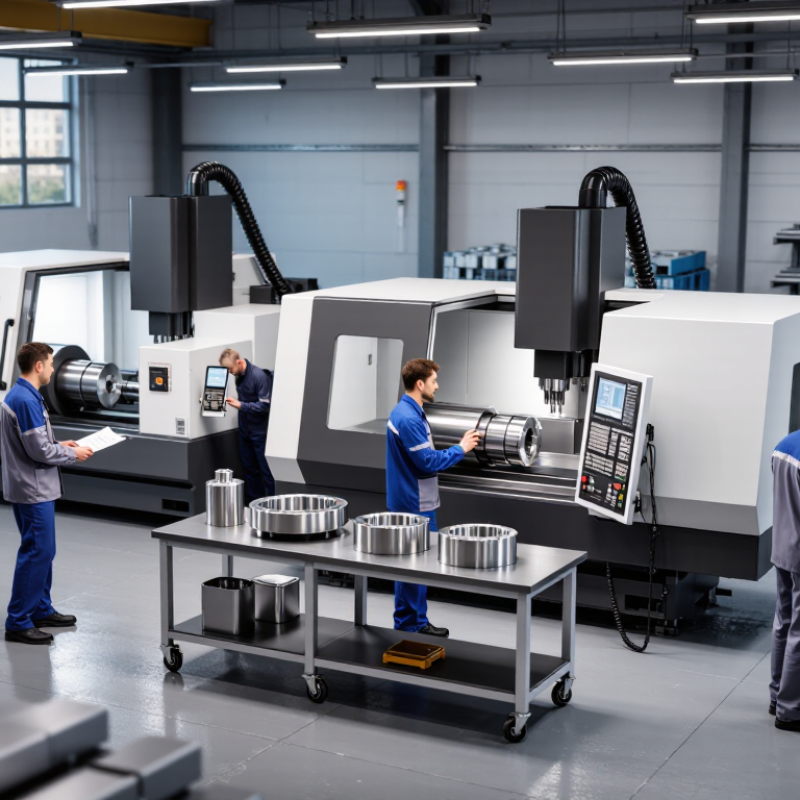
What CNC Machining Companies Do and How They Serve Global Buyers
CNC machining companies turn digital designs into precise physical parts by removing material with computer-controlled tools. They commonly produce prototypes, replacement components, and production runs in metals or plastics. Buyers share drawings, tolerances, material requirements, and expected quantities; suppliers then review manufacturability, quote the work, machine parts, and inspect critical dimensions. The details matter. A small hole-position error can prevent an assembly from fitting. Good suppliers explain inspection methods and flag design risks before production, though even careful reviews cannot eliminate every surprise.
Global buyers also rely on these firms to coordinate quality, lead times, and shipping across borders. Grand View Research estimated the global CNC machine market at USD 101.2 billion in 2023, reflecting broad investment in computer-controlled production. Separately, the International Federation of Robotics reported 541,302 industrial robot installations worldwide in 2023. These figures show the scale of automation, not a guarantee that any particular supplier has advanced equipment. Buyers should ask for relevant process experience, sample inspection records, material traceability, and clear communication about schedule changes. A polished website is not proof. It is easy to overlook the cost of unclear specifications, especially when teams work across time zones. A simple drawing revision can affect both price and delivery, so written approval matters.
Top CNC Machining and Manufacturing Companies for Global Buyers - What CNC Machining Companies Do and How They Serve Global Buyers
| Service or Capability | What It Involves | Common Materials or Outputs | How It Serves Global Buyers | What Buyers Should Confirm |
|---|---|---|---|---|
| CNC Milling | Rotating cutting tools remove material from a workpiece to create flat surfaces, slots, pockets, and complex profiles. | Metal and plastic components, including housings, brackets, and fixtures. | Supports prototypes and production parts with repeatable features and multiple machining operations. | Specify part geometry, material grade, tolerances, surface finish, and inspection requirements. |
| CNC Turning | A workpiece rotates while a cutting tool shapes its outside diameter, inside diameter, faces, or grooves. | Rotational parts such as shafts, bushings, pins, and threaded components. | Provides an efficient route for parts whose primary features are cylindrical. | Confirm maximum part dimensions, thread standards, concentricity needs, and whether secondary milling is required. |
| Multi-Axis Machining | Machine tools move the workpiece or cutting tool along multiple axes, allowing several faces or angled features to be machined. | Complex components with angled surfaces, compound curves, or features on multiple sides. | Can reduce repositioning and help maintain relationships between features. | Ask which features can be machined in one setup and how critical dimensions will be measured. |
| Prototype and Production Runs | Manufacturing services may cover early design samples, small batches, and repeat production orders. | One-off parts, pilot batches, and recurring components. | Helps buyers evaluate designs before committing to larger quantities and plan supply across order stages. | Clarify minimum order quantities, setup charges, lead-time assumptions, and repeat-order controls. |
| Material Selection | Parts can be machined from suitable metals or engineering plastics, subject to design and application requirements. | Common options include aluminum, steel, stainless steel, brass, and engineering plastics. | Enables buyers to balance properties such as strength, corrosion resistance, weight, and machinability. | State the exact material specification and required certificates; do not rely on a generic material name alone. |
| Finishing and Secondary Operations | Additional processes may include deburring, surface finishing, heat treatment, or coating, depending on the part and supplier capabilities. | Parts prepared for assembly, appearance, wear, or corrosion requirements. | Can consolidate manufacturing steps and reduce coordination between separate vendors. | Define finish type, applicable standard, masking areas, and acceptance criteria on the drawing or purchase documents. |
| Quality Inspection | Inspection checks whether parts meet drawing specifications using suitable measurement equipment and documented procedures. | Dimensional reports, material records, and other agreed quality documentation. | Provides evidence for incoming inspection and helps manage quality expectations across borders. | Agree on critical dimensions, sampling or inspection scope, reporting format, and document language before production. |
| Export and Logistics Coordination | International orders require agreed packaging, shipping terms, export documentation, and delivery arrangements. | Packaged machined components shipped by suitable freight methods. | Helps buyers coordinate delivery to their facility or onward assembly location. | Confirm Incoterms, shipment responsibility, packaging protection, customs paperwork, and estimated transit time. |
Related Posts
-
Best CNC Machining Solutions in China for Global Buyers?
-
Why Choose CNC Machining Solutions for Global Buyers?
-
What is CNC Precision Machining and How Does it Benefit Industries?
-
Top CNC Machining Manufacturing Companies in China?
-
Why Choose a CNC Machine for Your Manufacturing Needs?
-
What is CNC Machining? A Comprehensive Guide to the Basics and Applications