Selecting a CNC machining service is not just a price comparison. A drawing may specify a ±0.01 mm tolerance, yet the finished part still depends on material choice, tool wear, workholding, and inspection. A supplier’s polished capability sheet helps, but it cannot replace clear questions about process control and measurement. Small errors compound.
The market context is substantial. Grand View Research valued the global CNC machine market at approximately $101.22 billion in 2023 and forecast 6.3% compound annual growth through 2030. That figure covers CNC machines, not outsourced machining services, so it should not be mistaken for service-market revenue. Still, it reflects the expanding role of computer-controlled production. For buyers, cnc machining precision means more than a machine’s advertised accuracy: it includes repeatability across batches, documented inspection, and a realistic approach to tolerances.
“Without standards, there can be no improvement,” wrote Toyota production-system expert Taiichi Ohno. His point applies to evaluating machining partners: ask how they measure, record, and respond when a part drifts out of specification. Not every project needs the tightest tolerance. In fact, demanding unnecessary precision can add cost and lead time without improving function. The seven services in this guide are assessed through practical criteria, including equipment, materials, quality systems, communication, and suitability for different part requirements. Treat the comparison as a starting point, not a substitute for reviewing drawings and requesting a project-specific quote.
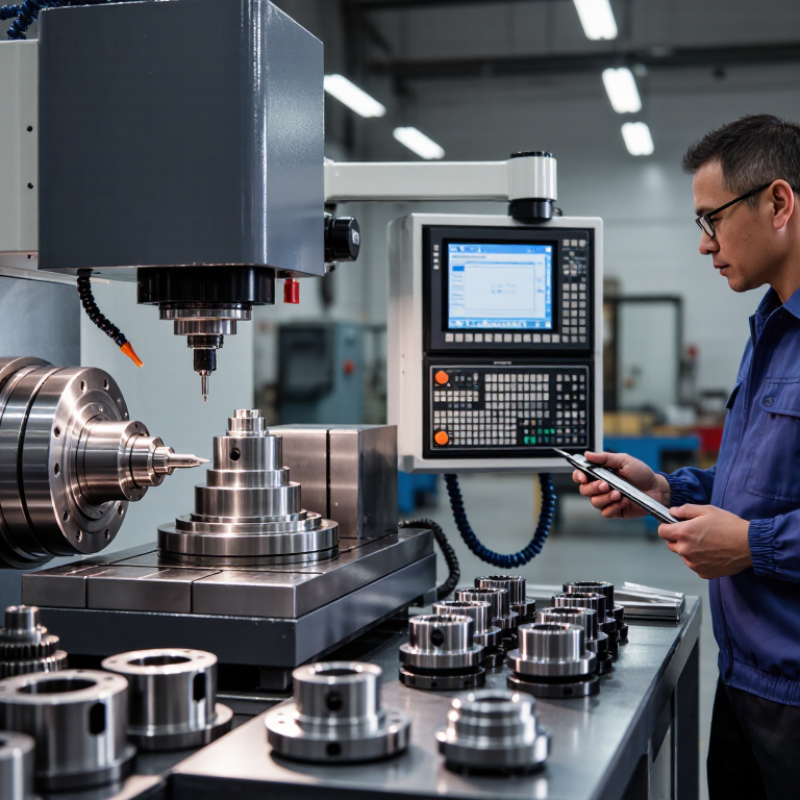
Choosing a CNC machining service means looking beyond price and impressive equipment photos. Check whether its stated tolerances match your drawing, especially around holes, threads, and mating surfaces. Ask how parts are inspected: a coordinate measuring machine may verify critical dimensions, while calipers may suit less demanding features. Material traceability matters, too. Request material certificates when the application depends on a specific grade. A polished website can still leave these details unclear.
Tips: Send a complete drawing and ask for a sample inspection report. Confirm who handles finishing, packaging, and delivery. Ask how the shop flags a dimension it cannot hold consistently. Clear answers are useful. Vague promises are not.
Also evaluate communication and process control. A reliable supplier should identify manufacturability concerns before cutting material, such as a thin wall that may distort under tool pressure. Discuss setup approval, revision tracking, and how repeat orders are checked against the original specifications. In practice, a low quote can become costly if inspection, finishing, or shipping is excluded. Lead-time estimates deserve scrutiny as well; schedules can shift when material availability changes. No checklist removes every risk, and buyers sometimes overlook small drawing inconsistencies. That is worth a second look.
CNC machining services differ less by their advertised accuracy than by how consistently they hold tolerances across a real part. Online quoting platforms can compare prices quickly, but the final result depends on the selected shop, material, and inspection plan. Local job shops often offer direct engineering discussions and useful feedback on awkward features. Dedicated precision providers may document tighter tolerances, yet those claims should be checked against the part’s drawing and measurement report.
Rapid-prototyping services suit small batches and quick design changes; production-focused shops are usually better prepared for repeat orders and process control. Three-axis machining handles many flat and prismatic parts efficiently, while four- and five-axis capability can reach angled faces with fewer setups. Fewer setups may reduce alignment errors. Still, more axes do not automatically mean better precision. Some shops specialize in difficult materials or close-tolerance components, but capability varies by machine condition, tooling, and operator experience. A clean capability list can hide these differences.
Tips: Compare quoted tolerances with your critical dimensions, not every dimension on the drawing. Ask how features will be measured, whether inspection records are included, and what happens if a part falls outside specification. Share the material, finish, quantity, and intended use before comparing prices. A low quote may exclude deburring or detailed inspection. That matters. Also, leave room to question your own design: a tight tolerance may add cost without improving how the part works.
Choosing among seven CNC machining services starts with the part’s geometry, material, and critical tolerances. Three-axis milling suits flat faces and pockets; five-axis milling reaches angled features with fewer setups. CNC turning makes round shafts, while mill-turn combines turning and milling in one machine. Swiss-type turning handles slender, small-diameter parts. Wire EDM cuts intricate conductive shapes, and CNC routing works well for larger panels and softer materials.
A 2024 CNC Machine Market report estimated the global market at about $101 billion in 2023, with projected annual growth of 9.3% through 2030. That points to continued investment in CNC equipment, but market growth alone says little about a shop’s accuracy. Ask for material traceability, inspection records, and a first-article report. For tight bores, request the measurement method and actual results, not just a tolerance promise.
The right service depends on details. A thin wall may distort after machining; a deep pocket may need a longer tool and leave visible marks. One awkward truth: the cheapest quote can overlook setup and inspection time. Compare lead times, finishing options, and how each shop handles design changes. A test part can expose problems early. Not every supplier will welcome that request, and that itself deserves thought.
| CNC Service | Best For | Common Materials | Typical Tolerance Range* | Key Consideration |
|---|---|---|---|---|
| 3-Axis CNC Milling | Prismatic parts, pockets, slots, and flat faces | Aluminum, steel, stainless steel, plastics | About ±0.13 mm (±0.005 in) | A practical option for many standard parts and accessible features. |
| 5-Axis CNC Milling | Complex contours, angled features, and multi-sided parts | Aluminum, titanium, steel, engineering plastics | About ±0.13 mm (±0.005 in), part-dependent | Can reduce setups; geometry and inspection requirements affect accuracy. |
| CNC Turning | Round components such as shafts, pins, and bushings | Aluminum, brass, steel, stainless steel, plastics | About ±0.13 mm (±0.005 in) | Well suited to rotational features and consistent diameters. |
| CNC Mill-Turn | Parts combining turned surfaces with milled features | Aluminum, steel, stainless steel, brass | About ±0.13 mm (±0.005 in), feature-dependent | Combines operations in fewer setups, which can help maintain feature alignment. |
| Swiss-Type CNC Turning | Small, slender, high-volume precision components | Stainless steel, brass, aluminum, titanium | Often around ±0.025–0.05 mm (±0.001–0.002 in) | Part size, material, and production setup determine achievable tolerances. |
| CNC Surface Grinding | Flat surfaces requiring fine finish or close dimensional control | Hardened steel, tool steel, some ceramics | Can reach about ±0.013–0.025 mm (±0.0005–0.001 in) | Usually a finishing operation; confirm flatness and surface-finish requirements. |
| CNC Router Machining | Large panels, plates, and comparatively lightweight components | Plastics, wood, composites, and some aluminum sheet | Often about ±0.25 mm (±0.010 in), material-dependent | Useful for sheet-based parts; rigidity and workholding influence results. |
*Tolerance figures are general indicative ranges, not guaranteed specifications. Actual capability depends on part geometry, material, size, equipment, process controls, and inspection method; confirm requirements with the machining provider.
Choosing among seven CNC machining service options means comparing more than the hourly rate. General-purpose milling and turning often suit aluminum brackets and steel shafts. Five-axis machining can reduce setups for angled features, while Swiss-style turning handles small, slender components. Prototype-focused shops may accept one-off parts; production services can offer better unit costs at larger volumes. Fit matters.
Material affects both price and achievable detail. Aluminum is usually quick to machine, while stainless steel can require slower cutting and more tool changes. Titanium may add substantial machining time. Plastics such as acetal are lightweight, but thin walls can distort under clamping. Ask whether the quoted material includes certification, and check that the grade matches the drawing.
Tolerance claims need context. A tight tolerance on every dimension can raise inspection and machining costs, even when only a few surfaces control assembly. Mark critical dimensions clearly. A common quoting trap is comparing lead times without checking setup, finishing, and inspection steps. A part may be cut in days, then wait for anodizing or a detailed report. Look for costs broken into setup, machining, material, finishing, and shipping. That estimate can mislead. If a quote is unusually low, verify its assumptions before approving the design.
Indicative comparison for simple, low-volume prototype parts using standard CNC machining.
Lead times are estimated business days and vary with part geometry, quantity, stock availability, finishing, and production queue. Relative cost is an indicative index, with 6061 aluminum set to 100; it is not a price quote. A common general machining tolerance is about ±0.10 mm, while tighter tolerances such as ±0.025 mm may be achievable on selected features by agreement. Actual tolerances depend on the material, feature, and process.
Choosing a CNC machining service starts with the part, not the machine list. For a thin aluminum bracket, ask about workholding and distortion control; for a stainless-steel shaft, check turning capacity, surface finish, and measurement methods. Send the same drawing and material specification to each candidate. Compare tolerances, lead time, inspection records, and how clearly they flag features that may raise cost. A low quote can hide a loose interpretation of “precision.” Details matter.
Production volume changes the right choice. A prototype shop may handle one-off revisions well, while repeat orders need documented setups and consistent inspection. The 2024 Deloitte and Manufacturing Institute workforce study estimates that 3.8 million U.S. manufacturing jobs may be needed by 2033, with 1.9 million potentially unfilled. That broad labor gap does not predict any shop’s performance, but it makes staffing and inspection capacity worth checking. Grand View Research estimated the global CNC machine market at $101.22 billion in 2023; market growth alone says little about a supplier’s fit. Ask for a sample inspection report and a review of critical dimensions before ordering. A spreadsheet cannot reveal every setup problem. Nor should every tolerance be pushed to its tightest limit; that choice can add cost without improving how the part works.